
 Afrika
 Asië
Asië Europa
 Suid-Amerika
 Australië & Oseanië
 Antarktika
 Stille Oseaan
 Atlantiese Oseaan
 Indiese Oseaan
 Arktiese Oseaan
 Middellandse See
 Rooi See
 Karibiese See
 Koraalsee
 Suid-Chinese See
 Filippynse See
 Andamansee
 Noordsee
 Timorsee & Arafurasee
 Baai van Bengale
 Golf van Kalifornië
Mexican west coast rattlesnake
 Byte
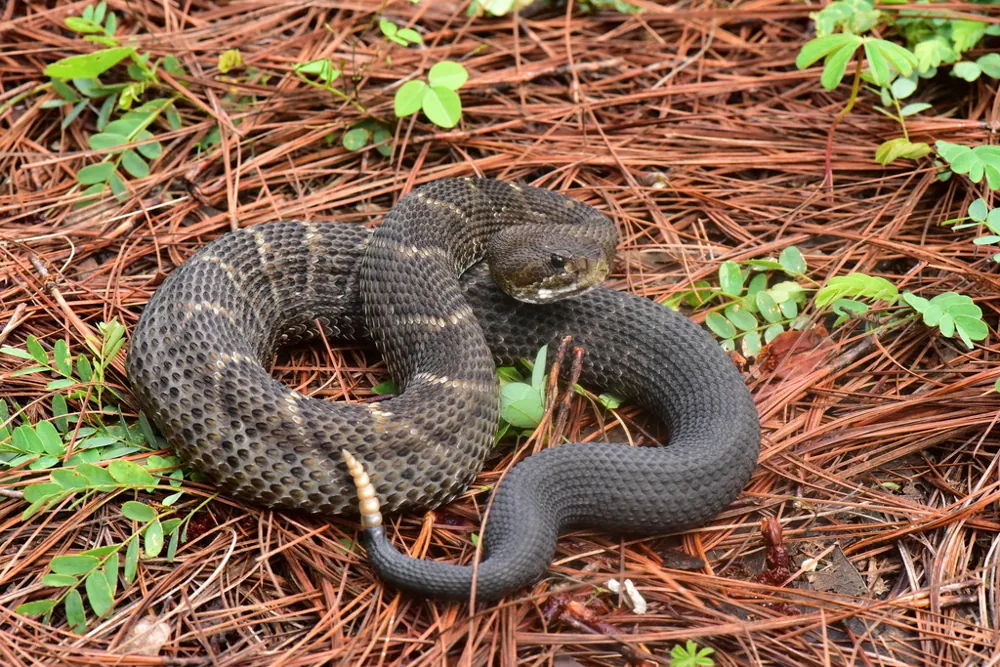
ByteThe Mexican west coast rattlesnake is a large venomous pit viper. It lives on the coastal plain of western Mexico. It is one of the largest rattlesnakes in the world, so its size and its strong venom make it one to respect.1

 Hoe om dit te herken
- Brown or grey body with 26 to 41 dark, diamond-shaped blotches that have light edges.1
- Within its range, it is the only rattlesnake with diamond-shaped markings on its back.1
- Head is a uniform greyish-brown, with lighter lip scales and a dark bar behind each eye.1
- Young snakes are mostly red, and adults become olive green.1
- Body is moderately stout and rather rectangular in cross section.1
Word dikwels verwar met: It often lives in the same areas as C. molossus, and the two hybridise freely. The two species are easy to tell apart, but hybrid snakes are hard to identify.1
Gifkrag
Gif kom deur sy giftande of tande uit wanneer dit byt.
Wat doen sy gif as dit byt of steek?
Its venom is highly toxic and is produced in large amounts. The venom contains proteases, which are enzymes that break down proteins. In some populations, it may also contain a component related to Mojave toxin.1
Hoe gevaarlik is dit vir mense?
Gevaar vir mense: Baie gevaarlikDit kan 'n mens doodmaak wat geen behandeling kry nie.Large specimens should be regarded as very dangerous. An average venom yield of 297 mg of dried venom has been recorded.1
 Goeie nuus: dokters het 'n medisyne (teengif) of 'n behandeling hiervoor.1
 As dit byt
- Hou die persoon stil en kalm, hou die gebyte arm of been op hartvlak, haal ringe en stywe goed af, en kom vinnig by 'n hospitaal uit.
Bel altyd eers jou noodnommer (112, 000, 911). Dit is algemene noodhulpraad, nie mediese advies nie. Noodhulp-basiese beginsels
 Bly veilig
- Moet nooit aan 'n wilde dier raak, dit vang of terg nie, selfs nie 'n kleintjie nie, en selfs nie as dit lyk of dit slaap of dood is nie.
- Gee dit spasie. As jy een raakloop, bly kalm, stap stadig terug en laat dit sy eie pad gaan.
- As een jou byt: bly kalm, bly stil, bel jou noodnommer (112, 000, 911) of kom vinnig by 'n hospitaal uit. Onthou hoe dit gelyk het, 'n foto help.
Dit is nie uit om jou te kry nie. Dit gebruik sy gif om kos te vang of om homself te beskerm, en kruip baie eerder weg. Meer oor veilig bly
Waar in die wêreld?
Hoe groot is dit?
Hoe lank is dit?
Hoe swaar is dit?
 so lank soos 4 huiskatte neus tot stert
 so lank soos 11 piesangs punt aan punt
 kan 100 meter in 86 sekondes aflê (die vinnigste mens het 9,6 nodig)
Hoe groot is Mexican west coast rattlesnake in vergelyking met JOU?
Net wiskunde in jou blaaier. Niks word gestoor of enige plek heen gestuur nie.
Hoe vinnig is dit?


Feite
It is one of the largest rattlesnake species, and specimens over 150 cm are not uncommon.1
Young snakes are red, and they turn olive green as they grow into adults.1
Its scientific name comes from the Greek word for king, a nod to its size and strong venom.1
It hybridises freely with C. molossus where their ranges overlap.1
Waar die feite vandaan kom
- Crotalus basiliscus (Wikipedia (CC BY-SA 4.0))
- Crotalus basiliscus (iNaturalist): name en klassifikasie.
- Venom Wiki: die gevaarvlak, die tipiese grootte en die spoedskatting is ons eie. Kyk hoe ons dit uitwerk: Hoe ons gevaar gradeer.
Elke feit op hierdie bladsy het 'n nommer wat na sy bron wys. As ons iets verkeerd het, jammer, ons is dierfanatici, nie 'n wetenskaplike joernaal nie. Laat weet ons by [email protected] en ons maak dit reg.
 Die skerpioen is honger! Venom Wiki is 'n eenmanprojek: gratis, sonder advertensies en sonder spoorsnyers. 'n Klein fooitjie help om dit aanlyn te hou.Voer die skerpioen
 Eastern diamondback rattlesnake
 Timber rattlesnake
 Western diamondback rattlesnake
 Sidewinder
 Mojave rattlesnake
 Aruba rattlesnake
 Terciopelo
 Eastern coral snake
 Eyelash viper
 Arizona bark scorpion
 Brown recluse
 Cane toad