
 Afrika
 Asië
Asië Europa
 Suid-Amerika
 Australië & Oseanië
 Antarktika
 Stille Oseaan
 Atlantiese Oseaan
 Indiese Oseaan
 Arktiese Oseaan
 Middellandse See
 Rooi See
 Karibiese See
 Koraalsee
 Suid-Chinese See
 Filippynse See
 Andamansee
 Noordsee
 Timorsee & Arafurasee
 Baai van Bengale
 Golf van Kalifornië
New Guinea small-eyed snake
 Byte
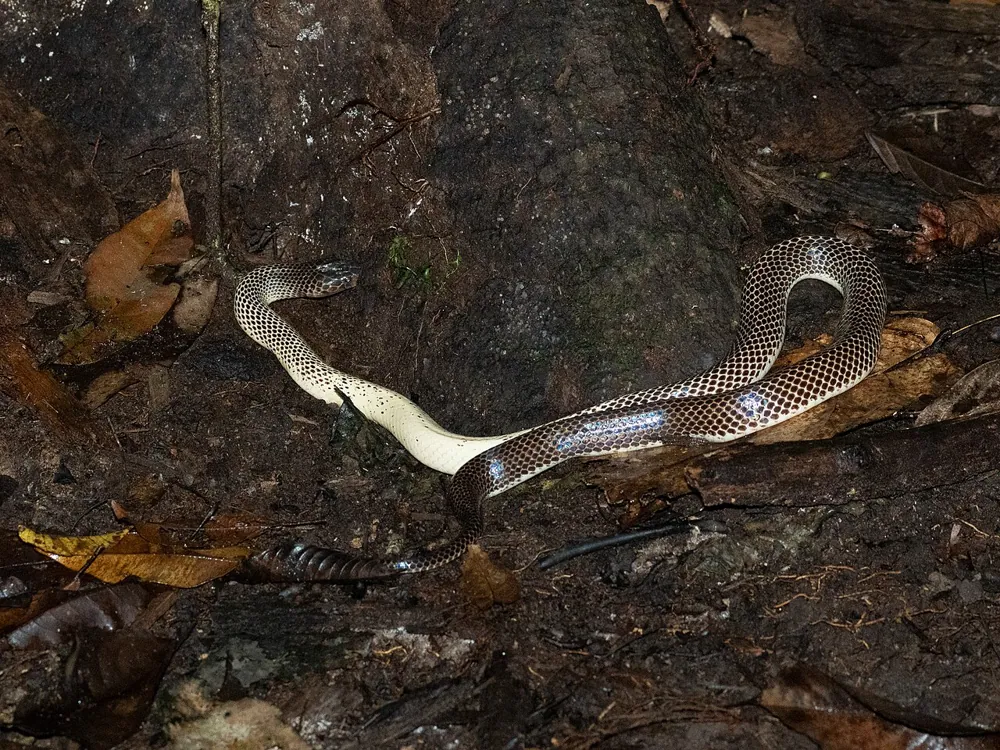
ByteThe New Guinea small-eyed snake, Micropechis ikaheka, is a highly venomous snake that lives on New Guinea and nearby islands. It is the only species in its genus, and it is known for causing many deadly bites, especially on Karkar Island in Papua New Guinea. Its bites are a serious medical concern in the places where it lives.1



 Hoe om dit te herken
Gifkrag
Gif kom deur sy giftande of tande uit wanneer dit byt.
Wat doen sy gif as dit byt of steek?
Its venom is strong enough that it is considered a dangerous snake. Common symptoms include local muscle pain and tenderness, fever, abdominal pain, vomiting, dizziness, headache, low blood pressure and spontaneous bleeding. In severe cases, the venom also affects the nerves and muscles, causing drooping eyelids, slurred speech and jaw locking, and death can result from respiratory paralysis (when the muscles used for breathing stop working).1
Hoe gevaarlik is dit vir mense?
Gevaar vir mense: Baie gevaarlikDit kan 'n mens doodmaak wat geen behandeling kry nie.This snake has been linked to many fatal bites. The first proven human death occurred in 1958 in Wau, Papua New Guinea, where a young man died 36 hours after being bitten on the base of the thumb while handling the snake. It causes about 40% of snake envenomations on Karkar Island, but less than 10% on the mainland, where death adders cause most snakebites. Plantation workers are most at risk, especially when moving husk piles, cutting grass, walking on plantation tracks or harvesting cocoa beans.1
 Goeie nuus: dokters het 'n medisyne (teengif) of 'n behandeling hiervoor.1
Wat doen dit as dit bang is?
Although it is normally shy, it becomes highly aggressive when disturbed, for example if it is handled or stepped on, and then it strikes quickly and readily. Its bite is tenacious and chewing, and it is not easily released.1
 As dit byt
- Drukimmobilisasie: draai 'n stewige elastiese verband oor die byt en dan op oor die hele arm of been, spalk dit en hou die persoon heeltemal stil totdat hulp opdaag.
- Moenie die byt was nie: hospitale kan die gif wat op die vel agterbly toets om die regte teengif te kies.
Bel altyd eers jou noodnommer (112, 000, 911). Dit is algemene noodhulpraad, nie mediese advies nie. Noodhulp-basiese beginsels
 Bly veilig
- Moet nooit aan 'n wilde dier raak, dit vang of terg nie, selfs nie 'n kleintjie nie, en selfs nie as dit lyk of dit slaap of dood is nie.
- Gee dit spasie. As jy een raakloop, bly kalm, stap stadig terug en laat dit sy eie pad gaan.
- As een jou byt: bly kalm, bly stil, bel jou noodnommer (112, 000, 911) of kom vinnig by 'n hospitaal uit. Onthou hoe dit gelyk het, 'n foto help.
Dit is nie uit om jou te kry nie. Dit gebruik sy gif om kos te vang of om homself te beskerm, en kruip baie eerder weg. Meer oor veilig bly
Waar in die wêreld?
Hoe groot is dit?
Hoe lank is dit?
 so lank soos 4 huiskatte neus tot stert
 so lank soos 12 piesangs punt aan punt
 kan 100 meter in 46 sekondes aflê (die vinnigste mens het 9,6 nodig)
Hoe groot is New Guinea small-eyed snake in vergelyking met JOU?
Net wiskunde in jou blaaier. Niks word gestoor of enige plek heen gestuur nie.
Hoe vinnig is dit?


Feite
A bite from this snake was linked to a human death in 1958, when a young man died 36 hours after being bitten on the thumb while handling it.1
It is cannibalistic, and it also hunts rodents, lizards and other snakes.1
On Karkar Island, where it is common, it is called the "white snake" because of its pale colouring.1
Its name, ikaheca, means "land eel" in a local West Papuan language.1
Mite-breker
Mite: A dead snake is harmless and cannot bite.
Waarheid: A villager was bitten on the thumb by a snake he had reportedly killed, possibly because of a reflex action after death. Dead snakes can still bite, so they should be handled with care.1
Waar die feite vandaan kom
- Micropechis (Wikipedia (CC BY-SA 4.0))
- Micropechis ikaheka (iNaturalist): name en klassifikasie.
- Venom Wiki: die gevaarvlak, die tipiese grootte en die spoedskatting is ons eie. Kyk hoe ons dit uitwerk: Hoe ons gevaar gradeer.
Elke feit op hierdie bladsy het 'n nommer wat na sy bron wys. As ons iets verkeerd het, jammer, ons is dierfanatici, nie 'n wetenskaplike joernaal nie. Laat weet ons by [email protected] en ons maak dit reg.
 Die skerpioen is honger! Venom Wiki is 'n eenmanprojek: gratis, sonder advertensies en sonder spoorsnyers. 'n Klein fooitjie help om dit aanlyn te hou.Voer die skerpioen
Meer uit dieselfde groep: Australiese slange
 Coastal taipan
 Common death adder
 Eastern brown snake
 Binnelandse taipan
 Tierslang
 Collett's snake
Leef ook in: Australië & Oseanië
 Sydney funnel-web spiderTarantulas & tregterwebspinnekoppeDodelik
 Redback spiderSpinnekoppeMoet 'n dokter sien
 Brown tree snakeAgtertandslangeMaak net seer
 Hooded pitohuiAnder diere wat giftig is om aan te raak of te eetMaak net seerMoenie aanraak nie
 PlatypusGiftige soogdiereMaak net seer
 Northern tree-dwelling funnel-web spiderTarantulas & tregterwebspinnekoppeDodelik