
 Afrika
 Asië
Asië Europa
 Suid-Amerika
 Australië & Oseanië
 Antarktika
 Stille Oseaan
 Atlantiese Oseaan
 Indiese Oseaan
 Arktiese Oseaan
 Middellandse See
 Rooi See
 Karibiese See
 Koraalsee
 Suid-Chinese See
 Filippynse See
 Andamansee
 Noordsee
 Timorsee & Arafurasee
 Baai van Bengale
 Golf van Kalifornië
Oak processionary
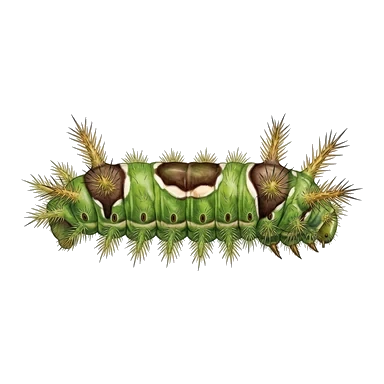 Brandhare
The oak processionary is a moth whose caterpillars feed on oak leaves and can strip trees bare. The caterpillars travel in long, nose-to-tail lines, which is how they got their name. Their fine, hair-like bristles can irritate skin and breathing, so they matter a lot to people.1

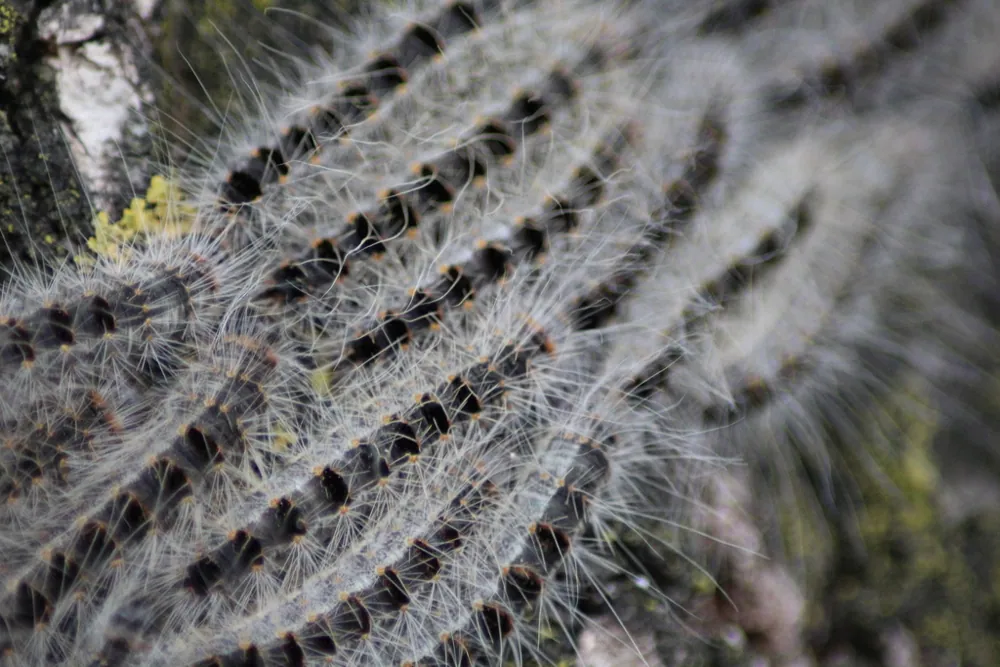
 Hoe om dit te herken
- Adult moths have a wingspan of 25 to 35 mm and are tan, brown and white, which makes them hard to see against oak bark.1
- Caterpillars have very long, white hairs that contrast with shorter hairs.1
- Caterpillars march in lines, often arrow-shaped, with a leader and rows of several caterpillars side by side.1
- Nests are white and silk-like when new, and become discoloured and hard to see over time.1
- Nests can be round, teardrop-shaped, bag-like or blanket-like, and can be found at any height on an oak tree.1
Word dikwels verwar met: Caterpillars of several other species may be mistaken for the oak processionary. Unlike other caterpillars, the oak processionary does not live on fences or walls, so it is mostly found in oak trees or on the ground beneath them in late spring and early summer.1
Gifkrag
Piepklein haartjies of borsels breek in die vel af en brand.
Wat doen sy gif as dit byt of steek?
The caterpillars' back bristles contain a urticating toxin called thaumetopoein, a protein that irritates the skin. Contact can cause a papular rash and itching, and the hairs can also cause eye inflammation (conjunctivitis). If the hairs are breathed in, they can cause sore throat (pharyngitis), breathing problems, asthma, or in rare cases anaphylaxis, a severe allergic reaction.1
Hoe gevaarlik is dit vir mense?
Gevaar vir mense: PynlikDit kan regtig seermaak, maar dit is amper nooit ernstig nie.The moths are an increasing nuisance to people as their range grows, and the hairs can cause a skin condition called epidemic caterpillar dermatitis. The hairs break off easily, float in the air, and can stay harmful for several seasons. Mowing a lawn can bring people into contact with them.1
 Goeie nuus: dokters het 'n medisyne (teengif) of 'n behandeling hiervoor.1
Wat doen dit as dit bang is?
The caterpillars defend themselves with thousands of pointed, easily broken bristles on their backs that float in the air and irritate the skin.1
 As jy aan sy hare raak
- The skin irritation and itching can be largely relieved by cetirizine-based antihistamine tablets. Anyone with breathing problems or a severe reaction needs urgent medical help.1
- Vir ruspe-brandhare: lig hulle af met kleefband en was dan die vel. Moenie vryf nie.
- Vir byte: was en koel af. Kry mediese hulp as die persoon sleg voel of maklik bloei.
Bel altyd eers jou noodnommer (112, 000, 911). Dit is algemene noodhulpraad, nie mediese advies nie. Noodhulp-basiese beginsels
 Bly veilig
- Moet nooit aan 'n wilde dier raak, dit vang of terg nie, selfs nie 'n kleintjie nie, en selfs nie as dit lyk of dit slaap of dood is nie.
- Gee dit spasie. As jy een raakloop, bly kalm, stap stadig terug en laat dit sy eie pad gaan.
- As jy aan sy hare raak: bly kalm, bly stil, bel jou noodnommer (112, 000, 911) of kom vinnig by 'n hospitaal uit. Onthou hoe dit gelyk het, 'n foto help.
Dit is nie uit om jou te kry nie. Dit gebruik sy gif om kos te vang of om homself te beskerm, en kruip baie eerder weg. Meer oor veilig bly
Waar in die wêreld?
Hoe groot is dit?
Hoe lank is dit?
 omtrent so lank soos 'n skuifspeld
 stadiger as 'n tuinslak
Hoe groot is Oak processionary in vergelyking met JOU?
Net wiskunde in jou blaaier. Niks word gestoor of enige plek heen gestuur nie.
Hoe vinnig is dit?

Feite
Older caterpillars can have up to 63,000 pointed defensive bristles on their backs.1
In 2007, soldiers were deployed to burn infestations in the Belgian province of Limburg.1
The UK government spent £37 million trying to control the caterpillars, which had spread to all 33 London boroughs by 2019.1
In the Netherlands, great tits have been observed eating the young caterpillars before their hairs develop in April.1
In 2023, an outbreak in Ireland was successfully eradicated.1
Vir gifkenners
Waar die feite vandaan kom
- Oak processionary (Wikipedia (CC BY-SA 4.0))
- Thaumetopoea processionea (iNaturalist): name en klassifikasie.
- Venom Wiki: die gevaarvlak, die tipiese grootte en die spoedskatting is ons eie. Kyk hoe ons dit uitwerk: Hoe ons gevaar gradeer.
Elke feit op hierdie bladsy het 'n nommer wat na sy bron wys. As ons iets verkeerd het, jammer, ons is dierfanatici, nie 'n wetenskaplike joernaal nie. Laat weet ons by [email protected] en ons maak dit reg.
 Die skerpioen is honger! Venom Wiki is 'n eenmanprojek: gratis, sonder advertensies en sonder spoorsnyers. 'n Klein fooitjie help om dit aanlyn te hou.Voer die skerpioen
Meer uit dieselfde groep: Ruspes & goggas
 Pine processionaryRuspes & goggasMaak net seerMoenie aanraak nie
 Common bombardier beetleRuspes & goggasOnskadelik
 Brown-tail mothRuspes & goggasMaak net seerMoenie aanraak nie
 Masked hunterRuspes & goggasMaak net seer
 Pine-tree lappetRuspes & goggasMaak net seerMoenie aanraak nie
 Common backswimmerRuspes & goggasOnskadelik
Leef ook in: Europa
 Common European adderAdders & vipersMoet 'n dokter sien
 Spanish flyAnder diere wat giftig is om aan te raak of te eetMoet 'n dokter sienMoenie aanraak nie
 Common waspBye, wespe & perdebyeMaak net seer
 European hornetBye, wespe & perdebyeMaak net seer
 Fire salamanderGifpaddas, skurwepaddas & salamandersMaak net seerMoenie aanraak nie
 Western honey beeBye, wespe & perdebyeMaak net seer