
 Afrika
 Asië
Asië Europa
 Suid-Amerika
 Australië & Oseanië
 Antarktika
 Stille Oseaan
 Atlantiese Oseaan
 Indiese Oseaan
 Arktiese Oseaan
 Middellandse See
 Rooi See
 Karibiese See
 Koraalsee
 Suid-Chinese See
 Filippynse See
 Andamansee
 Noordsee
 Timorsee & Arafurasee
 Baai van Bengale
 Golf van Kalifornië
Stonecat
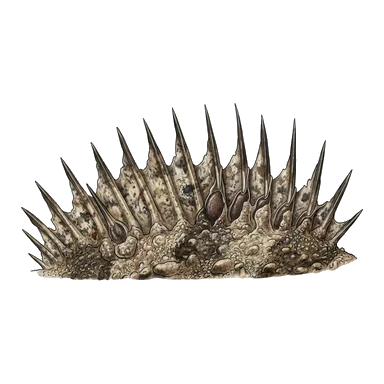 Giftige stekels
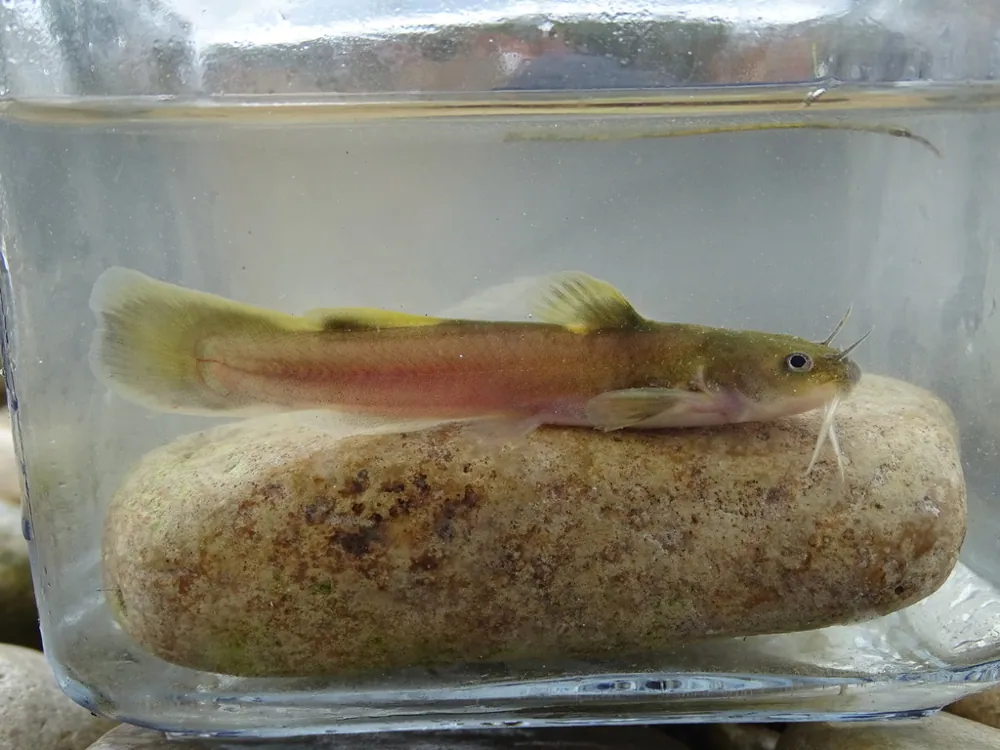
The stonecat is a small freshwater catfish from North America. It hides near or under stones in fast-moving water. It is special because it has venom glands at the base of its pectoral spines, which can cause extreme pain.1
 Hoe om dit te herken
- Small, slender, flat-headed catfish with a thick, yellowish-brown skin1
- The sides of the head shade to yellow, and the belly is whitish1
- A white spot at the rear of the dorsal fin base and another on the upper edge of the tail fin1
- Either two light bars or a patch on the nape, depending on the population1
Gifkrag
Skerp stekels dra die gif. Dit maak seer as jy daarop trap of dit gryp.
Wat doen sy gif as dit byt of steek?
Stonecats have venom glands, mainly at the bases of the pectoral spines. Their venom causes extreme pain, similar to that of a wasp sting. Other members of this catfish family cause irritating wounds from their spines, but the stonecat's venom is stronger.1
Hoe gevaarlik is dit vir mense?
Gevaar vir mense: PynlikDit kan regtig seermaak, maar dit is amper nooit ernstig nie.The spines can deliver venom that causes extreme pain, similar to a wasp sting. Keep clear of its spines.1
Wat doen dit as dit bang is?
Stonecats hide near or under stones, and their venom glands sit at the bases of their pectoral spines.1
 As sy stekels jou steek
- Sit die wond in warm water, so warm as wat die persoon kan verdra sonder om te brand (toets dit met jou eie hand), vir 30 tot 90 minute. Kry mediese hulp, veral vir klipvisse en pylsterte.
Bel altyd eers jou noodnommer (112, 000, 911). Dit is algemene noodhulpraad, nie mediese advies nie. Noodhulp-basiese beginsels
 Bly veilig
- Moet nooit aan 'n wilde dier raak, dit vang of terg nie, selfs nie 'n kleintjie nie, en selfs nie as dit lyk of dit slaap of dood is nie.
- Gee dit spasie. As jy een raakloop, bly kalm, stap stadig terug en laat dit sy eie pad gaan.
- As sy stekels jou steek: bly kalm, bly stil, bel jou noodnommer (112, 000, 911) of kom vinnig by 'n hospitaal uit. Onthou hoe dit gelyk het, 'n foto help.
Dit is nie uit om jou te kry nie. Dit gebruik sy gif om kos te vang of om homself te beskerm, en kruip baie eerder weg. Meer oor veilig bly
Waar in die wêreld?
Hoe groot is dit?
Hoe lank is dit?
Hoe swaar is dit?

 so lank soos 10 speelgoed-boublokke in 'n ry
 kan die lengte van 'n groot swembad (50 m) in 38 sekondes swem
Hoe groot is Stonecat in vergelyking met JOU?
Net wiskunde in jou blaaier. Niks word gestoor of enige plek heen gestuur nie.
Hoe vinnig is dit?
Feite
A stonecat's pectoral spines carry venom glands, which makes them far more painful than the spines of most related catfish.1
Its eggs are amber-yellow and very large for a fish, measuring between 3.5 and 4 mm across.1
Stonecats are used as indicators of water quality, because they are absent from highly polluted or heavily silted areas.1
Stonecats form monogamous pairs for breeding, and they spawn when water temperatures reach 25 °C.1
The upper jaw of the stonecat projects beyond the lower jaw.1
Vir gifkenners
- Wetenskaplike naam
- Noturus flavus
- Groep
- Giftige visse
- Familie
- Ictaluridae2
- Orde
- Siluriformes
- Kontinente
- Noord-Amerika
- Babas
- Males guard the clutch of eggs under large, flat rocks, and a female may produce between 200 and 1,200 eggs per year.1
- Lewensduur
- omtrent 6 jaar1
- Hoe dit in die natuur gaan
- Not threatened, according to the US Endangered Species Act1
- Gevaar vir mense
- 2 / 5: Pynlik3
Waar die feite vandaan kom
- Noturus flavus (Wikipedia (CC BY-SA 4.0))
- Noturus flavus (iNaturalist): name en klassifikasie.
- Venom Wiki: die gevaarvlak, die tipiese grootte en die spoedskatting is ons eie. Kyk hoe ons dit uitwerk: Hoe ons gevaar gradeer.
Elke feit op hierdie bladsy het 'n nommer wat na sy bron wys. As ons iets verkeerd het, jammer, ons is dierfanatici, nie 'n wetenskaplike joernaal nie. Laat weet ons by [email protected] en ons maak dit reg.
 Die skerpioen is honger! Venom Wiki is 'n eenmanprojek: gratis, sonder advertensies en sonder spoorsnyers. 'n Klein fooitjie help om dit aanlyn te hou.Voer die skerpioen
Meer uit dieselfde groep: Giftige visse
 Channel catfishGiftige visseMaak net seerMoenie aanraak nie
 Brown bullheadGiftige visseMaak net seerMoenie aanraak nie
 Carolina madtomGiftige visseMaak net seerMoenie aanraak nie
 Margined madtomGiftige visseMaak net seerMoenie aanraak nie
 Tadpole madtomGiftige visseMaak net seerMoenie aanraak nie
 Reef stonefishGiftige visseKan doodmaakMoenie aanraak nie
 Terciopelo
 Eastern coral snake
 Eastern diamondback rattlesnake
 Eyelash viper
 Timber rattlesnake
 Western diamondback rattlesnake