
 Afrika
 Asië
Asië Europa
 Suid-Amerika
 Australië & Oseanië
 Antarktika
 Stille Oseaan
 Atlantiese Oseaan
 Indiese Oseaan
 Arktiese Oseaan
 Middellandse See
 Rooi See
 Karibiese See
 Koraalsee
 Suid-Chinese See
 Filippynse See
 Andamansee
 Noordsee
 Timorsee & Arafurasee
 Baai van Bengale
 Golf van Kalifornië
Variable harlequin toad
 Gif in sy velEet: InsekteGiftig om aan te raak of te eet, nie deur 'n byt of steek nie
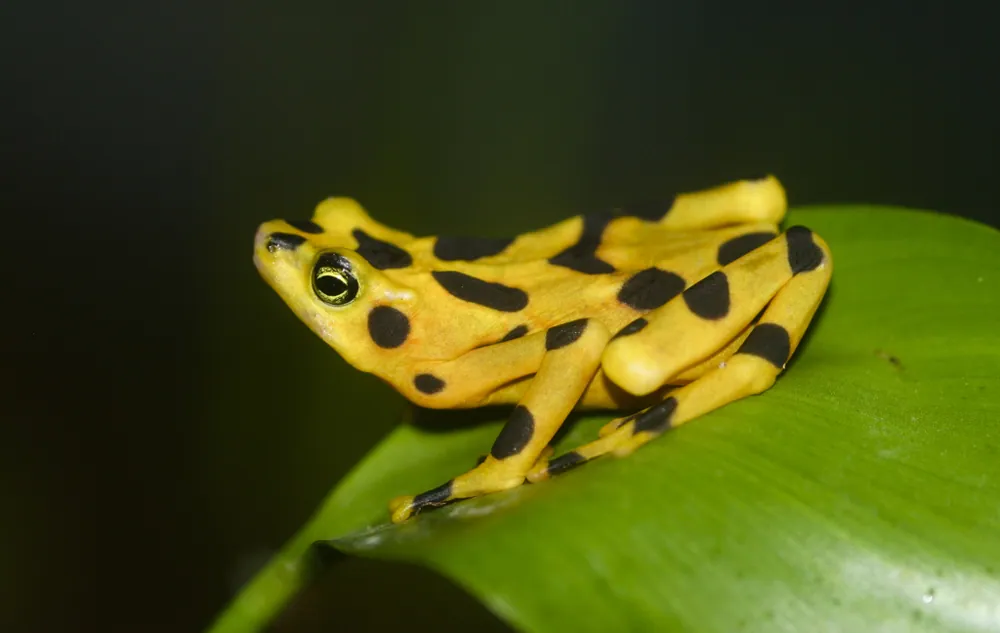
The variable harlequin toad is a small, brightly coloured toad from the forests of Central America. It lives on rocks and in crevices beside streams. It is critically endangered, which means it is at very high risk of disappearing from the wild.1
 Hoe om dit te herken
Gifkrag
Sy vel is giftig. Dit is gevaarlik om aan te raak, te lek of te eet.
Wat doen sy gif as jy daaraan raak of dit eet?
This animal is poisonous rather than venomous, so it does not bite or sting. Its skin contains tetrodotoxin, a potent neurotoxin (a poison that attacks the nerves).1
Hoe gevaarlik is dit vir mense?
Gevaar vir mense: PynlikDit kan regtig seermaak, maar dit is amper nooit ernstig nie.Wat doen dit as dit bang is?
Its bright, conspicuous colours warn predators that its skin is toxic.1
 As iemand daaraan geraak of dit geëet het
- As iemand aan een geraak het: was die hande goed en moenie aan die oë of mond raak nie. As 'n kind of troeteldier een gelek of geëet het: bel 'n gifsentrum of jou noodnommer.
Bel altyd eers jou noodnommer (112, 000, 911). Dit is algemene noodhulpraad, nie mediese advies nie. Noodhulp-basiese beginsels
 Bly veilig
- Moet nooit aan 'n wilde dier raak, dit vang of terg nie, selfs nie 'n kleintjie nie, en selfs nie as dit lyk of dit slaap of dood is nie.
- Gee dit spasie. As jy een raakloop, bly kalm, stap stadig terug en laat dit sy eie pad gaan.
- As jy daaraan geraak of dit geëet het: moenie jou oë of mond vryf nie, was jou hande en kry mediese hulp.
Dit is nie uit om jou te kry nie. Sy gif is net daar sodat niks dit eet nie. Meer oor veilig bly
Waar in die wêreld?
Hoe groot is dit?
Hoe lank is dit?
 omtrent so lank soos 'n skuifspeld
 kan 100 meter in 180 sekondes aflê (die vinnigste mens het 9,6 nodig)
Hoe groot is Variable harlequin toad in vergelyking met JOU?
Net wiskunde in jou blaaier. Niks word gestoor of enige plek heen gestuur nie.
Hoe vinnig is dit?


Feite
Its only known predator is a parasitic fly, Notochaeta bufonivora. The fly lays larvae on the frog's thigh, and the larvae burrow inside and eat the frog from within.1
A census between 1990 and 1992 near Monteverde, Costa Rica, found zero individuals where the population had once peaked at 751 adults.1
By 1996 it was believed to be extinct throughout Costa Rica, but a 2019 assessment found two subpopulations in the country.1
It was rediscovered near Quepos, Costa Rica, in 2003.1
The chytrid fungus Batrachochytrium dendrobatidis can spread between individuals through shed skin cells and harms the skin, which affects breathing and the balance of water and salts in the body.1
In March 2021 the species was bred in captivity outside Panama for the first time.1
Waar die feite vandaan kom
- Atelopus varius (Wikipedia (CC BY-SA 4.0))
- Atelopus varius (iNaturalist): name en klassifikasie.
- Venom Wiki: die gevaarvlak, die tipiese grootte en die spoedskatting is ons eie. Kyk hoe ons dit uitwerk: Hoe ons gevaar gradeer.
Elke feit op hierdie bladsy het 'n nommer wat na sy bron wys. As ons iets verkeerd het, jammer, ons is dierfanatici, nie 'n wetenskaplike joernaal nie. Laat weet ons by [email protected] en ons maak dit reg.
 Die skerpioen is honger! Venom Wiki is 'n eenmanprojek: gratis, sonder advertensies en sonder spoorsnyers. 'n Klein fooitjie help om dit aanlyn te hou.Voer die skerpioen
Meer uit dieselfde groep: Gifpaddas, skurwepaddas & salamanders
 Cane toadGifpaddas, skurwepaddas & salamandersMoet 'n dokter sienMoenie aanraak nie
 Strawberry poison-dart frogGifpaddas, skurwepaddas & salamandersMaak net seerMoenie aanraak nie
 California newtGifpaddas, skurwepaddas & salamandersKan doodmaakMoenie aanraak nie
 Rough-skinned newtGifpaddas, skurwepaddas & salamandersKan doodmaakMoenie aanraak nie
 Colorado River toadGifpaddas, skurwepaddas & salamandersMoet 'n dokter sienMoenie aanraak nie
 Panamanian golden frogGifpaddas, skurwepaddas & salamandersMoet 'n dokter sienMoenie aanraak nie
 Terciopelo
 Eastern coral snake
 Eastern diamondback rattlesnake
 Eyelash viper
 Timber rattlesnake
 Western diamondback rattlesnake