
 Afrika
 Asië
Asië Europa
 Suid-Amerika
 Australië & Oseanië
 Antarktika
 Stille Oseaan
 Atlantiese Oseaan
 Indiese Oseaan
 Arktiese Oseaan
 Middellandse See
 Rooi See
 Karibiese See
 Koraalsee
 Suid-Chinese See
 Filippynse See
 Andamansee
 Noordsee
 Timorsee & Arafurasee
 Baai van Bengale
 Golf van Kalifornië
White-marked tussock moth
 Brandhare
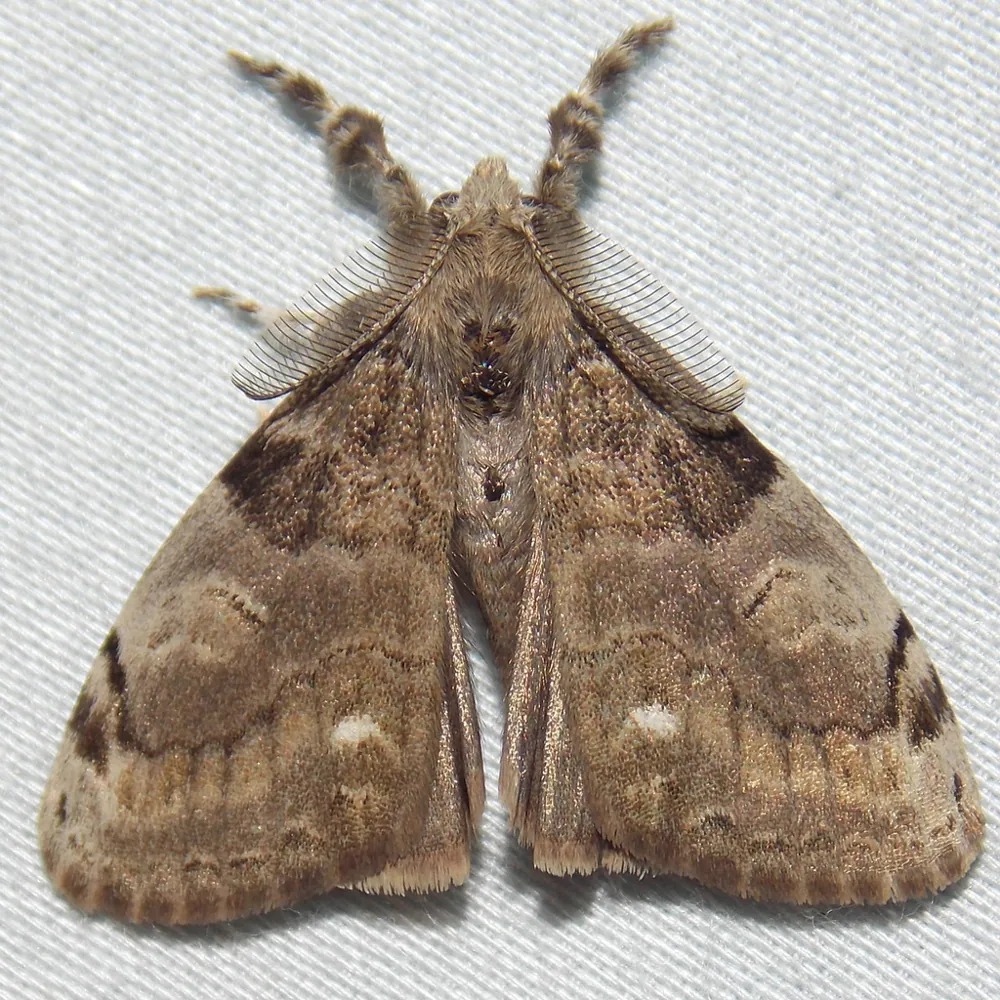
The white-marked tussock moth is a moth whose caterpillar is brightly coloured and covered in hairs. It is very common in late summer in eastern North America, and its hairs can cause an allergic reaction in many people who touch them.1

 Hoe om dit te herken
- Caterpillar has a bright red head and yellow or white stripes on the body, with a black stripe along the middle of the back1
- Caterpillar has bright red glands at the hind end of the back and four white, toothbrush-like tufts standing out from the back1
- Caterpillar has a grey-brown hair pencil at its hind end1
- Adult males are grey with wavy black lines and a white spot on the forewings1
- Adult males have very feathery antennae; females have reduced wings and stay near their cocoon1
Word dikwels verwar met: The vapourer (Orgyia antiqua) is similar to the adult male but is a rusty colour rather than grey.1
Gifkrag
Piepklein haartjies of borsels breek in die vel af en brand.
Hoe gevaarlik is dit vir mense?
Gevaar vir mense: LigSoos 'n bysteek of minder. Basies onskadelik vir mense.Touching the hairs of the caterpillar sets off an allergic reaction in many humans.1
Wat doen dit as dit bang is?
The caterpillar has bright red defensive glands on the hind end of its back, and its hairs can cause an allergic reaction if touched.1
 As jy aan sy hare raak
- Vir ruspe-brandhare: lig hulle af met kleefband en was dan die vel. Moenie vryf nie.
- Vir byte: was en koel af. Kry mediese hulp as die persoon sleg voel of maklik bloei.
Bel altyd eers jou noodnommer (112, 000, 911). Dit is algemene noodhulpraad, nie mediese advies nie. Noodhulp-basiese beginsels
 Bly veilig
- Moet nooit aan 'n wilde dier raak, dit vang of terg nie, selfs nie 'n kleintjie nie, en selfs nie as dit lyk of dit slaap of dood is nie.
- Gee dit spasie. As jy een raakloop, bly kalm, stap stadig terug en laat dit sy eie pad gaan.
- As jy aan sy hare raak: bly kalm, bly stil, bel jou noodnommer (112, 000, 911) of kom vinnig by 'n hospitaal uit. Onthou hoe dit gelyk het, 'n foto help.
Dit is nie uit om jou te kry nie. Dit gebruik sy gif om kos te vang of om homself te beskerm, en kruip baie eerder weg. Meer oor veilig bly
Waar in die wêreld?
Hoe groot is dit?
Hoe lank is dit?
 omtrent so lank soos 'n skuifspeld
 stadiger as 'n tuinslak
Hoe groot is White-marked tussock moth in vergelyking met JOU?
Net wiskunde in jou blaaier. Niks word gestoor of enige plek heen gestuur nie.
Hoe vinnig is dit?

Feite
The four white tufts on the caterpillar's back may mimic the cocoons of parasitic wasps.1
Large caterpillars are mostly eaten by birds, while small caterpillars mostly disappear while dispersing.1
The fungus Entomophaga maimaiga was introduced to North America to control the spongy moth, and it also infects this species.1
There are two or more generations each year in eastern North America, and the eggs overwinter.1
Waar die feite vandaan kom
- Orgyia leucostigma (Wikipedia (CC BY-SA 4.0))
- Orgyia leucostigma (iNaturalist): name en klassifikasie.
- Venom Wiki: die gevaarvlak, die tipiese grootte en die spoedskatting is ons eie. Kyk hoe ons dit uitwerk: Hoe ons gevaar gradeer.
Elke feit op hierdie bladsy het 'n nommer wat na sy bron wys. As ons iets verkeerd het, jammer, ons is dierfanatici, nie 'n wetenskaplike joernaal nie. Laat weet ons by [email protected] en ons maak dit reg.
 Die skerpioen is honger! Venom Wiki is 'n eenmanprojek: gratis, sonder advertensies en sonder spoorsnyers. 'n Klein fooitjie help om dit aanlyn te hou.Voer die skerpioen
Meer uit dieselfde groep: Ruspes & goggas
 Giant water bugRuspes & goggasMaak net seer
 Puss caterpillarRuspes & goggasMaak net seerMoenie aanraak nie
 Saddleback caterpillarRuspes & goggasMaak net seerMoenie aanraak nie
 Wheel bugRuspes & goggasMaak net seer
 Giant vinegaroonRuspes & goggasOnskadelik
 Rhodnius kissing bugRuspes & goggasMoet 'n dokter sien
 Terciopelo
 Eastern coral snake
 Eastern diamondback rattlesnake
 Eyelash viper
 Timber rattlesnake
 Western diamondback rattlesnake