
 አፍሪካ
አፍሪካ እስያ
እስያ አውሮፓ
አውሮፓ ደቡብ አሜሪካ
 አውስትራሊያ እና ኦሺኒያ
 አንታርክቲካ
 ፓስፊክ ውቅያኖስ
 አትላንቲክ ውቅያኖስ
 ሕንድ ውቅያኖስ
 አርክቲክ ውቅያኖስ
 ሜዲትራኒያን ባሕር
 ቀይ ባሕር
 ካሪቢያን ባሕር
 ኮራል ባሕር
 የደቡብ ቻይና ባሕር
 የፊሊፒንስ ባሕር
 አንዳማን ባሕር
 ሰሜን ባሕር
 ቲሞር እና አራፉራ ባሕር
 የቤንጋል ባሕረ ሰላጤ
 የካሊፎርኒያ ባሕረ ሰላጤ
Katipo
 ንክሻዎች
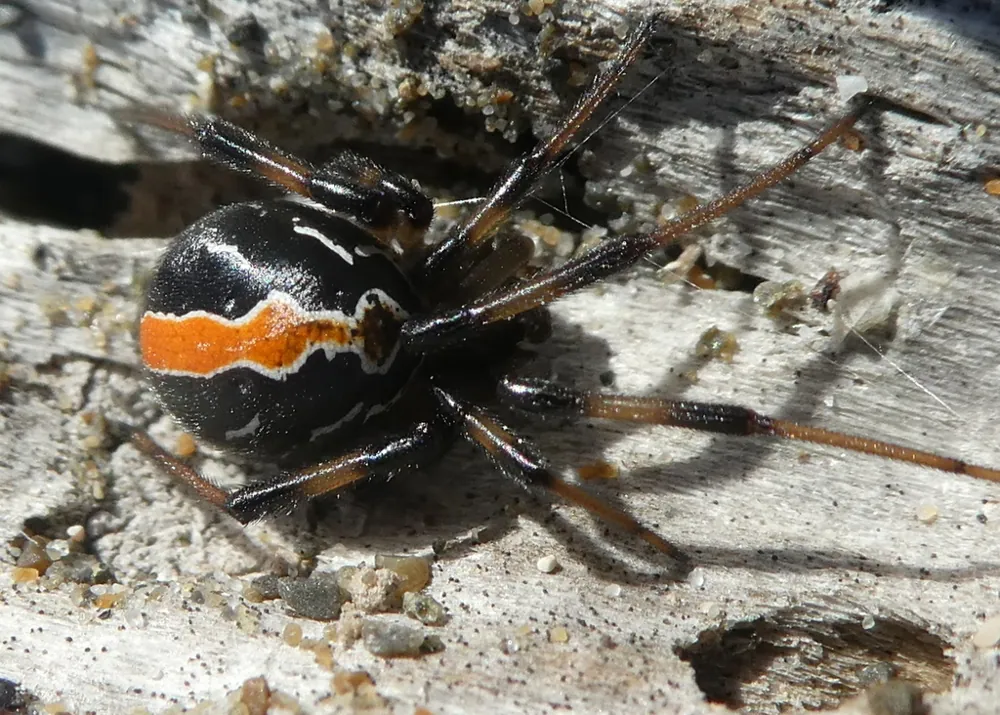
ንክሻዎችThe katipō is a cobweb spider found only in New Zealand, where it lives in coastal sand dunes. It is closely related to the Australian redback spider. Its bite is venomous to people, but bites are rare.1
 እንዴት እንደምታውቀው
- Adult females have a body length of 8–10 mm (about 0.3–0.4 in).1
- The red katipō, found in the South Island and lower North Island, has a large black, shiny abdomen with a white-bordered orange or red stripe on top, and a red hourglass-shaped marking underneath.1
- The black katipō, found in the upper North Island, has no upper red or orange stripe and is somewhat lighter in colour.1
- Males are 4–5 mm long, white with black stripes and red hourglass-shaped markings.1
ብዙ ጊዜ የሚምታታበት፦ Steatoda species, which share the same habitat, are very similar and are called "false katipō" in New Zealand. The katipō has a less shiny, more tapered abdomen, and its side eyes are further apart. It is also similar to the redback, but the katipō has only short hair-like spines on its abdomen, while the redback has a mix of long and short ones.1
የመርዝ ኃይል
ሲነክስ መርዙ በክራንቻዎቹ ወይም በጥርሶቹ በኩል ይወጣል።
መርዙ (ሲነክስ ወይም ሲነድፍ) ምን ያደርጋል?
The bite can cause latrodectism, a toxic syndrome that affects the nerves and body. Symptoms include extreme pain and, potentially, high blood pressure (hypertension) or seizures.1
ለሰዎች ምን ያህል አደገኛ ነው?
ለሰዎች ያለው አደጋ: ከባድንክሻው ሐኪም ያስፈልገዋል። ሞት በጣም አልፎ አልፎ ነው።Katipō are venomous to humans, but bites are described as rare. Serious symptoms are possible, including extreme pain, high blood pressure and seizures.1
 የምስራች፦ ሐኪሞች ለዚህ መድኃኒት (ፀረ-መርዝ) ወይም ሕክምና አላቸው።1
 ቢነክስ
ቢነክስ
- ንክሻውን እጠብ እና ለሕመሙ የበረዶ ከረጢት አድርግበት። ሕመሙ ኃይለኛ ከሆነ፣ ከተሰራጨ ወይም ሰውየው ጤና ካልተሰማው የሕክምና እርዳታ አግኝ።
ሁልጊዜ መጀመሪያ የአደጋ ጊዜ ቁጥርህን ደውል (112፣ 000፣ 911)። ይህ አጠቃላይ የመጀመሪያ እርዳታ መመሪያ ነው፣ የሕክምና ምክር አይደለም። የመጀመሪያ እርዳታ መሠረታዊ ነገሮች
 ደህንነትህን ጠብቅ
- የዱር እንስሳን በፍጹም አትንካ፣ አትያዝ ወይም አታበሳጭ፣ ትንሽ ቢሆንም፣ ተኝቶ ወይም ሞቶ ቢመስልም።
- ቦታ ስጠው። ካገኘኸው ተረጋጋ፣ ቀስ ብለህ ወደ ኋላ ተመለስ እና በራሱ መንገድ እንዲሄድ ተወው።
- አንዱ ቢነክስህ፦ ተረጋጋ፣ ሳትንቀሳቀስ ቆይ፣ የአደጋ ጊዜ ቁጥርህን (112፣ 000፣ 911) ደውል ወይም በፍጥነት ወደ ሆስፒታል ሂድ። ምን እንደሚመስል አስታውስ፣ ፎቶ ይረዳል።
አንተን ለማጥቃት እየፈለገ አይደለም። መርዙን የሚጠቀመው ምግብ ለመያዝ ወይም ራሱን ለመከላከል ነው፣ እና መደበቅን በጣም ይመርጣል። ስለ ደህንነት ተጨማሪ
ምን ያህል ትልቅ ነው?
ርዝመቱ ምን ያህል ነው?
 በጥፍርህ ላይ ሊቀመጥ የሚችል ያህል ትንሽ
Katipo ከአንተ ጋር ሲነጻጸር ምን ያህል ትልቅ ነው?
በአሳሽህ ውስጥ የሚሠራ ሂሳብ ብቻ ነው። ምንም ነገር አይቀመጥም ወይም ወደ የትም አይላክም።
ምን ያህል ፈጣን ነው?


እውነታዎች
In one 24-hour study of young spiders, 28% left the web by ballooning, carried by air currents.1
Katipō is one of the few Māori words that refers to a specific species of spider.1
The female does not usually eat the male after mating, unlike some other widow spiders.1
Females cover their egg sacs with silk and sand, which partly hides them in the web.1
The katipō is found only in New Zealand.1
ተረት አፍራሽ
ተረት፦ The katipō is just a form of the redback spider.
እውነት፦ The katipō is genetically and physically distinct from the redback, even though the two are closely related. It was once thought to be a subspecies of the redback.1
ለመርዝ ባለሙያዎች
- ሳይንሳዊ ስም
- Latrodectus katipo
- ቡድን
- ሸረሪቶች
- ቤተሰብ
- Theridiidae2
- ቅደም ተከተል
- Araneae
- አህጉራት
- አውስትራሊያ እና ኦሺኒያ
- ሕፃናት
- The female lays five or six egg sacs in November or December, with about 70 to 90 eggs in each. The young hatch after 20–25 days and leave the egg sac in January and February.1
- በዱር ውስጥ ያለበት ሁኔታ
- In serious decline (New Zealand Threat Classification System)1
- ለሰዎች ያለው አደጋ
- 3 / 5: ከባድ3
እውነታዎቹ ከየት ይመጣሉ
- Katipō (Wikipedia (CC BY-SA 4.0))
- Latrodectus katipo (iNaturalist): ስሞች እና ምደባ።
- Venom Wiki: የአደጋ ደረጃው፣ የተለመደው መጠን እና የፍጥነት ግምቱ የራሳችን ናቸው። እንዴት እንደምናሰላቸው እይ፦ አደጋን እንዴት እንደምንለካ.
በዚህ ገጽ ላይ ያለ እያንዳንዱ እውነታ ወደ ምንጩ የሚጠቁም ቁጥር አለው። አንድ ነገር ከተሳሳትን፣ ይቅርታ፣ እኛ የእንስሳት አፍቃሪዎች ነን እንጂ የሳይንስ መጽሔት አይደለንም። በ[email protected] ንገረን፣ እናስተካክለዋለን።
 ጊንጡ ርቦታል! Venom Wiki የአንድ ሰው ፕሮጀክት ነው፦ ነፃ፣ ያለ ማስታወቂያ እና ያለ መከታተያ። ትንሽ ጉርሻ በመስመር ላይ እንዲቆይ ይረዳዋል።ጊንጡን መግብ
 Redback spider
 White-tailed spider
 Peacock spider
 Badge huntsman spider
 Black house spider
 Eastern white-tailed spider
 Coastal taipan
 Common death adder
 Eastern brown snake
 የውስጥ ታይፓን
 Sydney funnel-web spider
 ነብር እባብ