
 أفريقيا
 آسيا
آسيا أوروبا
 أمريكا الجنوبية
 أستراليا وأوقيانوسيا
 القارة القطبية الجنوبية
 المحيط الهادئ
 المحيط الأطلسي
 المحيط الهندي
 المحيط المتجمد الشمالي
 البحر الأبيض المتوسط
 البحر الأحمر
 البحر الكاريبي
 بحر المرجان
 بحر الصين الجنوبي
 بحر الفلبين
 بحر أندامان
 بحر الشمال
 بحر تيمور وبحر أرافورا
 خليج البنغال
 خليج كاليفورنيا
By-the-wind sailor
 مجسّات لاسعة
The by-the-wind sailor is a small, deep blue animal that floats on the surface of the open ocean. It is not a single creature but a colony of tiny linked animals, and it moves by catching the wind with a small stiff sail. Its stinging tentacles are generally harmless to people, but they can irritate the skin.1

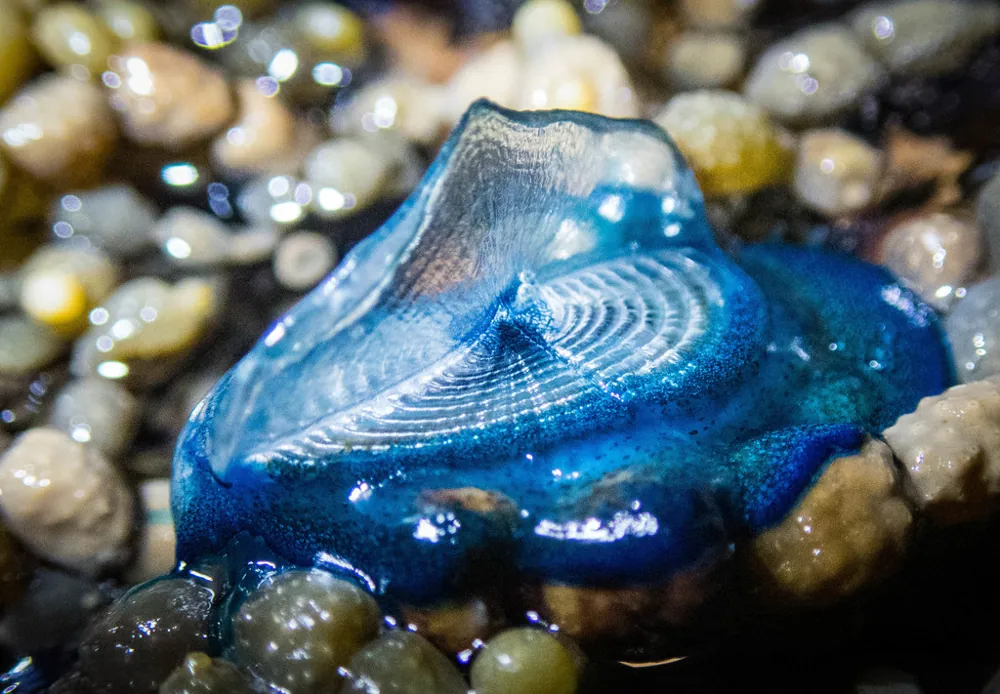
 كيف تتعرف عليه
قوة السم
آلاف الخلايا اللاسعة الصغيرة تنطلق عندما يلمسها شيء.
ماذا يفعل سمه؟
Its nematocysts contain toxins that are effective against its prey, which are mostly plankton. The nematocysts are relatively benign to humans, but each person may respond differently to the toxin. Contact may cause irritation to exposed skin.1
ما مدى خطورته على الناس؟
الخطر على الناس: خفيفمثل لسعة نحلة أو أقل. غير مؤذٍ للناس تقريبًا.It is relatively harmless to humans. Its main effect is possible skin irritation after contact. Mass strandings can leave large numbers of dying and rotting animals on beaches.1
 إذا لسع
- اخرج من الماء وانزع أي مجسّات عالقة (بقفازات أو قطعة قماش).
- لقناديل البحر الصندوقية الاستوائية: اسكب الخل على اللسعات 30 ثانية على الأقل، واطلب المساعدة، وكن مستعدًا لإجراء الإنعاش القلبي الرئوي. لقناديل الرجل البرتغالي المحارب ومعظم الأنواع الأخرى: اشطف بماء البحر، ثم بالماء الساخن لتخفيف الألم.
اتصل دائمًا برقم الطوارئ أولًا (112، 000، 911). هذه إرشادات إسعافات أولية عامة، وليست نصيحة طبية. أساسيات الإسعافات الأولية
 ابقَ آمنًا
- لا تلمس حيوانًا بريًا أبدًا ولا تمسكه ولا تضايقه، حتى لو كان صغيرًا، وحتى لو بدا نائمًا أو ميتًا.
- اترك له مساحة. إذا قابلته، فابقَ هادئًا وتراجع ببطء ودعه يمضي في طريقه.
- إذا لسعك: ابقَ هادئًا، ولا تتحرك، واتصل برقم الطوارئ (112، 000، 911) أو اذهب إلى المستشفى بسرعة. تذكّر شكله، فالصورة تساعد.
إنه لا يطاردك. يستخدم سمه لصيد طعامه أو لحماية نفسه، ويفضّل كثيرًا أن يختبئ. المزيد عن البقاء آمنًا
أين في العالم؟
ما حجمه؟
ما طوله؟
 بطول 2 قطعة بناء لعبة في صف
 يمكنه سباحة طول مسبح كبير (50 م) في 180 ثانية
ما حجم By-the-wind sailor مقارنة بك؟
مجرد حسابات في متصفحك. لا يُحفظ شيء ولا يُرسل إلى أي مكان.
ما سرعته؟

معلومات
Its floating colonies are mirror images of each other, either 'left-handed' or 'right-handed', and this affects where they drift. In the northern Pacific, one form tends to drift to North America and the other to eastern Asia, such as Japan.1
Each blue 'animal' with a sail is really a colony of linked polyps that share food through a canal system.1
Each colony is either all male or all female.1
Its sail is not a fin. It works like a sail, so the animal tends to drift downwind at a small angle to the wind.1
Its tiny jellyfish carry zooxanthellae, single-celled organisms that use sunlight to provide energy, a feature also found in corals.1
It has no means of moving other than its sail, so it depends on prevailing winds, and mass strandings on beaches happen in many parts of the world.1
كاشف الخرافات
الخرافة: Each blue sail is a single, simple animal.
الحقيقة: Each apparent individual is a colony of many connected polyps that share food and divide the work between feeding, reproductive and protective polyps.1
لخبراء السموم
- الاسم العلمي
- Velella velella
- المجموعة
- قناديل البحر واللاسعات البحرية
- العائلة
- Porpitidae2
- الترتيب
- Anthoathecata
- القارات
- المحيط الهادئ, المحيط الأطلسي, المحيط الهندي, البحر الأبيض المتوسط, المحيط الجنوبي, القارة القطبية الجنوبية, المحيطات
- الصغار
- Each colony's feeding polyps (gonozooids) bud off thousands of tiny jellyfish, each about 1 mm wide, over several weeks. These develop into a free-swimming larva called a conaria, which grows into a new floating colony.1
- الخطر على الناس
- 1 / 5: خفيف3
من أين تأتي المعلومات
- Velella (Wikipedia (CC BY-SA 4.0))
- Velella velella (iNaturalist): الأسماء والتصنيف.
- Venom Wiki: مستوى الخطر والحجم المعتاد وتقدير السرعة من عندنا. انظر كيف نحسبها: كيف نقيّم الخطر.
لكل معلومة في هذه الصفحة رقم يشير إلى مصدرها. إذا أخطأنا في شيء، فنحن آسفون، نحن محبّو حيوانات ولسنا مجلة علمية. أخبرنا على [email protected] وسنصلحه.
 العقرب جائع! Venom Wiki مشروع شخص واحد: مجاني، بلا إعلانات وبلا تتبع. بقشيش صغير يساعد على إبقائه متاحًا.أطعم العقرب
المزيد من المجموعة نفسها: قناديل البحر واللاسعات البحرية
 قنديل البحر الصندوقي الأستراليقناديل البحر واللاسعات البحريةقاتللا تلمس
 Irukandji jellyfishقناديل البحر واللاسعات البحريةقد يقتللا تلمس
 Portuguese man o' warقناديل البحر واللاسعات البحريةيحتاج إلى طبيبلا تلمس
 Lion's mane jellyfishقناديل البحر واللاسعات البحريةيؤلم فقطلا تلمس
 Moon jellyfishقناديل البحر واللاسعات البحريةغير مؤذٍ
 Common kingslayerقناديل البحر واللاسعات البحريةقد يقتللا تلمس
يعيش أيضًا في: المحيط الهادئ
 المخروط الجغرافيالحلزونات المخروطية والأخطبوطاتقاتل
 الأخطبوط الكبير ذو الحلقات الزرقاءالحلزونات المخروطية والأخطبوطاتقاتل
 سمك النفّاخ اليابانيحيوانات أخرى سامة عند اللمس أو الأكلقاتل
 الأخطبوط الجنوبي ذو الحلقات الزرقاءالحلزونات المخروطية والأخطبوطاتقاتل
 Hawksbill sea turtleحيوانات أخرى سامة عند اللمس أو الأكلقد يقتل
 Reef stonefishالأسماك السامةقد يقتللا تلمس