
 أفريقيا
 آسيا
آسيا أوروبا
 أمريكا الجنوبية
 أستراليا وأوقيانوسيا
 القارة القطبية الجنوبية
 المحيط الهادئ
 المحيط الأطلسي
 المحيط الهندي
 المحيط المتجمد الشمالي
 البحر الأبيض المتوسط
 البحر الأحمر
 البحر الكاريبي
 بحر المرجان
 بحر الصين الجنوبي
 بحر الفلبين
 بحر أندامان
 بحر الشمال
 بحر تيمور وبحر أرافورا
 خليج البنغال
 خليج كاليفورنيا
Egg-yolk jellyfish
 مجسّات لاسعة
The egg-yolk jellyfish is a very large jellyfish with a bright yellow centre that looks like a fried egg. It lives in cool seas across most of the world's oceans and is most common in the Northern Pacific. It is special because it can grow very large, and it is one of the few jellyfish that can survive in low-oxygen water.1



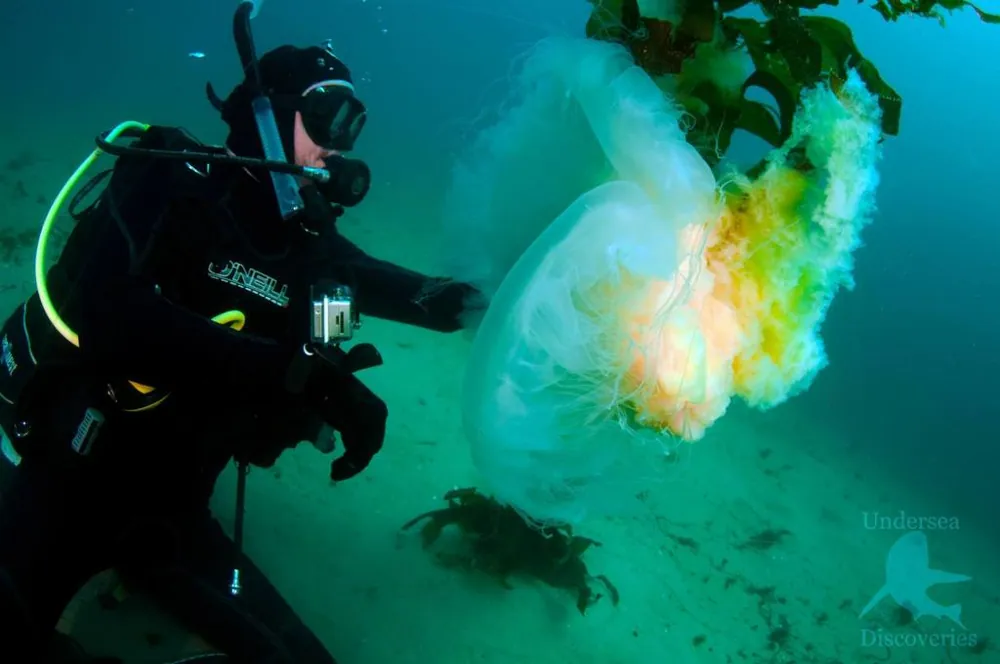
 كيف تتعرف عليه
- A yellow centre that looks like a broken egg yolk, surrounded by opaque white tissue1
- A large bell, sometimes close to 60 cm across1
- 16 clusters of tentacles, each with up to a few dozen tentacles, and each tentacle up to 6 m long1
- Broad, curtain-like oral arms1
- Mostly drifts with the current, with only limited movement1
كثيرًا ما يُخلط بينه وبين: The lion's mane jellyfish (Cyanea capillata) is sometimes confused with this species. The smaller Cotylorhiza tuberculata, which is found mainly in warmer water, especially in the Mediterranean Sea, is also called a fried egg jellyfish.1
قوة السم
آلاف الخلايا اللاسعة الصغيرة تنطلق عندما يلمسها شيء.
ماذا يفعل سمه؟
Its tentacles contain nematocysts, stinging cells that help it catch prey. Its sting is weak, which allows some small animals to ride on its bell and steal food from its arms and tentacles.1
ما مدى خطورته على الناس؟
الخطر على الناس: خفيفمثل لسعة نحلة أو أقل. غير مؤذٍ للناس تقريبًا.Its sting is weak.1
ماذا يفعل عندما يخاف؟
Its tentacles contain nematocysts, which also help protect it from predators.1
 إذا لسع
- اخرج من الماء وانزع أي مجسّات عالقة (بقفازات أو قطعة قماش).
- لقناديل البحر الصندوقية الاستوائية: اسكب الخل على اللسعات 30 ثانية على الأقل، واطلب المساعدة، وكن مستعدًا لإجراء الإنعاش القلبي الرئوي. لقناديل الرجل البرتغالي المحارب ومعظم الأنواع الأخرى: اشطف بماء البحر، ثم بالماء الساخن لتخفيف الألم.
اتصل دائمًا برقم الطوارئ أولًا (112، 000، 911). هذه إرشادات إسعافات أولية عامة، وليست نصيحة طبية. أساسيات الإسعافات الأولية
 ابقَ آمنًا
- لا تلمس حيوانًا بريًا أبدًا ولا تمسكه ولا تضايقه، حتى لو كان صغيرًا، وحتى لو بدا نائمًا أو ميتًا.
- اترك له مساحة. إذا قابلته، فابقَ هادئًا وتراجع ببطء ودعه يمضي في طريقه.
- إذا لسعك: ابقَ هادئًا، ولا تتحرك، واتصل برقم الطوارئ (112، 000، 911) أو اذهب إلى المستشفى بسرعة. تذكّر شكله، فالصورة تساعد.
إنه لا يطاردك. يستخدم سمه لصيد طعامه أو لحماية نفسه، ويفضّل كثيرًا أن يختبئ. المزيد عن البقاء آمنًا
ما حجمه؟
ما طوله؟
 بطول 3 موزة متتالية
 بطول 18 قطعة بناء لعبة في صف
 يمكنه سباحة طول مسبح كبير (50 م) في 140 ثانية
ما حجم Egg-yolk jellyfish مقارنة بك؟
مجرد حسابات في متصفحك. لا يُحفظ شيء ولا يُرسل إلى أي مكان.
ما سرعته؟

معلومات
Its tentacles can reach up to 6 m long, which is far longer than its bell.1
It has no gills, lungs or circulatory system. It takes in oxygen through its thin body surface instead.1
The giant deep-sea octopus Haliphron atlanticus clings to this jellyfish and eats its oral arms and stomach.1
It can survive in low-oxygen water for several hours at a time, and it sometimes dives into these zones during the day to avoid competition.1
Small crabs and an amphipod called Hyperia medusarum can live on its bell, and some feed on the parasites that infest the jellyfish.1
لخبراء السموم
- الاسم العلمي
- Phacellophora camtschatica
- المجموعة
- قناديل البحر واللاسعات البحرية
- العائلة
- Phacellophoridae2
- الترتيب
- Semaeostomeae
- القارات
- المحيط الهادئ, المحيطات
- الصغار
- Eggs are fertilised and develop into swimming larvae called planulae. These settle on the seabed and grow into polyps, which later release young jellyfish called ephyrae.1
- الخطر على الناس
- 1 / 5: خفيف3
من أين تأتي المعلومات
- Phacellophora (Wikipedia (CC BY-SA 4.0))
- Phacellophora camtschatica (iNaturalist): الأسماء والتصنيف.
- Venom Wiki: مستوى الخطر والحجم المعتاد وتقدير السرعة من عندنا. انظر كيف نحسبها: كيف نقيّم الخطر.
لكل معلومة في هذه الصفحة رقم يشير إلى مصدرها. إذا أخطأنا في شيء، فنحن آسفون، نحن محبّو حيوانات ولسنا مجلة علمية. أخبرنا على [email protected] وسنصلحه.
 العقرب جائع! Venom Wiki مشروع شخص واحد: مجاني، بلا إعلانات وبلا تتبع. بقشيش صغير يساعد على إبقائه متاحًا.أطعم العقرب
المزيد من المجموعة نفسها: قناديل البحر واللاسعات البحرية
 قنديل البحر الصندوقي الأستراليقناديل البحر واللاسعات البحريةقاتللا تلمس
 Irukandji jellyfishقناديل البحر واللاسعات البحريةقد يقتللا تلمس
 Portuguese man o' warقناديل البحر واللاسعات البحريةيحتاج إلى طبيبلا تلمس
 Lion's mane jellyfishقناديل البحر واللاسعات البحريةيؤلم فقطلا تلمس
 Moon jellyfishقناديل البحر واللاسعات البحريةغير مؤذٍ
 Common kingslayerقناديل البحر واللاسعات البحريةقد يقتللا تلمس
يعيش أيضًا في: المحيط الهادئ
 المخروط الجغرافيالحلزونات المخروطية والأخطبوطاتقاتل
 الأخطبوط الكبير ذو الحلقات الزرقاءالحلزونات المخروطية والأخطبوطاتقاتل
 سمك النفّاخ اليابانيحيوانات أخرى سامة عند اللمس أو الأكلقاتل
 الأخطبوط الجنوبي ذو الحلقات الزرقاءالحلزونات المخروطية والأخطبوطاتقاتل
 Hawksbill sea turtleحيوانات أخرى سامة عند اللمس أو الأكلقد يقتل
 Reef stonefishالأسماك السامةقد يقتللا تلمس