
 Afrika
 Asiya
Asiya Avropa
 Cənubi Amerika
 Avstraliya və Okeaniya
 Antarktida
 Sakit okean
 Atlantik okeanı
 Hind okeanı
 Şimal Buzlu okeanı
 Aralıq dənizi
 Qırmızı dəniz
 Karib dənizi
 Mərcan dənizi
 Cənubi Çin dənizi
 Filippin dənizi
 Andaman dənizi
 Şimal dənizi
 Timor və Arafura dənizləri
 Benqal körfəzi
 Kaliforniya körfəzi
Geography cone
 Sancır
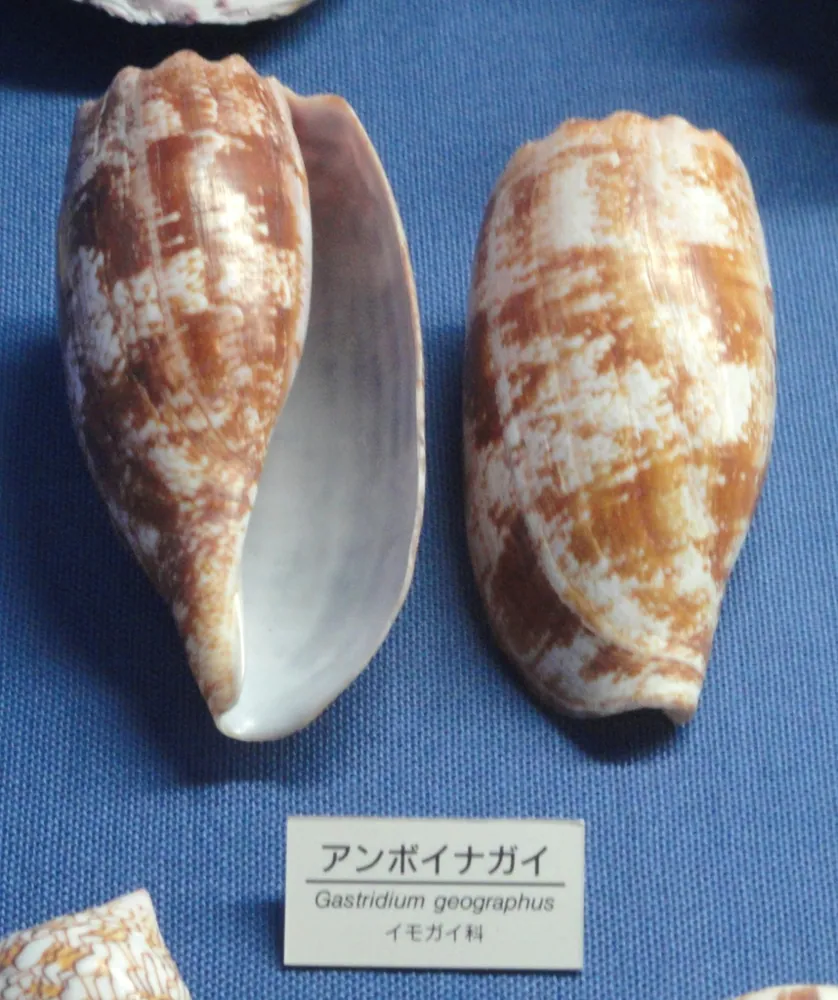
The geography cone is a predatory sea snail that lives on shallow tropical reefs in the Indo-Pacific. It hunts small fish. Its venom is strong enough to kill a person, which makes it one of the most dangerous cone snails.1


 Necə tanımalı
- Broad, thin shell that is cylindrically inflated, usually 10 to 15 cm long1
- Ground colour is pink or violet-white, sometimes reddish1
- Mottled pattern of chestnut or chocolate brown, usually forming two irregular bands1
- Wide pink or violet-white opening and numerous shoulder ridges or spines1
Tez-tez qarışdırılır: Compared with other cone shells of a similar size, the geography cone has a noticeably wider, more convex middle and a flattened spire. Its walls are also thinner and lighter.1
Zəhər gücü
Zəhər iynədən çıxır.
Onun zəhəri nə edir?
Its venom is a complex mix of hundreds of different toxins, delivered through the harpoon-like tooth. It has the most toxic sting known among cone snails. Even the most venomous cone snails take about one to five hours to kill a healthy adult, but medical care must still be prompt.1
İnsanlar üçün nə qədər təhlükəlidir?
İnsanlar üçün təhlükə: ÖlümcülDünyanın ən təhlükəli heyvanlarından biri.There are reports of about 36 human deaths over the past 300 years. Live specimens should be handled with extreme caution.1
Qorxanda nə edir?
Most of the venom's toxic compounds are believed to be used for defence rather than feeding.1
 Sancsa
- There is no antivenom for a cone snail sting. Treatment consists of keeping the victim alive until the symptoms wear off, so prompt medical care is essential.1
- Təzyiqli immobilizasiya: dişlənən yerin üzərinə sıx elastik sarğı sar, sonra sarğını bütün ətraf boyunca yuxarı davam etdir, ətrafa şina qoy və kömək gələnə qədər insanı tamamilə hərəkətsiz saxla.
- Mavi halqalı səkkizayaq və ya konus ilbizi insanın nəfəsini, o hələ ayıq ikən, dayandıra bilər: kömək çağır və təcili yardım işi öz üzərinə götürənə qədər süni tənəffüs verməyə hazır ol.
Həmişə əvvəlcə təcili yardım nömrənə zəng et (112, 000, 911). Bu, ümumi ilk yardım tövsiyəsidir, tibbi məsləhət deyil. İlk yardımın əsasları
 Təhlükəsiz qal
- Vəhşi heyvana heç vaxt toxunma, onu tutma və ya ona sataşma, hətta kiçik olsa belə, hətta yatmış və ya ölü görünsə belə.
- Ona yer ver. Rast gəlsən, sakit ol, yavaşca geri çəkil və qoy öz yolu ilə getsin.
- Biri səni sancsa: sakit ol, hərəkət etmə, təcili yardım nömrənə (112, 000, 911) zəng et və ya tez xəstəxanaya get. Onun necə göründüyünü yadda saxla, şəkil kömək edir.
O, sənin dalınca düşməyib. Zəhərini yem tutmaq və ya özünü qorumaq üçün istifadə edir və gizlənməyi daha çox sevir. Təhlükəsizlik haqqında daha çox
Dünyanın harasında?
Nə qədər böyükdür?
Nə qədər uzundur?
 cərgə ilə düzülmüş 5 oyuncaq kubik uzunluğunda
 bağ ilbizindən yavaş
Geography cone SƏNİNLƏ müqayisədə nə qədər böyükdür?
Sadəcə brauzerində riyaziyyat. Heç nə yadda saxlanmır və heç yerə göndərilmir.
Nə qədər sürətlidir?

Faktlar
Its venom contains a form of insulin, which it uses to stun fish. Once the venom passes through a fish's gills, the fish goes into hypoglycaemic shock (a dangerous drop in blood sugar).1
Apart from the tulip cone snail, no other known living thing is known to use its own biological insulin as a weapon.1
Research shows that some proteins from cone snail venom can be up to 10,000 times more effective than morphine as painkillers, without morphine's addictive properties and side effects.1
Of the venom's 100 to 200 toxic peptides, only 15 to 20 are used for feeding.1
Adult geography cones can fall prey to sea turtles, rays, birds and human shell collectors.1
Mif dağıdan
Mif: The nickname 'cigarette snail' means a sting gives you just enough time to smoke a cigarette before you die.
Həqiqət: This is a gallows humour exaggeration. Even the most venomous cone snails take about one to five hours to kill a healthy human.1
Faktlar haradan gəlir
- Conus geographus (Wikipedia (CC BY-SA 4.0))
- Conus geographus (iNaturalist): adlar və təsnifat.
- Venom Wiki: təhlükə səviyyəsi, tipik ölçü və sürət təxmini bizimdir. Onları necə hesabladığımıza bax: Təhlükəni necə qiymətləndiririk.
Bu səhifədəki hər faktın yanında mənbəyini göstərən nömrə var. Səhv bir şey yazmışıqsa, bağışla, biz elmi jurnal yox, sadəcə heyvan həvəskarlarıyıq. [email protected] ünvanına yaz, düzəldək.
 Əqrəb acdır! Venom Wiki bir nəfərin layihəsidir: pulsuz, reklamsız və izləyicisiz. Kiçik bəxşiş onun onlayn qalmasına kömək edir.Əqrəbi yemlə
Eyni qrupdan daha çox: Konus ilbizləri və səkkizayaqlar
 Greater blue-ringed octopusKonus ilbizləri və səkkizayaqlarÖlümcül
 Southern blue-ringed octopusKonus ilbizləri və səkkizayaqlarÖlümcül
 Blue sea dragonKonus ilbizləri və səkkizayaqlarSadəcə ağrıdır
 Common octopusKonus ilbizləri və səkkizayaqlarZərərsiz
 Giant Pacific octopusKonus ilbizləri və səkkizayaqlarZərərsiz
 Blue-lined octopusKonus ilbizləri və səkkizayaqlarÖlümcül
Həmçinin yaşadığı yerlər: Hind okeanı
 Australian box jellyfishMeduzalar və sancan dəniz canlılarıÖlümcülToxunma
 Hawksbill sea turtleDigər toksik heyvanlarÖldürə bilər
 Irukandji jellyfishMeduzalar və sancan dəniz canlılarıÖldürə bilərToxunma
 Reef stonefishZəhərli balıqlarÖldürə bilərToxunma
 Crown-of-thorns starfishDəniz kirpiləri, dəniz ulduzları və qurdlarHəkim lazımdırToxunma
 Portuguese man o' warMeduzalar və sancan dəniz canlılarıHəkim lazımdırToxunma