
 Афрыка
 Азія
Азія Еўропа
 Паўднёвая Амерыка
 Аўстралія і Акіянія
 Антарктыда
 Ціхі акіян
 Атлантычны акіян
 Індыйскі акіян
 Паўночны Ледавіты акіян
 Міжземнае мора
 Чырвонае мора
 Карыбскае мора
 Каралавае мора
 Паўднёва-Кітайскае мора
 Філіпінскае мора
 Андаманскае мора
 Паўночнае мора
 Тыморскае і Арафурскае моры
 Бенгальскі заліў
 Каліфарнійскі заліў
Katipo
 Укусы
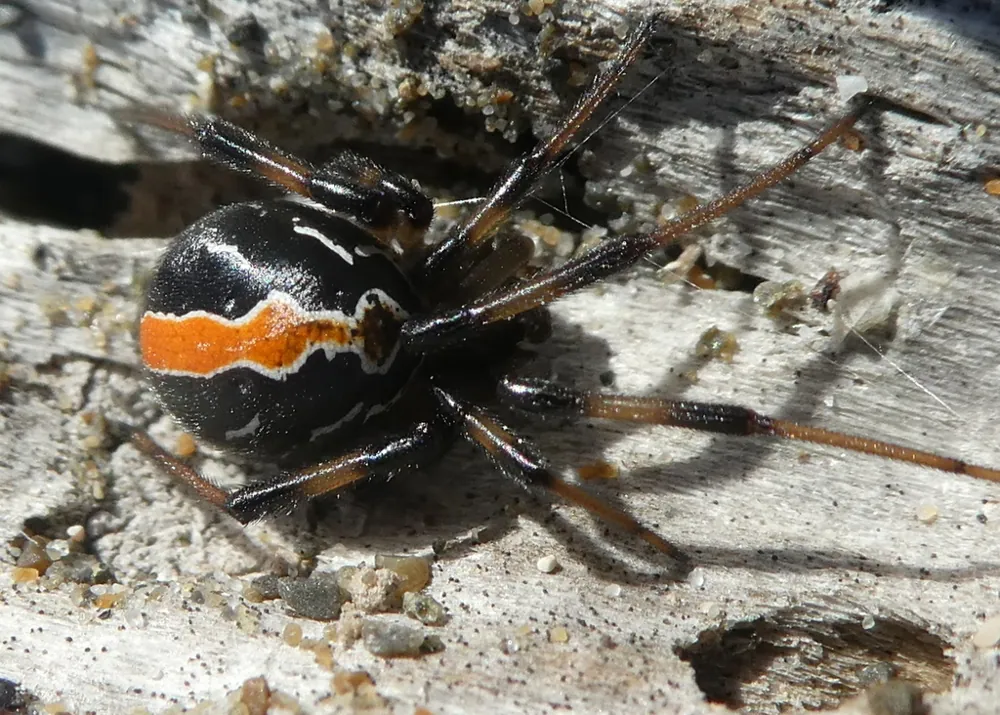
УкусыThe katipō is a cobweb spider found only in New Zealand, where it lives in coastal sand dunes. It is closely related to the Australian redback spider. Its bite is venomous to people, but bites are rare.1


 Як яе пазнаць
- Adult females have a body length of 8–10 mm (about 0.3–0.4 in).1
- The red katipō, found in the South Island and lower North Island, has a large black, shiny abdomen with a white-bordered orange or red stripe on top, and a red hourglass-shaped marking underneath.1
- The black katipō, found in the upper North Island, has no upper red or orange stripe and is somewhat lighter in colour.1
- Males are 4–5 mm long, white with black stripes and red hourglass-shaped markings.1
Часта блытаюць з: Steatoda species, which share the same habitat, are very similar and are called "false katipō" in New Zealand. The katipō has a less shiny, more tapered abdomen, and its side eyes are further apart. It is also similar to the redback, but the katipō has only short hair-like spines on its abdomen, while the redback has a mix of long and short ones.1
Сіла яду
Яд выходзіць праз ікла ці зубы, калі яна кусае.
Што робіць яе яд?
The bite can cause latrodectism, a toxic syndrome that affects the nerves and body. Symptoms include extreme pain and, potentially, high blood pressure (hypertension) or seizures.1
Наколькі яна небяспечная для людзей?
Небяспека для людзей: Сур'ёзна небяспечнаяПры ўкусе патрэбны лекар. Смерці здараюцца вельмі рэдка.Katipō are venomous to humans, but bites are described as rare. Serious symptoms are possible, including extreme pain, high blood pressure and seizures.1
 Добрая навіна: у лекараў ёсць лекі (сыроватка супраць яду) або лячэнне ад гэтага.1
 Калі кусае
- Прамый месца ўкусу і прыкладзі пакет з лёдам ад болю. Звярніся па медыцынскую дапамогу, калі боль моцны, распаўсюджваецца або чалавеку блага.
Заўсёды спачатку тэлефануй на нумар экстраннай службы (112, 000, 911). Гэта агульныя парады па першай дапамозе, а не медыцынская кансультацыя. Асновы першай дапамогі
 Будзь у бяспецы
- Ніколі не чапай, не лаві і не дражні дзікую жывёлу, нават маленькую, і нават калі здаецца, што яна спіць ці мёртвая.
- Трымайся ад яе далей. Калі сустрэнеш такую жывёлу, захоўвай спакой, павольна адыдзі назад і дай ёй пайсці сваёй дарогай.
- Калі такая жывёла ўкусіць цябе: захоўвай спакой, не рухайся, тэлефануй на нумар экстраннай службы (112, 000, 911) або хутка дабірайся да бальніцы. Запомні, як яна выглядала, фота дапаможа.
Яна не палюе на цябе. Яд патрэбны ёй, каб лавіць ежу ці абараняцца, і яна з большай ахвотай схаваецца. Яшчэ пра бяспеку
Якога яна памеру?
Якой яна даўжыні?
 такая маленькая, што памесціцца на тваім пазногці
Katipo і ТЫ: хто большы?
Проста матэматыка ў тваім браўзеры. Нічога не захоўваецца і нікуды не адпраўляецца.
Як хутка яна рухаецца?


Факты
In one 24-hour study of young spiders, 28% left the web by ballooning, carried by air currents.1
Katipō is one of the few Māori words that refers to a specific species of spider.1
The female does not usually eat the male after mating, unlike some other widow spiders.1
Females cover their egg sacs with silk and sand, which partly hides them in the web.1
The katipō is found only in New Zealand.1
Разбуральнік міфаў
Міф: The katipō is just a form of the redback spider.
Праўда: The katipō is genetically and physically distinct from the redback, even though the two are closely related. It was once thought to be a subspecies of the redback.1
Для знаўцаў яду
- Навуковая назва
- Latrodectus katipo
- Група
- Павукі
- Сям'я
- Theridiidae2
- Парадак
- Araneae
- Кантыненты
- Аўстралія і Акіянія
- Дзіцяняты
- The female lays five or six egg sacs in November or December, with about 70 to 90 eggs in each. The young hatch after 20–25 days and leave the egg sac in January and February.1
- Як ёй жывецца ў дзікай прыродзе
- In serious decline (New Zealand Threat Classification System)1
- Небяспека для людзей
- 3 / 5: Сур'ёзна небяспечная3
Адкуль узятыя факты
- Katipō (Wikipedia (CC BY-SA 4.0))
- Latrodectus katipo (iNaturalist): назвы і класіфікацыя.
- Venom Wiki: узровень небяспекі, звычайны памер і прыблізную хуткасць мы ацэньваем самі. Паглядзі, як мы гэта робім: Як мы ацэньваем небяспеку.
У кожнага факта на гэтай старонцы ёсць нумар, які вядзе да яго крыніцы. Калі мы недзе памыліліся, прабач, мы аматары жывёл, а не навуковы часопіс. Напішы нам на [email protected], і мы ўсё выправім.
 Скарпіён галодны! Venom Wiki робіць адзін чалавек: праект бясплатны, без рэкламы і без трэкераў. Невялікія чаявыя дапамагаюць яму працаваць далей.Пакармі скарпіёна
Яшчэ з гэтай групы: Павукі
 Redback spider
 White-tailed spider
 Peacock spider
 Badge huntsman spider
 Black house spider
 Eastern white-tailed spider
Таксама жыве ў: Аўстралія і Акіянія
 Coastal taipanАўстралійскія змеіСмяротна небяспечная
 Common death adderАўстралійскія змеіСмяротна небяспечная
 Eastern brown snakeАўстралійскія змеіСмяротна небяспечная
 Inland taipanАўстралійскія змеіСмяротна небяспечная
 Sydney funnel-web spiderТарантулы і варонкавыя павукіСмяротна небяспечная
 Tiger snakeАўстралійскія змеіСмяротна небяспечная