
 Афрыка
 Азія
Азія Еўропа
 Паўднёвая Амерыка
 Аўстралія і Акіянія
 Антарктыда
 Ціхі акіян
 Атлантычны акіян
 Індыйскі акіян
 Паўночны Ледавіты акіян
 Міжземнае мора
 Чырвонае мора
 Карыбскае мора
 Каралавае мора
 Паўднёва-Кітайскае мора
 Філіпінскае мора
 Андаманскае мора
 Паўночнае мора
 Тыморскае і Арафурскае моры
 Бенгальскі заліў
 Каліфарнійскі заліў
Peruvian giant centipede
 Укусы
УкусыThe Peruvian giant centipede is the largest centipede species in the world, growing longer than 30 centimetres. It lives in northern South America and on several Caribbean islands, mostly in rainforests and dry forests. It hunts a wide range of animals, from insects to bats, and its venom is strong enough to stop small mammals.1



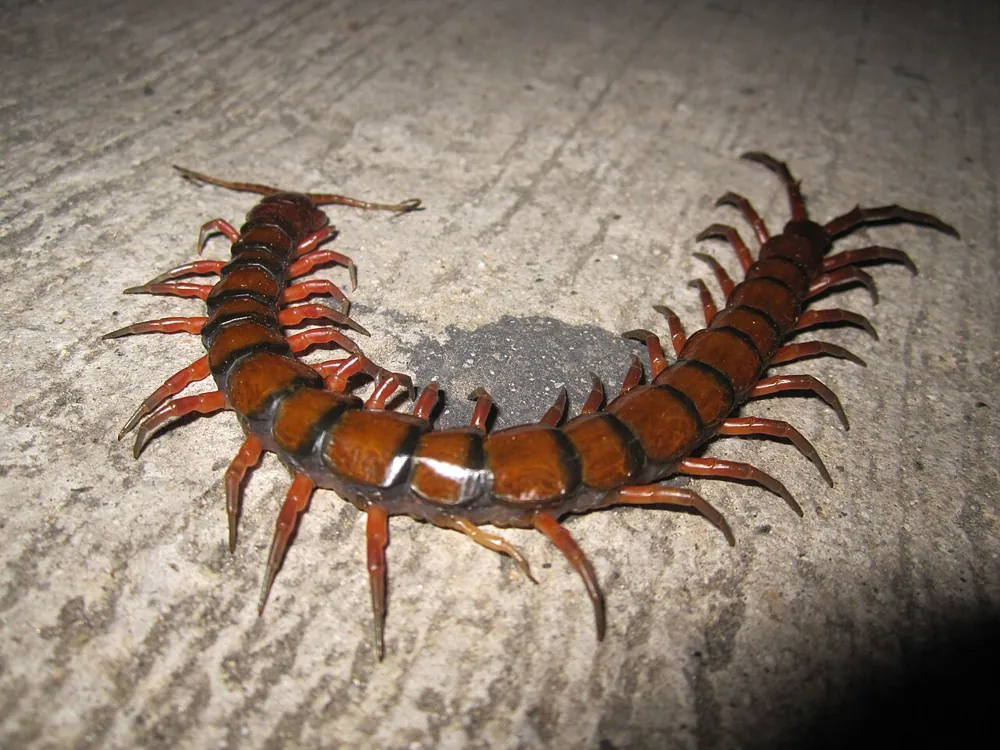
 Як яе пазнаць
Сіла яду
Яд выходзіць праз ікла ці зубы, калі яна кусае.
Што робіць яе яд?
Its venom is strong enough to immobilise small mammals it hunts, such as bats and mice. The venom is produced in a modified pair of legs placed under the head.1
Наколькі яна небяспечная для людзей?
Небяспека для людзей: Сур'ёзна небяспечнаяПры ўкусе патрэбны лекар. Смерці здараюцца вельмі рэдка.At least one human death has been linked to its venom. In 2014, a four-year-old child in Venezuela died after being bitten by a giant centipede hidden inside an open soda can. Researchers at Universidad de Oriente later confirmed the animal was this species.1
 Калі кусае
- Прамый месца ўкусу, ахалодзі яго або патрымай у цёплай вадзе ад болю і звярніся па медыцынскую дапамогу, калі стане горш.
Заўсёды спачатку тэлефануй на нумар экстраннай службы (112, 000, 911). Гэта агульныя парады па першай дапамозе, а не медыцынская кансультацыя. Асновы першай дапамогі
 Будзь у бяспецы
- Ніколі не чапай, не лаві і не дражні дзікую жывёлу, нават маленькую, і нават калі здаецца, што яна спіць ці мёртвая.
- Трымайся ад яе далей. Калі сустрэнеш такую жывёлу, захоўвай спакой, павольна адыдзі назад і дай ёй пайсці сваёй дарогай.
- Калі такая жывёла ўкусіць цябе: захоўвай спакой, не рухайся, тэлефануй на нумар экстраннай службы (112, 000, 911) або хутка дабірайся да бальніцы. Запомні, як яна выглядала, фота дапаможа.
Яна не палюе на цябе. Яд патрэбны ёй, каб лавіць ежу ці абараняцца, і яна з большай ахвотай схаваецца. Яшчэ пра бяспеку
Якога яна памеру?
Якой яна даўжыні?
 даўжынёй як 9 цаглінак канструктара ў рад
 магла б прабегчы 100 метраў за 140 с (самаму хуткаму чалавеку трэба 9,6 с)
Peruvian giant centipede і ТЫ: хто большы?
Проста матэматыка ў тваім браўзеры. Нічога не захоўваецца і нікуды не адпраўляецца.
Як хутка яна рухаецца?


Факты
Large individuals have a clever way of catching bats: they climb cave ceilings and hold their heavier prey with only a few legs attached to the ceiling.1
It is the largest centipede species in the world, with a length exceeding 30 centimetres.1
It can overpower animals as large as tarantulas, and it can also kill snakes up to 25 centimetres long.1
Its venom comes from a modified pair of legs placed just underneath its head.1
It climbs readily and will use hiding spaces under tree bark.1
Its natural predators include large birds, spiders, and mammals that hunt arthropods, such as the coati, kinkajou and opossum.1
Адкуль узятыя факты
- Scolopendra gigantea (Wikipedia (CC BY-SA 4.0))
- Scolopendra gigantea (iNaturalist): назвы і класіфікацыя.
- Venom Wiki: узровень небяспекі, звычайны памер і прыблізную хуткасць мы ацэньваем самі. Паглядзі, як мы гэта робім: Як мы ацэньваем небяспеку.
У кожнага факта на гэтай старонцы ёсць нумар, які вядзе да яго крыніцы. Калі мы недзе памыліліся, прабач, мы аматары жывёл, а не навуковы часопіс. Напішы нам на [email protected], і мы ўсё выправім.
 Скарпіён галодны! Venom Wiki робіць адзін чалавек: праект бясплатны, без рэкламы і без трэкераў. Невялікія чаявыя дапамагаюць яму працаваць далей.Пакармі скарпіёна
Яшчэ з гэтай групы: Мнаганожкі
 Amazonian giant green-horned centipedeМнаганожкіПатрэбны лекар
 Galapagos centipedeМнаганожкіПатрэбны лекар
 Chinese red-headed centipedeМнаганожкіПатрэбны лекар
 Giant Australian centipedeМнаганожкіПроста балюча
 Giant desert centipedeМнаганожкіПроста балюча
 Mediterranean banded centipedeМнаганожкіПроста балюча
Таксама жыве ў: Паўднёвая Амерыка
 Golden poison frogАтрутныя жабы, рапухі і трытоныСмяротна небяспечнаяНе чапаць
 TerciopeloЯмкагаловыя змеіСмяротна небяспечная
 Brazilian wandering spiderПавукіМожа забіць
 Eyelash viperЯмкагаловыя змеіМожа забіць
 Golden lanceheadЯмкагаловыя змеіМожа забіць
 South American bushmasterЯмкагаловыя змеіМожа забіць