
 Àfrica
 Àsia
Àsia Europa
 Amèrica del Sud
 Austràlia i Oceania
 Antàrtida
 Oceà Pacífic
 Oceà Atlàntic
 Oceà Índic
 Oceà Àrtic
 Mar Mediterrània
 Mar Roja
 Mar Carib
 Mar del Corall
 Mar de la Xina Meridional
 Mar de les Filipines
 Mar d'Andaman
 Mar del Nord
 Mar de Timor i d'Arafura
 Golf de Bengala
 Golf de Califòrnia
Cane toad
 Toxines a la pellMenja: Una mica de totTòxic, no verinós
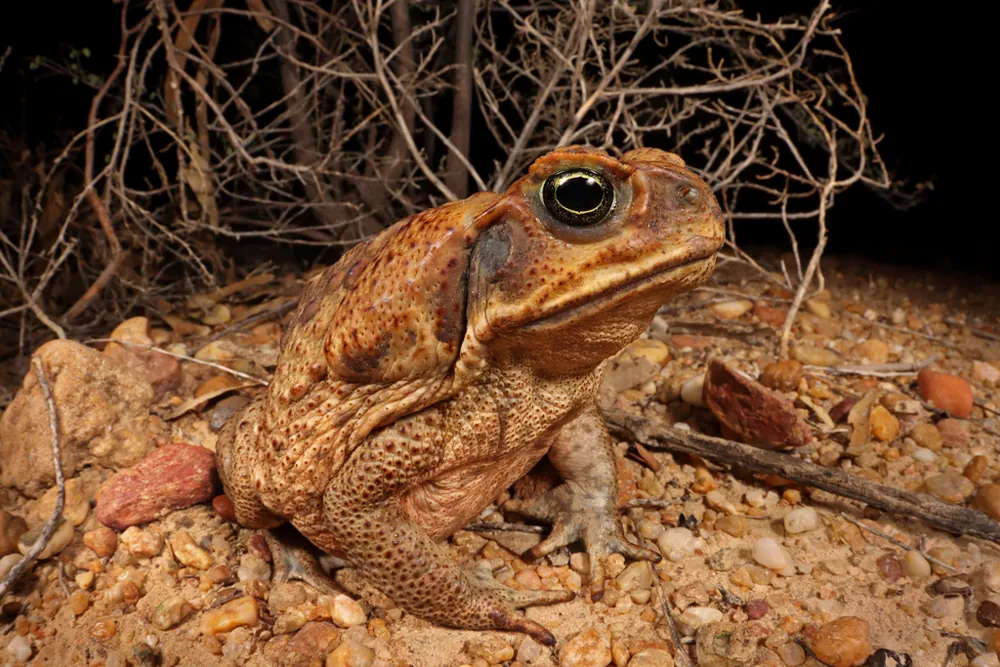
The cane toad is a large toad that is very poisonous to many animals. It is native to South and mainland Central America, but people have moved it to islands in Oceania and the Caribbean and to northern Australia. It matters because it spreads quickly and harms native wildlife and pets.1
 Com reconèixer-lo
- Very large, with adults usually 10 to 15 cm long1
- Dry, warty skin with distinct ridges above the eyes that run down the snout1
- A large parotoid gland (a swollen gland) behind each eye1
- Grey, yellowish, red-brown or olive-brown skin, often with patterns1
- Horizontal pupils and golden irises1
Sovint es confon amb: In Australia, adults can be confused with large native frogs, but these lack the large parotoid glands and the ridge between the nostril and eye. The giant burrowing frog has vertical pupils and silver-grey irises, while the cane toad has horizontal pupils and golden irises. In the United States, the southern toad has two bulbs in front of the parotoid glands.1
Poder tòxic
La seva pell és tòxica. És perillós tocar-lo, llepar-lo o menjar-se'l.
Què fan les seves toxines?
The toad's glands secrete a milky-white fluid called bufotoxin when it is threatened. Components of bufotoxin are toxic to many animals. In dogs, signs of poisoning include excessive drooling, extremely red gums, head-shaking, crying and loss of coordination.1
Com de perillós és per a les persones?
Perill per a les persones: GreuSi algú el toca o se'l menja, cal anar al metge. Les morts són molt rares.The toxic skin can kill many wild and domestic animals. Dogs are especially at risk from licking or biting the toad. Human deaths have also been recorded after people ate cane toads.1
Què fa quan té por?
When threatened, it releases bufotoxin from its glands.1
 Si algú l'ha tocat o se l'ha menjat
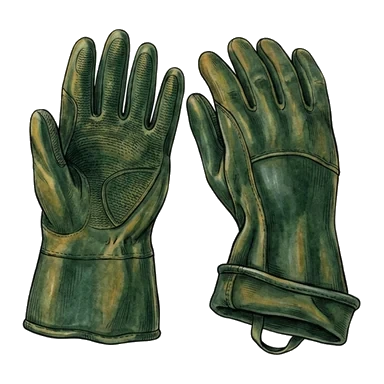
- Si algú n'ha tocat un: renta-li bé les mans i que no es toqui els ulls ni la boca. Si un nen o una mascota n'ha llepat o menjat un: truca al centre de toxicologia o al número d'emergències.
Truca sempre primer al número d'emergències (112, 000, 911). Això són pautes generals de primers auxilis, no consells mèdics. Primers auxilis bàsics
 Estigues segur
- No toquis, atrapis ni molestis mai un animal salvatge, encara que sigui petit i encara que sembli adormit o mort.
- Deixa-li espai. Si en trobes un, mantén la calma, recula a poc a poc i deixa que segueixi el seu camí.
- Si l'has tocat o te l'has menjat: no et freguis els ulls ni la boca, renta't les mans i busca ajuda mèdica.
No va a per tu. Les seves toxines només hi són perquè ningú no se'l mengi. Més sobre com estar segur
Que gran és?
Quant fa de llarg?
 fa de llarg com 8 peces de construcció de joguina en fila
 podria recórrer 100 metres en 180 segons (l'humà més ràpid necessita 9,6)
Que gran és Cane toad comparat amb TU?
Només càlculs al teu navegador. No es desa ni s'envia res enlloc.
Com de ràpid va?


Dades
Young toads lose the toxicity they had as eggs and tadpoles, and they only develop their poison glands later. Only an estimated 0.5% of cane toads reach adulthood.1
In Australia, tadpoles have evolved to be more likely to eat their siblings than tadpoles in South America.1
A female can lay thousands of eggs in one spawn, in strings up to 20 metres long.1
In the wild, cane toads can live 10 to 15 years, and one captive toad was reported to have lived 35 years.1
The cane toad is considered the largest species in the Bufonidae, the toad family.1
Cane toads eat both living and dead matter, which is unusual among frogs and toads.1
Desmuntamites
Mite: The name 'marine toad' suggests that cane toads live in the sea.
Veritat: Cane toads do not live in the sea. The name came from a mistaken belief by an early naturalist.1
Per a experts en verins
- Nom científic
- Rhinella marina
- Grup
- Granotes punta de fletxa, gripaus i tritons
- Família
- Bufonidae2
- Ordre
- Anura
- Continents
- Amèrica del Nord, Amèrica del Sud
- Cries
- A female lays 8,000 to 25,000 eggs at once, in long jelly strings that can stretch up to 20 metres.1
- Esperança de vida
- uns 15 anys1
- Perill per a les persones
- 3 / 5: Greu3
D'on surten les dades
- Cane toad (Wikipedia (CC BY-SA 4.0))
- Rhinella marina (iNaturalist): noms i classificació.
- Venom Wiki: el nivell de perill, la mida típica i la velocitat estimada són nostres. Mira com els calculem: Com valorem el perill.
Cada dada d'aquesta pàgina té un número que porta a la seva font. Si ens hem equivocat en alguna cosa, perdona, som fans dels animals, no una revista científica. Escriu-nos a [email protected] i ho arreglarem.
 L'escorpí té gana! Venom Wiki és un projecte d'una sola persona: gratuït, sense anuncis i sense rastrejadors. Una petita propina ajuda a mantenir-lo en línia.Dona menjar a l'escorpí
Més del mateix grup: Granotes punta de fletxa, gripaus i tritons
 Golden poison frogGranotes punta de fletxa, gripaus i tritonsMortalNo ho toquis
 Dyeing poison dart frogGranotes punta de fletxa, gripaus i tritonsNomés fa malNo ho toquis
 Strawberry poison-dart frogGranotes punta de fletxa, gripaus i tritonsNomés fa malNo ho toquis
 Black-legged poison frogGranotes punta de fletxa, gripaus i tritonsPot matarNo ho toquis
 California newtGranotes punta de fletxa, gripaus i tritonsPot matarNo ho toquis
 Rough-skinned newtGranotes punta de fletxa, gripaus i tritonsPot matarNo ho toquis
 Terciopelo
 Eastern coral snake
 Eastern diamondback rattlesnake
 Eyelash viper
 Timber rattlesnake
 Western diamondback rattlesnake