
 Àfrica
 Àsia
Àsia Europa
 Amèrica del Sud
 Austràlia i Oceania
 Antàrtida
 Oceà Pacífic
 Oceà Atlàntic
 Oceà Índic
 Oceà Àrtic
 Mar Mediterrània
 Mar Roja
 Mar Carib
 Mar del Corall
 Mar de la Xina Meridional
 Mar de les Filipines
 Mar d'Andaman
 Mar del Nord
 Mar de Timor i d'Arafura
 Golf de Bengala
 Golf de Califòrnia
Fire salamander
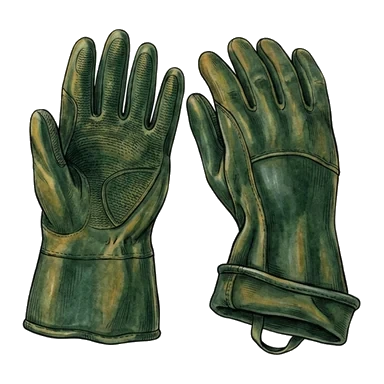 Toxines a la pell
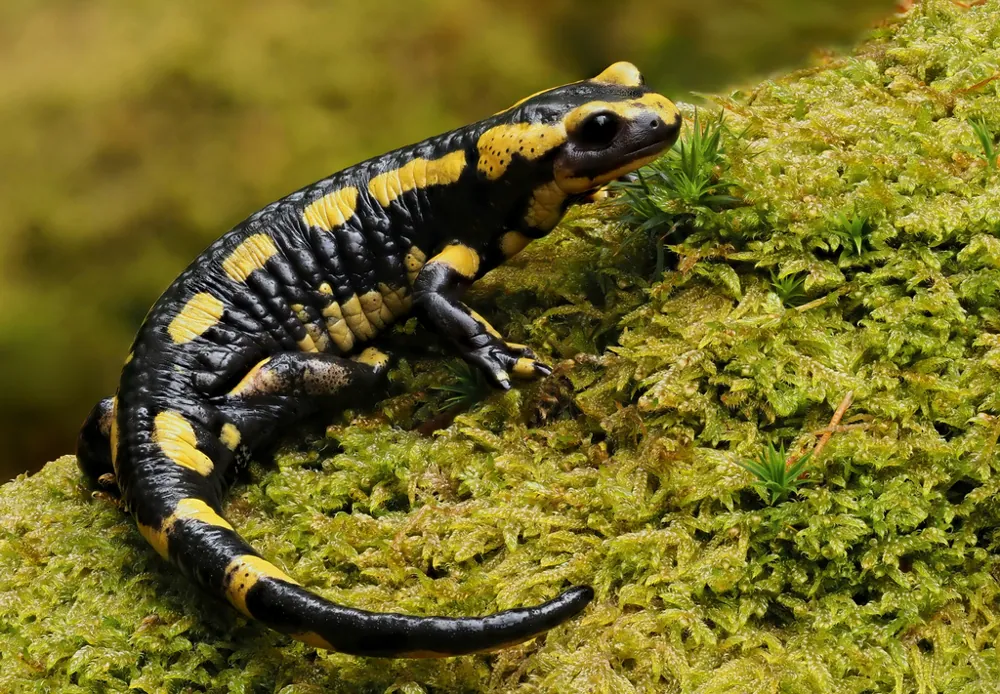
The fire salamander is a black amphibian with bright yellow, and sometimes red or orange, markings. It lives in forests across most of southern and central Europe. Its bright colours warn predators that its skin is poisonous.1
 Com reconèixer-lo
- Black with yellow spots or stripes; the amount of yellow varies, and some are almost completely black1
- Shades of red or orange may appear, replacing or mixing with the yellow, depending on the subspecies1
- Grows to 15 to 25 cm long, making it one of Europe's largest salamanders1
- Males and females look very similar, except in the breeding season, when the male has a swollen gland near his vent1
Poder tòxic
La seva pell és tòxica. És perillós tocar-lo, llepar-lo o menjar-se'l.
Què fan les seves toxines?
The fire salamander is poisonous rather than venomous, so it does not inject venom with a bite. Its skin secretions contain alkaloid toxins, mainly samandarin, which cause strong muscle convulsions and high blood pressure, combined with fast breathing, in all vertebrates. Another alkaloid, samandarone, has also been found in its skin secretions. The poison comes from glands concentrated around the head and along the back.1
Com de perillós és per a les persones?
Perill per a les persones: DolorósPot fer molt de mal, però gairebé mai no és greu.Some compounds in its skin secretions are potentially dangerous to human life. Touching the animal or handling its skin can expose people to the poison.1
Què fa quan té por?
Its bright yellow, red or orange colours warn predators that it is poisonous, and it releases toxins from its skin glands.1
 Si algú l'ha tocat o se l'ha menjat
- Si algú n'ha tocat un: renta-li bé les mans i que no es toqui els ulls ni la boca. Si un nen o una mascota n'ha llepat o menjat un: truca al centre de toxicologia o al número d'emergències.
Truca sempre primer al número d'emergències (112, 000, 911). Això són pautes generals de primers auxilis, no consells mèdics. Primers auxilis bàsics
 Estigues segur
- No toquis, atrapis ni molestis mai un animal salvatge, encara que sigui petit i encara que sembli adormit o mort.
- Deixa-li espai. Si en trobes un, mantén la calma, recula a poc a poc i deixa que segueixi el seu camí.
- Si l'has tocat o te l'has menjat: no et freguis els ulls ni la boca, renta't les mans i busca ajuda mèdica.
No va a per tu. Les seves toxines només hi són perquè ningú no se'l mengi. Més sobre com estar segur
Que gran és?
Quant fa de llarg?
Quant pesa?

 fa de llarg com 8 peces de construcció de joguina en fila
Que gran és Fire salamander comparat amb TU?
Només càlculs al teu navegador. No es desa ni s'envia res enlloc.
Com de ràpid va?


Dades
One fire salamander lived for more than 50 years in Museum Koenig, a natural history museum in Germany.1
Larvae do not make the poison. It develops as the salamander matures, in the ovaries, liver and testes.1
Its skin poison may also help protect it against bacterial and fungal infections of the skin.1
Its bright colours are a warning signal. Scientists call this aposematism, meaning the animal advertises that it is poisonous.1
Some subspecies give birth to live young, while others release larvae into water. Only two subspecies, fastuosa and bernadezi, give birth to fully formed young.1
In captivity, females can store sperm for a long time and use it to produce another clutch of eggs. This has not been seen in the wild.1
Per a experts en verins
- Nom científic
- Salamandra salamandra
- Grup
- Granotes punta de fletxa, gripaus i tritons
- Família
- Salamandridae2
- Ordre
- Caudata
- Continents
- Europa
- Cries
- Eggs develop inside the female, and she puts the larvae into water as they hatch. In some subspecies, the young develop inside the female until she gives birth to fully formed young.1
- Esperança de vida
- uns 50 anys1
- Com li va a la natura
- Vulnerable (IUCN Red List, 2023)1
- Perill per a les persones
- 2 / 5: Dolorós3
D'on surten les dades
- Fire salamander (Wikipedia (CC BY-SA 4.0))
- Salamandra salamandra (iNaturalist): noms i classificació.
- Venom Wiki: el nivell de perill, la mida típica i la velocitat estimada són nostres. Mira com els calculem: Com valorem el perill.
Cada dada d'aquesta pàgina té un número que porta a la seva font. Si ens hem equivocat en alguna cosa, perdona, som fans dels animals, no una revista científica. Escriu-nos a [email protected] i ho arreglarem.
 L'escorpí té gana! Venom Wiki és un projecte d'una sola persona: gratuït, sense anuncis i sense rastrejadors. Una petita propina ajuda a mantenir-lo en línia.Dona menjar a l'escorpí
Més del mateix grup: Granotes punta de fletxa, gripaus i tritons
 Common toadGranotes punta de fletxa, gripaus i tritonsNomés fa malNo ho toquis
 European fire-bellied toadGranotes punta de fletxa, gripaus i tritonsInofensiu
 Iberian ribbed newtGranotes punta de fletxa, gripaus i tritonsInofensiu
 Natterjack toadGranotes punta de fletxa, gripaus i tritonsInofensiu
 Alpine salamanderGranotes punta de fletxa, gripaus i tritonsInofensiu
 European green toadGranotes punta de fletxa, gripaus i tritonsInofensiu
També viu a: Europa
 Common European adderEscurçons i vibresCal anar al metge
 Spanish flyAltres animals tòxicsCal anar al metgeNo ho toquis
 Common waspAbelles, vespes i vesparronsNomés fa mal
 European hornetAbelles, vespes i vesparronsNomés fa mal
 Western honey beeAbelles, vespes i vesparronsNomés fa mal
 Blunt-nosed viperEscurçons i vibresPot matar