
 Afrika
 Asie
Asie Evropa
 Jižní Amerika
 Austrálie a Oceánie
 Antarktida
 Tichý oceán
 Atlantský oceán
 Indický oceán
 Severní ledový oceán
 Středozemní moře
 Rudé moře
 Karibské moře
 Korálové moře
 Jihočínské moře
 Filipínské moře
 Andamanské moře
 Severní moře
 Timorské a Arafurské moře
 Bengálský záliv
 Kalifornský záliv
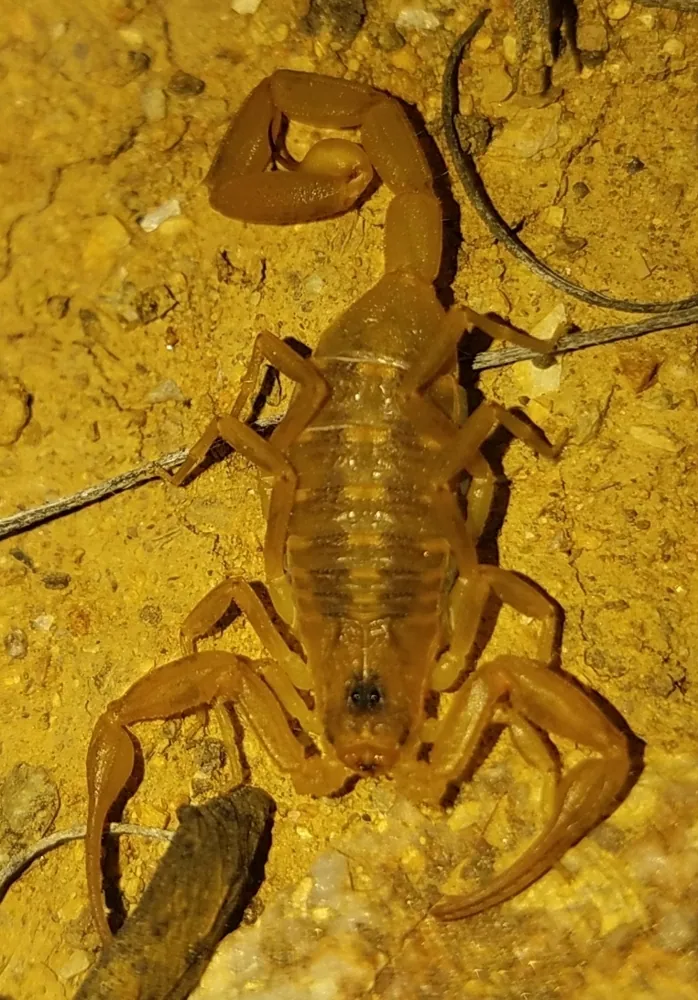
Baja California bark scorpion
 Bodnutí
The Baja California bark scorpion is a slender scorpion with a long tail. It lives in the western deserts and wet places of North America, mainly in Baja California. It matters because it is closely related to the Arizona bark scorpion, and scientists only confirmed in 2004 that the two are separate species.1


 Jak ho poznat
- Slender body with a long tail1
- Typically sand-coloured, though it can appear darker1
- Exoskeleton can be yellow, light brown or gold1
- Body length of about 3.8 to 7.6 cm1
- Rests its tail on the ground, unlike other scorpions that hold it arched over the back. It also has a subaculear tooth at the tip of its stinger1
Často se plete s: It is closely related to the Arizona bark scorpion, and their body shapes can be almost impossible to tell apart. Differences in venom and DNA are used to separate the two species. The subaculear tooth at the tip of the stinger and the way the tail rests on the ground are the main features that set it apart from other scorpions.1
Síla jedu
Jed vychází žihadlem.
Co dělá jeho jed?
It uses venom to hunt, injecting it into prey to immobilise or kill it. Each scorpion species has a unique venom profile, which is used to tell species apart. In humans, its venom may cause difficulty breathing or muscle spasms.1
Jak je nebezpečné pro lidi?
Nebezpečí pro lidi: BolestivéMůže to hodně bolet, ale skoro nikdy to není vážné.Its venom has the potential to be fatal to humans, but the chances of this happening are low. It is not considered dangerous, and it is less of a medical threat than its close relative, the Arizona bark scorpion.1
 Když bodne
- Zchlaď místo bodnutí ledovým obkladem a udržuj postiženého v klidu. Rychle vyhledej lékařskou pomoc, hlavně u dětí: někteří štíři jsou pro děti smrtelně nebezpeční.
Vždy nejdřív zavolej na tísňovou linku (112, 000, 911). Jde o obecné rady k první pomoci, ne o lékařskou radu. Základy první pomoci
 Buď v bezpečí
- Nikdy se nedotýkej divokého zvířete, nechytej ho a neprovokuj, ani malé, a ani když vypadá, že spí nebo je mrtvé.
- Nech mu prostor. Když ho potkáš, zůstaň v klidu, pomalu couvej a nech ho jít svou cestou.
- Když tě bodne: zůstaň v klidu, nehýbej se, zavolej na tísňovou linku (112, 000, 911) nebo se rychle dostaň do nemocnice. Zapamatuj si, jak vypadalo, fotka pomůže.
Nejde po tobě. Jed používá k lovu potravy nebo k obraně a mnohem radši se schová. Víc o bezpečí
Jak je velké?
Jak je dlouhé?
 dlouhé jako 2,5 stavebnicových kostek v řadě
 100 metrů za 260 s (nejrychlejší člověk potřebuje 9,6)
Baja California bark scorpion: jak je velké ve srovnání s TEBOU?
Jen matematika ve tvém prohlížeči. Nic se neukládá ani nikam neposílá.
Jak je rychlé?


Fakta
Lovec mýtů
Mýtus: It is the same species as the Arizona bark scorpion.
Pravda: The two were grouped as one species in 1980, but differences in venom toxicity and DNA analysis in 2004 showed they are separate species.1
Odkud fakta pocházejí
- Centruroides exilicauda (Wikipedia (CC BY-SA 4.0))
- Centruroides exilicauda (iNaturalist): jména a zařazení.
- Venom Wiki: úroveň nebezpečí, typická velikost a odhad rychlosti jsou naše vlastní. Podívej se, jak je určujeme: Jak hodnotíme nebezpečí.
Každý fakt na této stránce má číslo, které odkazuje na jeho zdroj. Pokud jsme se spletli, promiň, jsme fanoušci zvířat, ne vědecký časopis. Napiš nám na [email protected] a opravíme to.
 Štír má hlad! Venom Wiki je projekt jednoho člověka: zdarma, bez reklam a bez sledování. Malé spropitné pomáhá udržet ho online.Nakrm štíra
 Arizona bark scorpion
 Cuban blue scorpion
 Striped bark scorpion
 Giant desert hairy scorpion
 Colima scorpion
 Durango scorpion
 Křovinář sametový
 Eastern coral snake
 Eastern diamondback rattlesnake
 Eyelash viper
 Timber rattlesnake
 Western diamondback rattlesnake
.jpg)