
 Afrika
 Asie
Asie Evropa
 Jižní Amerika
 Austrálie a Oceánie
 Antarktida
 Tichý oceán
 Atlantský oceán
 Indický oceán
 Severní ledový oceán
 Středozemní moře
 Rudé moře
 Karibské moře
 Korálové moře
 Jihočínské moře
 Filipínské moře
 Andamanské moře
 Severní moře
 Timorské a Arafurské moře
 Bengálský záliv
 Kalifornský záliv
Climbing mantella
 Toxin v kůži
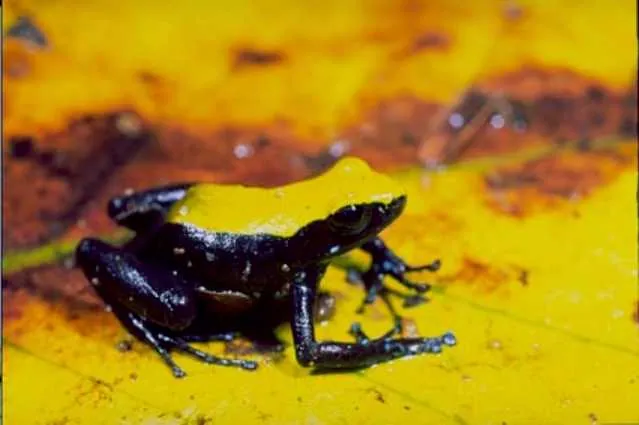
The climbing mantella is a small, brightly coloured frog that lives in the lowland rainforests of northeast Madagascar. It is a poison frog, so its skin holds chemicals that can harm predators. It is special because it is one of the few frogs whose parents care for their tadpoles by feeding them eggs.1



 Jak ho poznat
- Adults are 24–30 mm long and weigh 1.2–2.0 g1
- Front of the back is bright yellow or pale green1
- Arms, legs, belly and rear are black, with blue spots on the limbs1
- Eyes are completely black1
- Has discs at the tips of its fingers and toes, and the toes are webbed1
Často se plete s: M. betsileo, M. viridis and M. expectata look similar but are differently coloured. They often have blue spots on the throat rather than the limbs, and they have a faint line along the upper lip, which the climbing mantella lacks.1
Síla toxinu
Jeho kůže je toxická. Je nebezpečné se jí dotýkat, olizovat ji nebo ji jíst.
Co dělá jeho toxin?
This frog is poisonous rather than venomous. Its skin glands contain lipophilic alkaloids, the chemicals that make up its poison, which it gets from the arthropods it eats. Researchers have found 41 different potent alkaloids in its skin. Captive frogs lose their toxicity over time.1
Jak je nebezpečné pro lidi?
Nebezpečí pro lidi: MírnéJako včelí bodnutí nebo méně. Pro lidi v podstatě neškodné.Co dělá, když se bojí?
Its bright colours warn predators that its skin is toxic.1
 Pokud se ho někdo dotkl nebo ho snědl
- Pokud se ho někdo dotkl: pořádně si umyj ruce a nesahej si na oči ani do pusy. Pokud ho dítě nebo domácí zvíře olízlo nebo snědlo: volej toxikologické středisko nebo tísňovou linku.
Vždy nejdřív zavolej na tísňovou linku (112, 000, 911). Jde o obecné rady k první pomoci, ne o lékařskou radu. Základy první pomoci
 Buď v bezpečí
- Nikdy se nedotýkej divokého zvířete, nechytej ho a neprovokuj, ani malé, a ani když vypadá, že spí nebo je mrtvé.
- Nech mu prostor. Když ho potkáš, zůstaň v klidu, pomalu couvej a nech ho jít svou cestou.
- Po dotyku nebo snězení: netři si oči ani pusu, umyj si ruce a vyhledej lékařskou pomoc.
Nejde po tobě. Jeho toxin je tu jen proto, aby ho nikdo nesnědl. Víc o bezpečí
Jak je velké?
Jak je dlouhé?
Kolik váží?
 zhruba tak dlouhé jako kancelářská sponka
 tak lehké, že ho na ruce ani neucítíš
 100 metrů za 100 s (nejrychlejší člověk potřebuje 9,6)
Climbing mantella: jak je velké ve srovnání s TEBOU?
Jen matematika ve tvém prohlížeči. Nic se neukládá ani nikam neposílá.
Jak je rychlé?


Fakta
Its tadpoles eat only the eggs of their own species, and the parents feed them unfertilized eggs.1
Males defend territories of about 2 square metres and fight by wrestling, chasing and leaping, sometimes for over 1.5 hours.1
Female frogs choose a mate based on the quality of the male's well, not on his call.1
The climbing mantella is the only member of the Mantella genus that breeds in water-filled wells in trees, tree holes or broken bamboo stalks.1
Its chemical defence has developed in a similar way to that of the dart frogs of Dendrobatidae, although the two families are only distantly related.1
Pro znalce jedů
- Vědecký název
- Mantella laevigata
- Skupina
- Pralesničky, ropuchy a čolci
- Rodina
- Mantellidae2
- Pořadí
- Anura
- Kontinenty
- Afrika
- Mláďata
- Usually lays only one large egg, 3–3.5 mm across, at the side of a water-filled well or above the water line. The parents feed tadpoles unfertilized eggs.1
- Jak se mu daří v přírodě
- Least Concern (IUCN Red List, 2016), though its population is suspected to be decreasing1
- Nebezpečí pro lidi
- 1 / 5: Mírné3
Odkud fakta pocházejí
- Climbing mantella (Wikipedia (CC BY-SA 4.0))
- Mantella laevigata (iNaturalist): jména a zařazení.
- Venom Wiki: úroveň nebezpečí, typická velikost a odhad rychlosti jsou naše vlastní. Podívej se, jak je určujeme: Jak hodnotíme nebezpečí.
Každý fakt na této stránce má číslo, které odkazuje na jeho zdroj. Pokud jsme se spletli, promiň, jsme fanoušci zvířat, ne vědecký časopis. Napiš nám na [email protected] a opravíme to.
 Štír má hlad! Venom Wiki je projekt jednoho člověka: zdarma, bez reklam a bez sledování. Malé spropitné pomáhá udržet ho online.Nakrm štíra
Víc ze stejné skupiny: Pralesničky, ropuchy a čolci
 Golden mantellaPralesničky, ropuchy a čolciNeškodné
 Iberian ribbed newtPralesničky, ropuchy a čolciNeškodné
 Tomato frogPralesničky, ropuchy a čolciNeškodné
 African common toadPralesničky, ropuchy a čolciJen to bolíNedotýkat se
 Baron's mantellaPralesničky, ropuchy a čolciNeškodné
 Blue-legged mantellaPralesničky, ropuchy a čolciNeškodné
 Mamba černá
 Štír palestinský
 Kobra egyptská
 Zmije útočná
 Boomslang
 Fat-tailed scorpion