
 Afrika
 Asie
Asie Evropa
 Jižní Amerika
 Austrálie a Oceánie
 Antarktida
 Tichý oceán
 Atlantský oceán
 Indický oceán
 Severní ledový oceán
 Středozemní moře
 Rudé moře
 Karibské moře
 Korálové moře
 Jihočínské moře
 Filipínské moře
 Andamanské moře
 Severní moře
 Timorské a Arafurské moře
 Bengálský záliv
 Kalifornský záliv
Compass jellyfish
 Žahavá chapadla
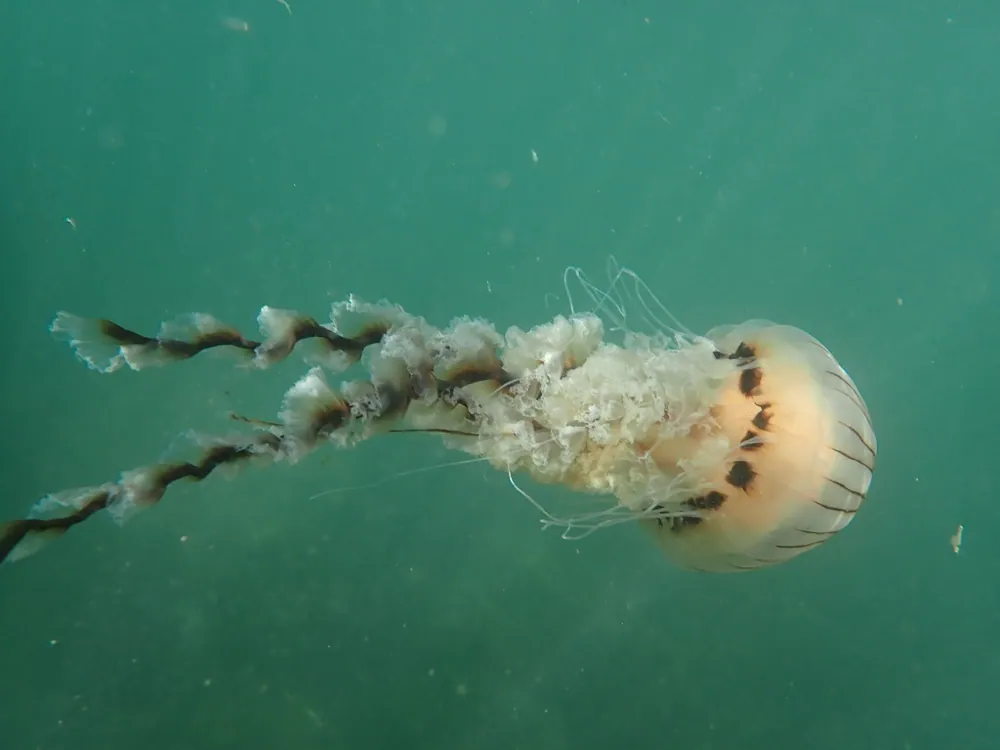
The compass jellyfish is a common jellyfish that lives in cool coastal seas of the northeast Atlantic, including the North Sea and the Mediterranean. Its bell has a pattern that looks like the face of a compass, which gives it its name. Its tentacles carry stinging cells, so it is best left alone.1



 Jak ho poznat
- Adults have a bell 15 to 25 cm across, usually yellowish white with some brown.1
- The bell has 16 brown, elongated V-shaped markings around a central brown spot.1
- It has 24 tentacles arranged in eight groups of three.1
- It has four oral arms that are noticeably longer than the tentacles and look folded and frilly.1
- Juveniles lack the compass pattern. They look white and polka-dotted, with a reddish fringe on the bell edge.1
Často se plete s: Records of this species from the southeastern Atlantic, including South Africa, were caused by confusion with close relatives: C. africana, C. fulgida and an undescribed species tentatively called "C. agulhensis".1
Síla jedu
Tisíce malinkých žahavých buněk vystřelí, když se jich něco dotkne.
Co dělá jeho jed?
Each tentacle has stinging cells used to capture prey and to defend against predators. Jellyfish stings are painful and can be deadly to humans.1
Jak je nebezpečné pro lidi?
Nebezpečí pro lidi: BolestivéMůže to hodně bolet, ale skoro nikdy to není vážné.Jellyfish stings are painful and sometimes deadly to humans.1
Co dělá, když se bojí?
Stinging cells on its tentacles are used to defend it from predators.1
 Když bodne
- Vylez z vody a odstraň zbylá chapadla (v rukavicích nebo přes látku).
- U tropických čtyřhranek: lij na zasažená místa ocet aspoň 30 sekund, zavolej pomoc a připrav se na resuscitaci (KPR). U měchýřovek a většiny ostatních: opláchni mořskou vodou a pak dej na bolest horkou vodu.
Vždy nejdřív zavolej na tísňovou linku (112, 000, 911). Jde o obecné rady k první pomoci, ne o lékařskou radu. Základy první pomoci
 Buď v bezpečí
- Nikdy se nedotýkej divokého zvířete, nechytej ho a neprovokuj, ani malé, a ani když vypadá, že spí nebo je mrtvé.
- Nech mu prostor. Když ho potkáš, zůstaň v klidu, pomalu couvej a nech ho jít svou cestou.
- Když tě bodne: zůstaň v klidu, nehýbej se, zavolej na tísňovou linku (112, 000, 911) nebo se rychle dostaň do nemocnice. Zapamatuj si, jak vypadalo, fotka pomůže.
Nejde po tobě. Jed používá k lovu potravy nebo k obraně a mnohem radši se schová. Víc o bezpečí
Kde na světě?
Jak je velké?
Jak je dlouhé?
 dlouhé jako 8 stavebnicových kostek v řadě
Compass jellyfish: jak je velké ve srovnání s TEBOU?
Jen matematika ve tvém prohlížeči. Nic se neukládá ani nikam neposílá.
Jak je rychlé?


Fakta
Males release sperm from their mouths into the water, and females can fertilise sperm from several males.1
Adults often carry a parasite called Hyperia medusarum, which settles inside the body, especially the gonads.1
Compass jellyfish have very few predators. Leatherback sea turtles and ocean sunfish are known to eat them.1
Warmer winters allow longer release periods for young, and the species is predicted to move further north as the seas warm.1
Lovec mýtů
Mýtus: Compass jellyfish live in the southeastern Atlantic, including South Africa.
Pravda: Earlier records from there were due to confusion with close relatives. The species lives in the northeast Atlantic.1
Pro znalce jedů
- Vědecký název
- Chrysaora hysoscella
- Skupina
- Medúzy a žahaví mořští tvorové
- Rodina
- Pelagiidae2
- Pořadí
- Semaeostomeae
- Kontinenty
- Atlantský oceán, Středozemní moře, Severní moře, Oceány
- Mláďata
- Females release planular larvae, which settle on the seabed and grow into polyps. The polyps then release young medusae.1
- Nebezpečí pro lidi
- 2 / 5: Bolestivé3
Odkud fakta pocházejí
- Chrysaora hysoscella (Wikipedia (CC BY-SA 4.0))
- Chrysaora hysoscella (iNaturalist): jména a zařazení.
- Venom Wiki: úroveň nebezpečí, typická velikost a odhad rychlosti jsou naše vlastní. Podívej se, jak je určujeme: Jak hodnotíme nebezpečí.
Každý fakt na této stránce má číslo, které odkazuje na jeho zdroj. Pokud jsme se spletli, promiň, jsme fanoušci zvířat, ne vědecký časopis. Napiš nám na [email protected] a opravíme to.
 Štír má hlad! Venom Wiki je projekt jednoho člověka: zdarma, bez reklam a bez sledování. Malé spropitné pomáhá udržet ho online.Nakrm štíra
Víc ze stejné skupiny: Medúzy a žahaví mořští tvorové
 Australian box jellyfishMedúzy a žahaví mořští tvorovéSmrtelně nebezpečnéNedotýkat se
 Irukandji jellyfishMedúzy a žahaví mořští tvorovéMůže zabítNedotýkat se
 Portuguese man o' warMedúzy a žahaví mořští tvorovéPotřebuje lékařeNedotýkat se
 Lion's mane jellyfishMedúzy a žahaví mořští tvorovéJen to bolíNedotýkat se
 Moon jellyfishMedúzy a žahaví mořští tvorovéNeškodné
 Common kingslayerMedúzy a žahaví mořští tvorovéMůže zabítNedotýkat se
 Hawksbill sea turtle
 Blue sea dragon
 Greenland shark
 Common octopus
 Common stingray
 Greater weever