
 Afrika
 Asie
Asie Evropa
 Jižní Amerika
 Austrálie a Oceánie
 Antarktida
 Tichý oceán
 Atlantský oceán
 Indický oceán
 Severní ledový oceán
 Středozemní moře
 Rudé moře
 Karibské moře
 Korálové moře
 Jihočínské moře
 Filipínské moře
 Andamanské moře
 Severní moře
 Timorské a Arafurské moře
 Bengálský záliv
 Kalifornský záliv
Hundred-pace viper
 Kousnutí
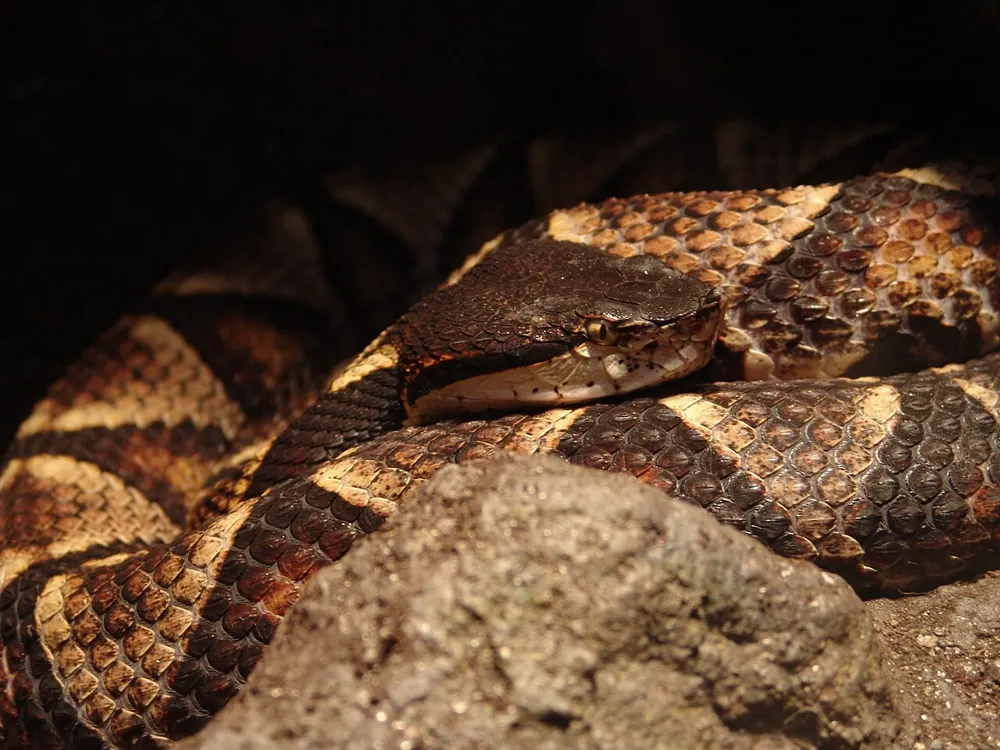
The hundred-pace viper is a pit viper that lives in the mountains and hills of southern China, Taiwan and northern Vietnam. It is venomous, and its bite can be dangerous, so it is important to know what it looks like. Its name comes from a well-known but exaggerated local belief about how far a bite victim can walk.1



 Jak ho poznat
- Light brown or greyish brown, with a series of dark brown triangles along each side1
- About 20 light brown, squarish blotches run along the back1
- Top of the head and upper sides are black, with a black streak from the eye to the corner of the mouth1
- Large, triangular head with an upturned snout, and a very stout body1
- Young snakes are much lighter than adults but have the same pattern1
Síla jedu
Jed vychází jedovými zuby nebo zuby, když kouše.
Co dělá jeho jed?
Its venom is a potent hemotoxin, which damages blood and tissue and is strongly haemorrhagic, meaning it causes bleeding. Bite symptoms include severe pain and bleeding that may begin almost immediately, followed by swelling, blistering, tissue death (necrosis) and ulceration. Heart palpitations may come on suddenly and relatively soon after the bite.1
Jak je nebezpečné pro lidi?
Nebezpečí pro lidi: Velmi nebezpečnéMůže zabít člověka, který nedostane léčbu.The species is considered dangerous, and deaths are not unusual. Its large, hinged fangs can deliver large amounts of venom.1
 Dobrá zpráva: lékaři na to mají lék (protijed) nebo léčbu.1
 Když kousne
- Victims should be treated according to the seriousness of the bite. Cutting off or burning a bitten finger or limb is harmful and can cause further complications. An antivenom is produced in Taiwan.1
- Udržuj postiženého v klidu a bez pohybu, drž pokousanou končetinu ve výšce srdce, sundej prsteny a všechno, co škrtí, a rychle se dostaňte do nemocnice.
Vždy nejdřív zavolej na tísňovou linku (112, 000, 911). Jde o obecné rady k první pomoci, ne o lékařskou radu. Základy první pomoci
 Buď v bezpečí
- Nikdy se nedotýkej divokého zvířete, nechytej ho a neprovokuj, ani malé, a ani když vypadá, že spí nebo je mrtvé.
- Nech mu prostor. Když ho potkáš, zůstaň v klidu, pomalu couvej a nech ho jít svou cestou.
- Když tě kousne: zůstaň v klidu, nehýbej se, zavolej na tísňovou linku (112, 000, 911) nebo se rychle dostaň do nemocnice. Zapamatuj si, jak vypadalo, fotka pomůže.
Nejde po tobě. Jed používá k lovu potravy nebo k obraně a mnohem radši se schová. Víc o bezpečí
Jak je velké?
Jak je dlouhé?
 dlouhé jako 3 domácích koček od nosu k ocasu
 dlouhé jako 9 banánů za sebou
 100 metrů za 95 s (nejrychlejší člověk potřebuje 9,6)
Hundred-pace viper: jak je velké ve srovnání s TEBOU?
Jen matematika ve tvém prohlížeči. Nic se neukládá ani nikam neposílá.
Jak je rychlé?


Fakta
Its popular name, hundred-pacer, is said to come from a belief that a bitten victim can walk only 100 steps before dying.1
A protein from its venom, called ACTX-6, has been shown to cause cell death in isolated cancer cells.1
Its venom is widely used in research. In mice, it attacks the kidneys and the mice die.1
It is one of the few pit vipers that lays eggs. It can keep eggs inside during early incubation, which shortens the time they need to develop after being laid.1
The venom has been used in traditional Chinese medicine for centuries to make antivenin for treating snakebites.1
For the Paiwan people of Taiwan, the viper is the parent of their hero Aljis, and the viper symbol is used on their homes to show power.1
Lovec mýtů
Mýtus: A person bitten by a hundred-pace viper can only walk 100 steps before dying.
Pravda: This belief is an exaggeration. The species is still dangerous, and deaths are not unusual. Believing the myth has led people to amputate or burn bitten fingers or limbs, which causes further harm.1
Odkud fakta pocházejí
- Deinagkistrodon (Wikipedia (CC BY-SA 4.0))
- Deinagkistrodon acutus (iNaturalist): jména a zařazení.
- Venom Wiki: úroveň nebezpečí, typická velikost a odhad rychlosti jsou naše vlastní. Podívej se, jak je určujeme: Jak hodnotíme nebezpečí.
Každý fakt na této stránce má číslo, které odkazuje na jeho zdroj. Pokud jsme se spletli, promiň, jsme fanoušci zvířat, ne vědecký časopis. Napiš nám na [email protected] a opravíme to.
 Štír má hlad! Venom Wiki je projekt jednoho člověka: zdarma, bez reklam a bez sledování. Malé spropitné pomáhá udržet ho online.Nakrm štíra
 Brown spotted pit viper
 Habu
Habu Hump-nosed viper
 Malayan pit viper
 Mamushi
 Mangshan pit viper
 Štír palestinský
 Kobra indická
 Zmije paví
 Kobra královská
 Zmije útočná
 Zmije řetízková