
 Afrika
 Asien
Asien Europa
 Südamerika
 Australien & Ozeanien
 Antarktis
 Pazifischer Ozean
 Atlantischer Ozean
 Indischer Ozean
 Nordpolarmeer
 Mittelmeer
 Rotes Meer
 Karibisches Meer
 Korallenmeer
 Südchinesisches Meer
 Philippinensee
 Andamanensee
 Nordsee
 Timorsee & Arafurasee
 Golf von Bengalen
 Golf von Kalifornien
Indochinese spitting cobra
 Sprüht oder spuckt
The Siamese spitting cobra is a medium-sized snake that can spray venom from a distance. It lives in Southeast Asia, including Thailand, Cambodia, Vietnam and Laos. It is special because it is a 'true spitter' that sprays venom into the face of a threat, and its bite can be dangerous to people.1



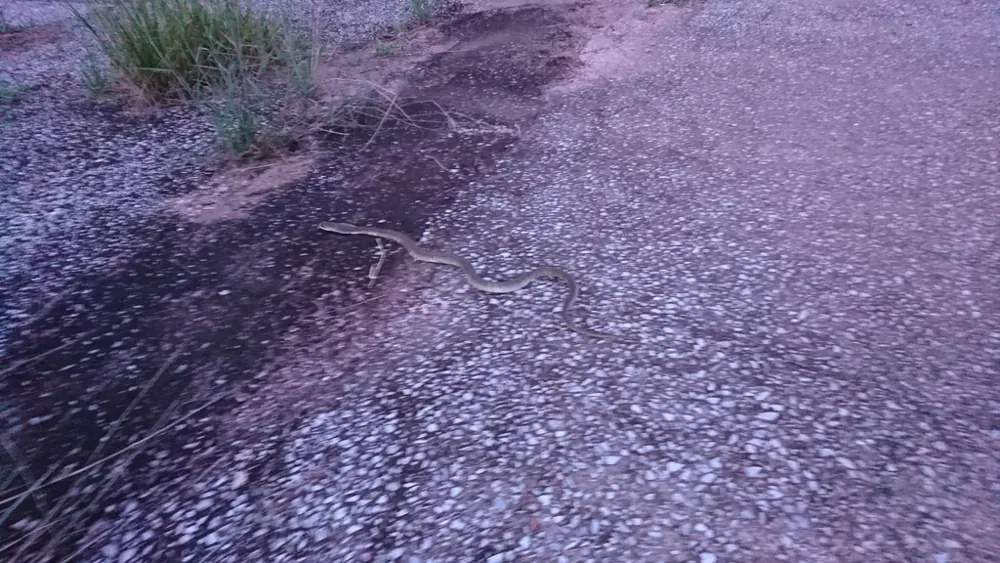
 So erkennst du es
- Body colour ranges from grey to brown to black, with white spots or stripes.1
- The black and white colour form is common in central Thailand. Snakes from western Thailand are mostly black, and those from elsewhere are usually brown.1
- The hood mark may be spectacle-shaped or irregular, or missing altogether, especially in adults.1
- It is medium-sized with a more slender build than most other cobras in the genus Naja.1
Oft verwechselt mit: The monocled cobra (Naja kaouthia) has a similar habitat, size and appearance, so it is easy to confuse with this species. This species is a 'true spitter' that sprays a mist, rather than the stream that many other spitting cobras produce.1
Giftkraft
Es sprüht oder spuckt Angreifern eine brennende Flüssigkeit entgegen.
Was macht sein Gift, wenn es beißt oder sticht?
Its venom is mainly a postsynaptic neurotoxin, which attacks the nerves, and a cytotoxin, which kills tissue. A bite causes pain, swelling and necrosis (death of tissue) around the wound. Neurotoxic effects can lead to paralysis and difficulty breathing. If venom is spat into the eyes, it causes immediate, severe pain and can cause temporary or sometimes permanent blindness.1
Wie gefährlich ist es für Menschen?
Gefahr für Menschen: Sehr gefährlichEs kann einen Menschen töten, der keine Behandlung bekommt.The bite is potentially lethal to an adult human. Deaths usually happen through paralysis and asphyxiation (suffocation), mainly in rural areas where antivenin is hard to obtain. In one Thai hospital survey, neurotoxic signs appeared in 12 of 114 cases (10.5%).1
 Gute Nachricht: Ärzte haben dafür ein Medikament (Gegengift) oder eine Behandlung.1
Was macht es, wenn es Angst hat?
At night it is aggressive: it stands its ground, rears up, displays its hood and spits venom, and it bites as a last resort. In daylight it is usually timid and seeks shelter in the nearest burrow.1
 Wenn es beißt oder spuckt
- Halte die Person still und ruhig, nimm Ringe und alles Enge ab und bring sie schnell in ein Krankenhaus: Gegengift (Antiserum) ist die Behandlung.
- Wenn Gift in die Augen gespuckt wurde, spül sie sofort mit viel sauberem Wasser aus.
Ruf immer zuerst deine Notrufnummer an (112, 000, 911). Das sind allgemeine Erste-Hilfe-Hinweise, keine ärztliche Beratung. Erste-Hilfe-Grundlagen
 Bleib sicher
- Fass ein wildes Tier niemals an, fang es nicht und ärgere es nicht, auch kein kleines, und auch nicht, wenn es schlafend aussieht oder tot.
- Halte Abstand. Wenn du einem begegnest, bleib ruhig, geh langsam zurück und lass es seiner Wege gehen.
- Wenn dich eines beißt oder dir Gift in die Augen spuckt: Bleib ruhig, halt still, ruf deine Notrufnummer an (112, 000, 911) oder fahr schnell in ein Krankenhaus. Merk dir, wie es aussah, ein Foto hilft.
Es hat es nicht auf dich abgesehen. Es benutzt sein Gift, um Futter zu fangen oder sich zu schützen, und versteckt sich viel lieber. Mehr über Sicherheit
Wo auf der Welt?
Wie groß ist es?
Wie lang ist es?
Wie schwer ist es?
 so lang wie 3 Hauskatzen von Nase bis Schwanz
 so lang wie 9 Bananen hintereinander
 könnte 100 Meter in 51 Sekunden schaffen (der schnellste Mensch braucht 9,6)
Wie groß ist Indochinese spitting cobra im Vergleich zu DIR?
Nur Rechnen in deinem Browser. Nichts wird gespeichert oder irgendwohin geschickt.
Wie schnell ist es?


Fakten
Some hatchlings are about 32 cm long, and they are venomous from the moment they hatch.1
Its reported spitting range is about 1 metre, the shortest of any spitting cobra, although one researcher reports it may reach about 2 metres in a stream.1
It has been reported in Taiwan, where it was released into the wild as part of folklore Buddhist practices.1
The black and white form is so distinctive that it is the best-known colour phase, especially in central Thailand.1
Mythen-Check
Mythos: It is the same animal as the monocled cobra or the Chinese cobra.
Wahrheit: It was once confused with these snakes, but it has been confirmed as a distinct species.1
Für Giftexperten
- Wissenschaftlicher Name
- Naja siamensis
- Gruppe
- Kobras, Mambas & Kraits
- Familie
- Elapidae2
- Ordnung
- Squamata
- Kontinente
- Asien
- Babys
- It lays eggs. A female lays 13 to 19 eggs, which hatch after 48 to 70 days depending on temperature. Hatchlings are independent and already have working venom systems, so they should be treated with the same respect as adults.1
- Gefahr für Menschen
- 4 / 5: Sehr gefährlich3
Woher die Fakten kommen
- Siamese spitting cobra (Wikipedia (CC BY-SA 4.0))
- Naja siamensis (iNaturalist): Namen und Klassifikation.
- Venom Wiki: die Gefahrenstufe, die typische Größe und die geschätzte Geschwindigkeit sind von uns. So berechnen wir sie: So bewerten wir die Gefahr.
Jeder Fakt auf dieser Seite hat eine Nummer, die auf seine Quelle zeigt. Wenn wir etwas falsch haben: Entschuldigung, wir sind Tierfans, keine Fachzeitschrift. Schreib uns an [email protected] und wir korrigieren es.
 Der Skorpion hat Hunger! Venom Wiki ist ein Ein-Mann-Projekt: kostenlos, ohne Werbung und ohne Tracker. Ein kleines Trinkgeld hilft, es online zu halten.Füttere den Skorpion
 Brillenschlange
 Königskobra
 Caspian cobra
 Common krait
 Malayan krait
 Many-banded krait
 Gelber Mittelmeerskorpion
 Indische Sandrasselotter
 Puffotter
 Kettenviper
 Asian giant hornet
 Komodo dragon