
 África
 Asia
Asia Europa
 Sudamérica
 Australia y Oceanía
 Antártida
 Océano Pacífico
 Océano Atlántico
 Océano Índico
 Océano Ártico
 Mar Mediterráneo
 Mar Rojo
 Mar Caribe
 Mar del Coral
 Mar de China Meridional
 Mar de Filipinas
 Mar de Andamán
 Mar del Norte
 Mar de Timor y de Arafura
 Golfo de Bengala
 Golfo de California
Mediterranean recluse
 Mordeduras
The Mediterranean recluse spider is a small spider that comes from the Mediterranean region. It has spread to many parts of the world through human travel and trade, and it is listed as one of the most invasive spiders in the world. Its bite can cause skin damage, so it is worth knowing what it looks like.1

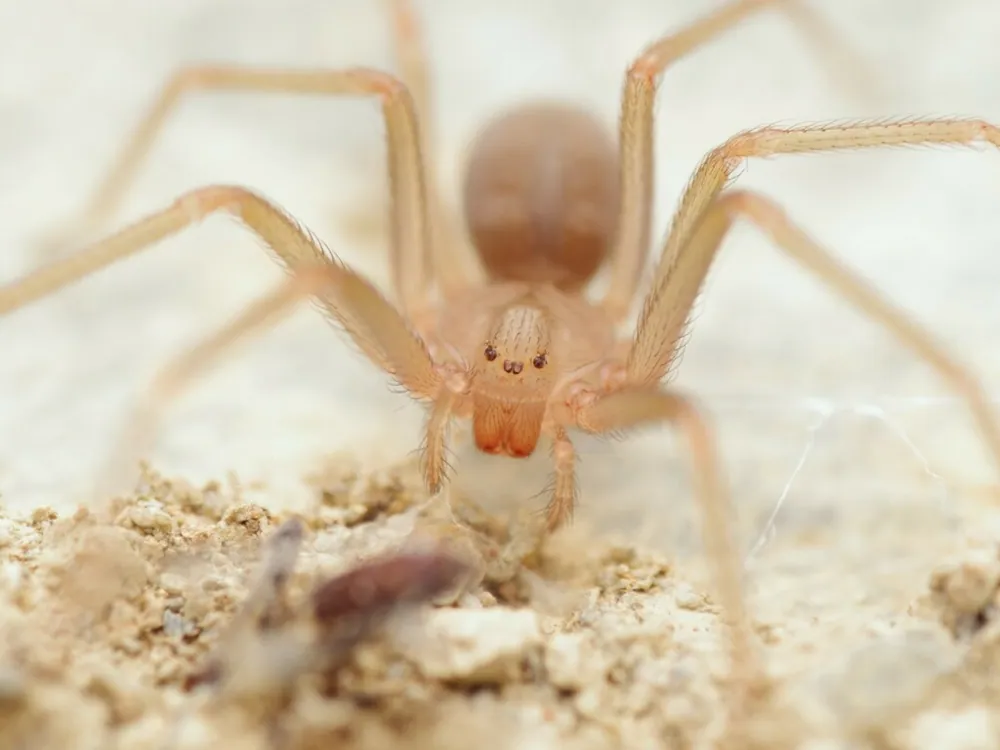
 Cómo reconocerlo
- A medium-sized spider with three pairs of two eyes arranged in a triangle, instead of the usual eight eyes1
- A violin-shaped pattern on the front part of the body (cephalothorax)1
- Adults of both sexes grow to about 7 to 7.5 cm... no, 7 to 7.5 mm long1
- Its web is very thin and fragile, made of silk strands laid in a disorganised way1
Se confunde a menudo con: It is nearly indistinguishable in appearance from the brown recluse spider (Loxosceles reclusa). Pest control for one can often be adapted for the other.1
Poder del veneno
El veneno sale por sus colmillos o dientes cuando muerde.
¿Qué hace su veneno?
Its venom contains an enzyme called sphingomyelinase D, which causes necrosis, meaning the death of skin and other tissue around the bite. Most cases are medically insignificant. In some cases, penetrating pain starts 2 to 8 hours after the bite, followed by burning, and the area becomes red and painful. A blister may form that turns dark blue with a sunken centre over several days. In rare cases, the blood and kidneys can be damaged, which can lead to kidney failure.1
¿Qué peligro tiene para las personas?
Peligro para las personas: DolorosoPuede doler de verdad, pero casi nunca es grave.Most bites are medically insignificant, but some people are affected much more seriously. In 2024, the species was blamed for the deaths of two people in Italy.1
 Si muerde
- Lava la mordedura y ponle hielo para el dolor. Busca ayuda médica si el dolor es fuerte, se extiende o la persona se encuentra mal.
Llama siempre primero a tu número de emergencias (112, 000, 911). Esto son pautas generales de primeros auxilios, no consejo médico. Primeros auxilios básicos
 Mantente a salvo
- Nunca toques, atrapes ni molestes a un animal salvaje, aunque sea pequeño y aunque parezca dormido o muerto.
- Déjale espacio. Si te encuentras uno, mantén la calma, retrocede despacio y deja que siga su camino.
- Si te muerde: mantén la calma, no te muevas, llama a tu número de emergencias (112, 000, 911) o ve rápido a un hospital. Recuerda cómo era, una foto ayuda.
No va a por ti. Usa su veneno para cazar o defenderse, y prefiere mil veces esconderse. Más sobre cómo protegerte
¿En qué parte del mundo?
¿Qué tamaño tiene?
¿Cuánto mide?
 tan pequeño que cabe en tu uña
¿Qué tamaño tiene Mediterranean recluse comparado contigo?
Solo cálculos en tu navegador. No se guarda ni se envía nada a ningún sitio.
¿Qué velocidad alcanza?


Datos
It is listed as one of the most invasive spiders in the world.1
It can survive for long periods without food and water, which makes it hard to control in homes.1
Young spiders shed their skins several times as they grow, and these skins often look pale and ghostly.1
Males hunt more actively than females, partly because they are also searching for a mate.1
Para expertos en veneno
- Nombre científico
- Loxosceles rufescens
- Grupo
- Arañas
- Familia
- Sicariidae2
- Orden
- Araneae
- Continentes
- Europa, Asia, África
- Crías
- Egg sacs contain about 40 eggs, which take a few weeks to hatch, depending on the temperature.1
- Cómo le va en la naturaleza
- Least Concern (South African National Biodiversity Institute)1
- Peligro para las personas
- 2 / 5: Doloroso3
De dónde salen los datos
- Mediterranean recluse spider (Wikipedia (CC BY-SA 4.0))
- Loxosceles rufescens (iNaturalist): nombres y clasificación.
- Venom Wiki: el nivel de peligro, el tamaño típico y la velocidad estimada son nuestros. Mira cómo los calculamos: Cómo valoramos el peligro.
Cada dato de esta página tiene un número que lleva a su fuente. Si nos hemos equivocado en algo, perdón, somos fans de los animales, no una revista científica. Escríbenos a [email protected] y lo arreglamos.
 ¡El escorpión tiene hambre! Venom Wiki es un proyecto de una sola persona: gratis, sin anuncios y sin rastreadores. Una pequeña propina ayuda a mantenerlo en línea.Alimenta al escorpión
Más del mismo grupo: Arañas
 Mediterranean black widow
 Six-eyed sand spider
 Brown widow
 Diving bell spider
 European yellow sac spider
 Noble false widow
También vive en: Europa
 Common European adderVíborasNecesita médico
 Spanish flyOtros animales tóxicosNecesita médicoNo tocar
 Common waspAbejas, avispas y avisponesSolo duele
 European hornetAbejas, avispas y avisponesSolo duele
 Fire salamanderRanas venenosas, sapos y tritonesSolo dueleNo tocar
 Western honey beeAbejas, avispas y avisponesSolo duele