
 África
 Asia
Asia Europa
 Sudamérica
 Australia y Oceanía
 Antártida
 Océano Pacífico
 Océano Atlántico
 Océano Índico
 Océano Ártico
 Mar Mediterráneo
 Mar Rojo
 Mar Caribe
 Mar del Coral
 Mar de China Meridional
 Mar de Filipinas
 Mar de Andamán
 Mar del Norte
 Mar de Timor y de Arafura
 Golfo de Bengala
 Golfo de California
Oak processionary
 Pelos urticantes
The oak processionary is a moth whose caterpillars feed on oak leaves and can strip trees bare. The caterpillars travel in long, nose-to-tail lines, which is how they got their name. Their fine, hair-like bristles can irritate skin and breathing, so they matter a lot to people.1

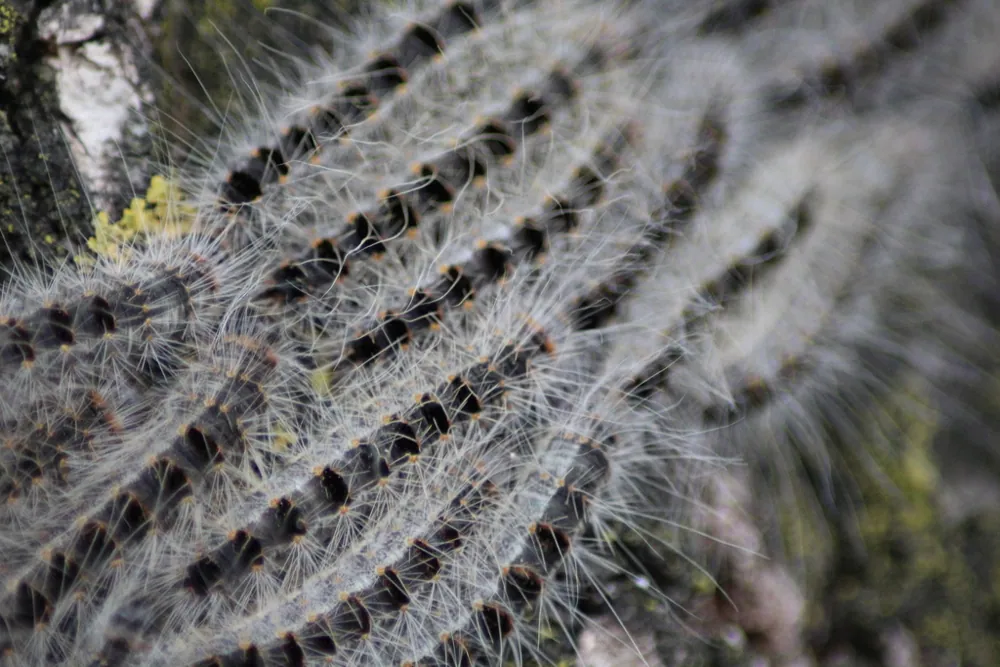
 Cómo reconocerlo
- Adult moths have a wingspan of 25 to 35 mm and are tan, brown and white, which makes them hard to see against oak bark.1
- Caterpillars have very long, white hairs that contrast with shorter hairs.1
- Caterpillars march in lines, often arrow-shaped, with a leader and rows of several caterpillars side by side.1
- Nests are white and silk-like when new, and become discoloured and hard to see over time.1
- Nests can be round, teardrop-shaped, bag-like or blanket-like, and can be found at any height on an oak tree.1
Se confunde a menudo con: Caterpillars of several other species may be mistaken for the oak processionary. Unlike other caterpillars, the oak processionary does not live on fences or walls, so it is mostly found in oak trees or on the ground beneath them in late spring and early summer.1
Poder del veneno
Pelitos o cerdas diminutas se rompen dentro de la piel y pican.
¿Qué hace su veneno?
The caterpillars' back bristles contain a urticating toxin called thaumetopoein, a protein that irritates the skin. Contact can cause a papular rash and itching, and the hairs can also cause eye inflammation (conjunctivitis). If the hairs are breathed in, they can cause sore throat (pharyngitis), breathing problems, asthma, or in rare cases anaphylaxis, a severe allergic reaction.1
¿Qué peligro tiene para las personas?
Peligro para las personas: DolorosoPuede doler de verdad, pero casi nunca es grave.The moths are an increasing nuisance to people as their range grows, and the hairs can cause a skin condition called epidemic caterpillar dermatitis. The hairs break off easily, float in the air, and can stay harmful for several seasons. Mowing a lawn can bring people into contact with them.1
 Buena noticia: los médicos tienen un medicamento (antídoto) o un tratamiento para esto.1
¿Qué hace cuando se asusta?
The caterpillars defend themselves with thousands of pointed, easily broken bristles on their backs that float in the air and irritate the skin.1
 Si tocas sus pelos
- The skin irritation and itching can be largely relieved by cetirizine-based antihistamine tablets. Anyone with breathing problems or a severe reaction needs urgent medical help.1
- Para los pelos urticantes de orugas: quítalos con cinta adhesiva y luego lava la piel. No frotes.
- Para mordeduras: lava y enfría. Busca ayuda médica si la persona se encuentra mal o sangra con facilidad.
Llama siempre primero a tu número de emergencias (112, 000, 911). Esto son pautas generales de primeros auxilios, no consejo médico. Primeros auxilios básicos
 Mantente a salvo
- Nunca toques, atrapes ni molestes a un animal salvaje, aunque sea pequeño y aunque parezca dormido o muerto.
- Déjale espacio. Si te encuentras uno, mantén la calma, retrocede despacio y deja que siga su camino.
- Si tocas sus pelos: mantén la calma, no te muevas, llama a tu número de emergencias (112, 000, 911) o ve rápido a un hospital. Recuerda cómo era, una foto ayuda.
No va a por ti. Usa su veneno para cazar o defenderse, y prefiere mil veces esconderse. Más sobre cómo protegerte
¿En qué parte del mundo?
¿Qué tamaño tiene?
¿Cuánto mide?
 más o menos lo que mide un clip
 más lento que un caracol de jardín
¿Qué tamaño tiene Oak processionary comparado contigo?
Solo cálculos en tu navegador. No se guarda ni se envía nada a ningún sitio.
¿Qué velocidad alcanza?

Datos
Older caterpillars can have up to 63,000 pointed defensive bristles on their backs.1
In 2007, soldiers were deployed to burn infestations in the Belgian province of Limburg.1
The UK government spent £37 million trying to control the caterpillars, which had spread to all 33 London boroughs by 2019.1
In the Netherlands, great tits have been observed eating the young caterpillars before their hairs develop in April.1
In 2023, an outbreak in Ireland was successfully eradicated.1
Para expertos en veneno
- Nombre científico
- Thaumetopoea processionea
- Grupo
- Orugas y bichos
- Familia
- Notodontidae2
- Orden
- Lepidoptera
- Continentes
- Europa
- Crías
- Eggs hatch into caterpillars that build communal silk nests in oak trees, and the caterpillars later pupate into adult moths in these nests.1
- Peligro para las personas
- 2 / 5: Doloroso3
De dónde salen los datos
- Oak processionary (Wikipedia (CC BY-SA 4.0))
- Thaumetopoea processionea (iNaturalist): nombres y clasificación.
- Venom Wiki: el nivel de peligro, el tamaño típico y la velocidad estimada son nuestros. Mira cómo los calculamos: Cómo valoramos el peligro.
Cada dato de esta página tiene un número que lleva a su fuente. Si nos hemos equivocado en algo, perdón, somos fans de los animales, no una revista científica. Escríbenos a [email protected] y lo arreglamos.
 ¡El escorpión tiene hambre! Venom Wiki es un proyecto de una sola persona: gratis, sin anuncios y sin rastreadores. Una pequeña propina ayuda a mantenerlo en línea.Alimenta al escorpión
Más del mismo grupo: Orugas y bichos
 Pine processionary
 Common bombardier beetle
 Brown-tail moth
 Masked hunter
 Pine-tree lappet
 Common backswimmer
También vive en: Europa
 Common European adderVíborasNecesita médico
 Spanish flyOtros animales tóxicosNecesita médicoNo tocar
 Common waspAbejas, avispas y avisponesSolo duele
 European hornetAbejas, avispas y avisponesSolo duele
 Fire salamanderRanas venenosas, sapos y tritonesSolo dueleNo tocar
 Western honey beeAbejas, avispas y avisponesSolo duele