
 África
 Asia
Asia Europa
 Sudamérica
 Australia y Oceanía
 Antártida
 Océano Pacífico
 Océano Atlántico
 Océano Índico
 Océano Ártico
 Mar Mediterráneo
 Mar Rojo
 Mar Caribe
 Mar del Coral
 Mar de China Meridional
 Mar de Filipinas
 Mar de Andamán
 Mar del Norte
 Mar de Timor y de Arafura
 Golfo de Bengala
 Golfo de California
Red-tailed bumblebee
 Picaduras
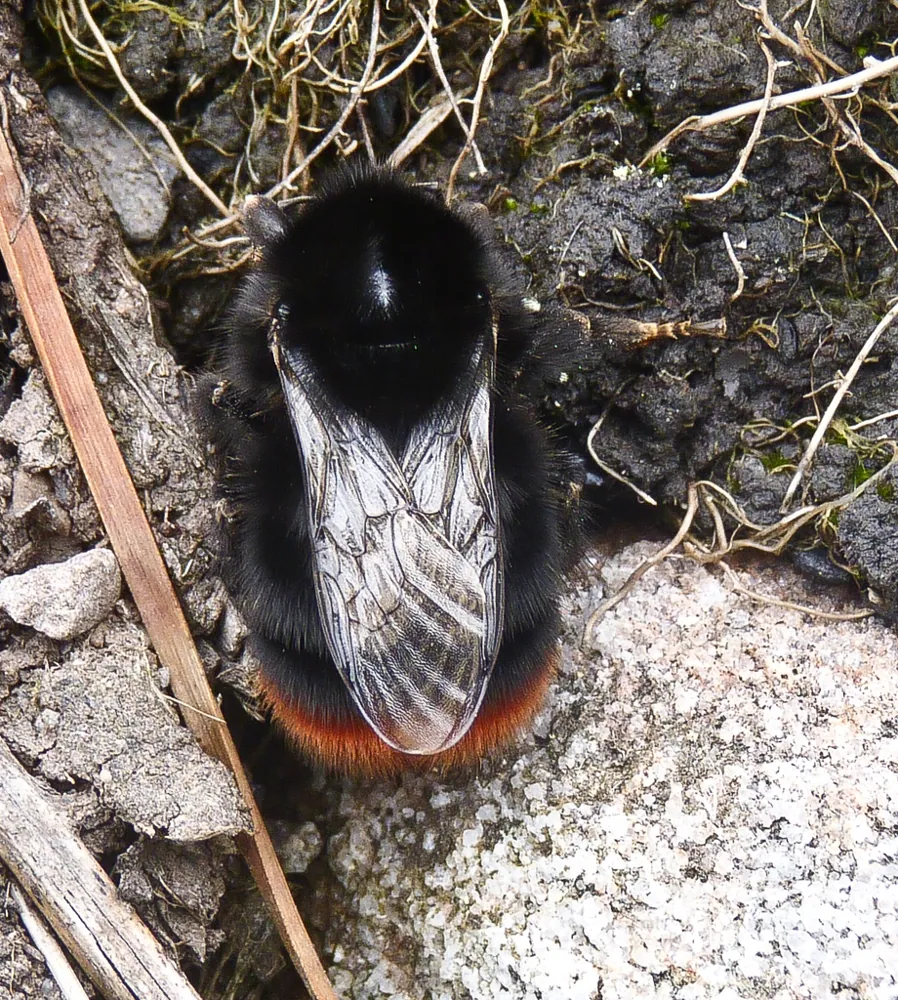
The red-tailed bumblebee is a black bee with red markings at the back of its body. It lives across much of Central Europe, including Britain and Ireland. It is an important pollinator of flowers and crops, and like other bumblebees it can sting.1


 Cómo reconocerlo
- Black body with red markings around the abdomen.1
- Males have red and black colouring, a yellow band around the abdomen and yellow markings on the face.1
- Workers and the queen look similar, but the queen is much larger than the workers.1
Se confunde a menudo con: Rarer bumblebees such as Bombus ruderarius have a similar appearance.1
Poder del veneno
El veneno sale por un aguijón.
¿Qué peligro tiene para las personas?
Peligro para las personas: LeveComo una picadura de abeja o menos. Prácticamente inofensivo para las personas. Si pica
- Raspa el aguijón de abeja y enfría la zona.
- Si a la persona le cuesta respirar, se le hincha la cara o la garganta, o se marea, es una emergencia alérgica: llama a tu número de emergencias y usa su autoinyector de adrenalina si tiene uno.
Llama siempre primero a tu número de emergencias (112, 000, 911). Esto son pautas generales de primeros auxilios, no consejo médico. Primeros auxilios básicos
 Mantente a salvo
- Nunca toques, atrapes ni molestes a un animal salvaje, aunque sea pequeño y aunque parezca dormido o muerto.
- Déjale espacio. Si te encuentras uno, mantén la calma, retrocede despacio y deja que siga su camino.
- Si te pica: mantén la calma, no te muevas, llama a tu número de emergencias (112, 000, 911) o ve rápido a un hospital. Recuerda cómo era, una foto ayuda.
No va a por ti. Usa su veneno para cazar o defenderse, y prefiere mil veces esconderse. Más sobre cómo protegerte
¿En qué parte del mundo?
¿Qué tamaño tiene?
¿Cuánto mide?
 más corto que tu dedo meñique
 podría cruzar volando un campo de fútbol entero en 15 segundos
¿Qué tamaño tiene Red-tailed bumblebee comparado contigo?
Solo cálculos en tu navegador. No se guarda ni se envía nada a ningún sitio.
¿Qué velocidad alcanza?


Datos
The bees warm their nest by producing heat with their flight muscles, which they use to incubate the brood.1
Cuckoo bumblebees can invade its nests by copying its chemical scent or by producing a substance that repels the workers.1
Males mark spots with scent to attract females, and these scents are often copied by cuckoo bumblebees.1
Some individuals fly as far as 1,750 metres from the nest to find food, although most forage much closer.1
Males travel much farther than workers, which may help keep the population genetically varied.1
It forages and pollinates at higher temperatures than many other bumblebee species.1
Para expertos en veneno
- Nombre científico
- Bombus lapidarius
- Grupo
- Abejas, avispas y avispones
- Familia
- Apidae2
- Orden
- Hymenoptera
- Continentes
- Europa
- Crías
- The queen lays eggs in the nest, and workers sometimes eat them. A nest usually holds a few hundred bees at most, with about 100 to 200 workers on average.1
- Cómo le va en la naturaleza
- Near Threatened in Ireland1
- Peligro para las personas
- 1 / 5: Leve3
De dónde salen los datos
- Bombus lapidarius (Wikipedia (CC BY-SA 4.0))
- Bombus lapidarius (iNaturalist): nombres y clasificación.
- Venom Wiki: el nivel de peligro, el tamaño típico y la velocidad estimada son nuestros. Mira cómo los calculamos: Cómo valoramos el peligro.
Cada dato de esta página tiene un número que lleva a su fuente. Si nos hemos equivocado en algo, perdón, somos fans de los animales, no una revista científica. Escríbenos a [email protected] y lo arreglamos.
 ¡El escorpión tiene hambre! Venom Wiki es un proyecto de una sola persona: gratis, sin anuncios y sin rastreadores. Una pequeña propina ayuda a mantenerlo en línea.Alimenta al escorpión
Más del mismo grupo: Abejas, avispas y avispones
 Common waspAbejas, avispas y avisponesSolo duele
 European hornetAbejas, avispas y avisponesSolo duele
 Western honey beeAbejas, avispas y avisponesSolo duele
 European paper waspAbejas, avispas y avisponesSolo duele
 German waspAbejas, avispas y avisponesSolo duele
 Buff-tailed bumblebeeAbejas, avispas y avisponesInofensivo
 Common European adder
 Spanish fly
 Fire salamander
 Blunt-nosed viper
 Nose-horned viper
 Ottoman viper