
 Afrika
 Asia
Asia Europa
 Hego Amerika
 Australia eta Ozeania
 Antartika
 Ozeano Barea
 Ozeano Atlantikoa
 Ozeano Indikoa
 Ozeano Artikoa
 Mediterraneo itsasoa
 Itsaso Gorria
 Karibe itsasoa
 Koralen itsasoa
 Hego Txinako itsasoa
 Filipinetako itsasoa
 Andaman itsasoa
 Ipar itsasoa
 Timor eta Arafura itsasoak
 Bengalako golkoa
 Kaliforniako golkoa
Diving bell spider
 Koska
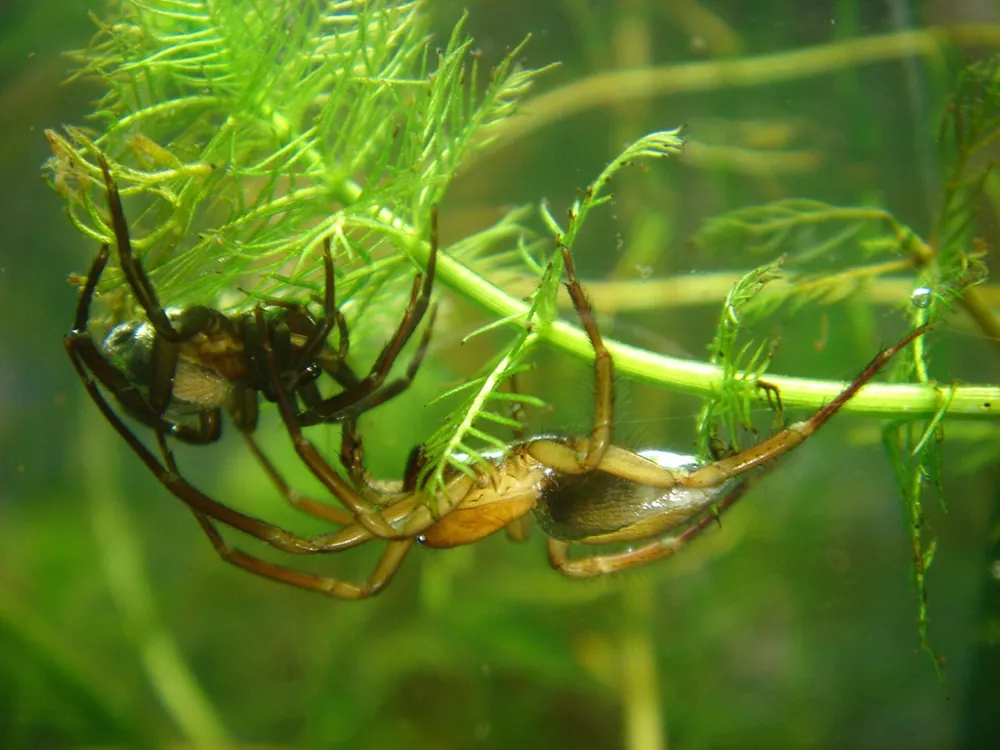
KoskaThe diving bell spider is the only spider known to live almost entirely underwater. It makes its home in clean freshwater across Europe and Asia. It is special because it breathes air that it carries down from the surface and keeps in a silk bell under the water.1



 Nola ezagutu
- Out of the water, it is mid to dark brown.1
- Hairs on the abdomen give it a dark grey, velvet-like look.1
- Underwater, an air bubble trapped by dense hairs on the abdomen and legs makes it look silvery.1
- Males have a head-and-body length of 10 to 15 mm, and females 8 to 12 mm.1
- It spends most of its time inside a silk diving bell, darting out to catch prey.1
Pozoi-ahalmena
Pozoia letaginetatik edo hortzetatik ateratzen da kosk egiten duenean.
Zer egiten du bere pozoiak?
Reports describe a bite that is painful, with local swelling, vomiting and a slight fever that lasts 5 to 10 days. These reports are old and unverified, so the effects are not well confirmed.1
Zein arriskutsua da pertsonentzat?
Arriskua pertsonentzat: MingarriaBenetan min handia eman dezake, baina ia inoiz ez da larria.The bite is reputedly painful, but there is no solid evidence of serious harm to people. Recent confirmed reports are lacking.1
 Kosk egiten badu
- Garbitu koska eta jarri izotz-poltsa bat gainean minerako. Lortu mediku-laguntza mina handia bada, zabaltzen bada edo pertsona gaizki sentitzen bada.
Deitu beti lehenik zure larrialdi-zenbakira (112, 000, 911). Lehen sorospenei buruzko orientabide orokorra da hau, ez mediku-aholkua. Lehen sorospenen oinarriak
 Egon seguru
- Ez ukitu, ez harrapatu eta ez zirikatu inoiz animalia basati bat, txikia izan arren, eta lo edo hilda dagoela badirudi ere.
- Utzi tartea. Bat aurkitzen baduzu, egon lasai, egin atzera poliki eta utzi bere bidetik joaten.
- Batek kosk egiten badizu: egon lasai, egon geldi, deitu zure larrialdi-zenbakira (112, 000, 911) edo joan ospitalera azkar. Gogoratu nolakoa zen, argazki batek laguntzen du.
Ez dabil zure atzetik. Pozoia janaria harrapatzeko edo bere burua babesteko erabiltzen du, eta askoz nahiago du ezkutatu. Seguru egoteari buruz gehiago
Munduko zein tokitan?
Zein handia da?
Zein luzea da?
 zure hatz txikia baino laburragoa
Zein handia da Diving bell spider ZUREKIN alderatuta?
Matematika hutsa zure nabigatzailean. Ez da ezer gordetzen, ezta inora bidaltzen ere.
Zein azkarra da?


Datuak
It is the only known spider that spends almost its whole life underwater, including resting, hunting, mating, laying eggs and overwintering. It surfaces only briefly to refill its air supply.1
Its diving bell is made of waterproof silk and lets gases pass through. Oxygen flows in and carbon dioxide flows out, so the bell works like a kind of gill.1
Nitrogen slowly leaves the bell, so the air bubble shrinks and the spider must keep refilling it.1
Unlike most spiders, the males are larger than the females, and they are more active hunters.1
Mito-hauslea
Mitoa: Its bite is very painful and causes vomiting and fever.
Egia: These effects are based on old, unverified reports. There is no solid evidence for them, and recent confirmed reports are lacking.1
Pozoi-adituentzat
- Izen zientifikoa
- Argyroneta aquatica
- Taldea
- Armiarmak
- Familia
- Argyronetidae2
- Ordena
- Araneae
- Kontinenteak
- Europa, Asia
- Kumeak
- After mating in the female's bell, she builds an egg sac inside it and lays between 30 and 70 eggs.1
- Bizi-iraupena
- 2 urte inguru1
- Nola dagoen naturan
- Endangered in South Korea1
- Arriskua pertsonentzat
- 2 / 5: Mingarria3
Datuak nondik datozen
- Diving bell spider (Wikipedia (CC BY-SA 4.0))
- Argyroneta aquatica (iNaturalist): izenak eta sailkapena.
- Venom Wiki: arrisku-maila, ohiko tamaina eta abiadura-kalkulua geureak dira. Ikusi nola kalkulatzen ditugun: Nola baloratzen dugun arriskua.
Orrialde honetako datu bakoitzak zenbaki bat du, bere iturrira eramaten zaituena. Zerbait gaizki badugu, barkatu, animalien zaleak gara, ez zientzia-aldizkari bat. Esaiguzu [email protected] helbidean eta konponduko dugu.
 Eskorpioia gose da! Venom Wiki pertsona bakar baten proiektua da: doakoa, iragarkirik eta jarraitzailerik gabe. Eskupeko txiki batek sarean mantentzen laguntzen du.Elikatu eskorpioia
Talde bereko gehiago: Armiarmak
 Mediterranean black widowArmiarmakMedikua behar du
 European yellow sac spiderArmiarmakMin ematen du, besterik ez
 Noble false widowArmiarmakMin ematen du, besterik ez
 Tarantula wolf spiderArmiarmakMin ematen du, besterik ez
 Daddy long-legs spiderArmiarmakKaltegabea
 European garden spiderArmiarmakKaltegabea
Hemen ere bizi da: Europa
 Common European adderSugegorriak eta biperakMedikua behar du
 Spanish flyBeste animalia toxiko batzukMedikua behar duEz ukitu
 Common waspErleak, liztorrak eta erlastarrakMin ematen du, besterik ez
 European hornetErleak, liztorrak eta erlastarrakMin ematen du, besterik ez
 Fire salamanderIgel toxikoak, apoak eta uhandreakMin ematen du, besterik ezEz ukitu
 Western honey beeErleak, liztorrak eta erlastarrakMin ematen du, besterik ez