
 Afrikka
 Aasia
Aasia Eurooppa
 Etelä-Amerikka
 Australia ja Oseania
 Etelämanner
 Tyynimeri
 Atlantti
 Intian valtameri
 Pohjoinen jäämeri
 Välimeri
 Punainenmeri
 Karibianmeri
 Korallimeri
 Etelä-Kiinan meri
 Filippiinienmeri
 Andamaanienmeri
 Pohjanmeri
 Timorinmeri ja Arafuranmeri
 Bengalinlahti
 Kalifornianlahti
Black long-spined urchin
 Myrkkypiikit
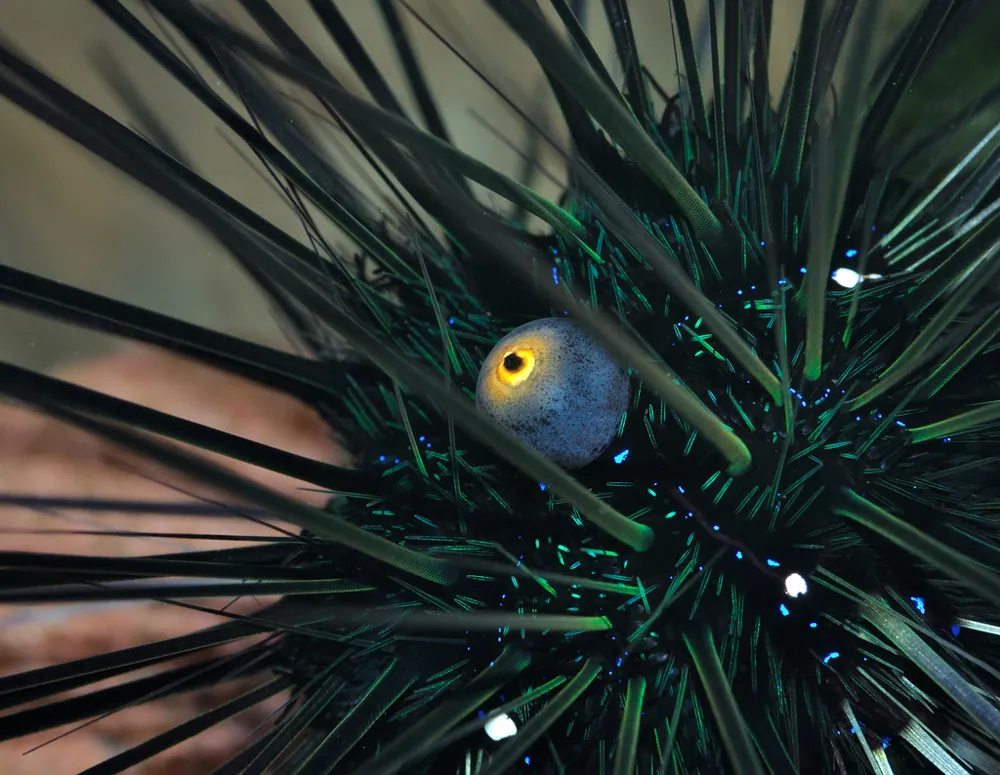
The black long-spined urchin is a sea urchin with very long, hollow spines. It lives on coral reefs, sand flats and seagrass beds across the Indo-Pacific, and it is one of the most widespread sea urchins in that region. Its spines can deliver a mild venom, so it is best to watch where you put your feet.1


 Näin tunnistat sen
- Black, near-spherical body (test) with extremely long, narrow, hollow spines, often black but sometimes brown-banded1
- Five white spots on the body, which separate it from other Diadema species1
- A bright orange ring around the periproctal cone (the 'anal cone'), which is often mistaken for an eye1
- Bluish spots on the genital plates and a line of blue spots along the body1
- Adults are no more than 70 mm across the body and about 40 mm high1
Sekoitetaan usein: Other Diadema species are similar in shape and spines, but they lack the five white spots that mark this species. Its orange ring and blue spots also help to tell it apart.1
Myrkkyvoima
Terävissä piikeissä on myrkkyä. Sen päälle astuminen tai siihen tarttuminen sattuu.
Mitä sen myrkky tekee, kun se puree tai pistää?
The spines are hollow and contain a mild venom. The toxin mostly causes swelling and pain, which spreads gradually over several hours. The venom is not fatal to humans. The spines themselves are a bigger problem, because they are brittle and needle-like, break off in flesh and are difficult to remove.1
Kuinka vaarallinen se on ihmisille?
Vaara ihmisille: KivuliasSe voi sattua tosi paljon, mutta se ei ole juuri koskaan vakavaa.The venom is only mild, and the species is not considered a serious threat to humans. Stepping on it can cause painful stings.1
Mitä se tekee, kun se pelästyy?
When threatened by a sudden impact or by spines snapping, it rapidly flips its body over and 'runs' on the tips of its longest spines.1
 Jos sen piikit uppoavat ihoosi
- Laita haava kuumaan veteen, niin kuumaan kuin henkilö kestää polttamatta itseään, ja hae lääkärin apua piikkien poistamiseen. Älä kaivele niitä itse.
Soita aina ensin hätänumeroon (112, 000, 911). Nämä ovat yleisiä ensiapuohjeita, eivät lääketieteellisiä neuvoja. Ensiavun perusteet
 Pysy turvassa
- Älä koskaan koske villieläimeen, pyydystä sitä tai kiusaa sitä, ei edes pientä, eikä silloinkaan, kun se näyttää nukkuvan tai olevan kuollut.
- Anna sille tilaa. Jos kohtaat sellaisen, pysy rauhallisena, peräänny hitaasti ja anna sen mennä omaa tietään.
- Jos sen piikit uppoavat ihoosi: pysy rauhallisena, pysy paikallasi, soita hätänumeroon (112, 000, 911) tai mene nopeasti sairaalaan. Muista, miltä se näytti, valokuva auttaa.
Se ei ole sinun perässäsi. Se käyttää myrkkyään saadakseen ruokaa tai suojellakseen itseään, ja se piiloutuu paljon mieluummin. Lisää turvallisuudesta
Missä päin maailmaa?
Kuinka iso se on?
Kuinka pitkä se on?
Kuinka painava se on?

 yhtä pitkä kuin 2 rakennuspalikkaa rivissä
 hitaampi kuin puutarhaetana
Kuinka iso Black long-spined urchin on SINUUN verrattuna?
Pelkkää matematiikkaa selaimessasi. Mitään ei tallenneta eikä lähetetä minnekään.
Kuinka nopea se on?

Faktat
It can move 760 mm in just 7 seconds by rolling and walking on the tips of its spines.1
It has no eye, but it has a diffuse light-sensing system that lets it detect light levels and the size and colour of objects.1
In 2006, living specimens were found off Turkey, making it the first invasive Erythrean sea urchin recorded in the Mediterranean.1
Goose barnacles of the genus Microlepas are known to live on it as parasites.1
It is considered one of the oldest living species in its genus, Diadema.1
Myyttien murtaja
Myytti: Black long-spined urchins are deadly and their stings can kill people.
Totuus: Their venom is mild and is not fatal to humans. The main problems are pain, swelling and spines that break off in the skin.1
Myrkkyasiantuntijoille
- Tieteellinen nimi
- Diadema setosum
- Ryhmä
- Merisiilit, meritähdet ja madot
- Perhe
- Diadematidae2
- Järjestys
- Diadematoida
- Maanosat
- Intian valtameri, Tyynimeri, Punainenmeri, Korallimeri, Filippiinienmeri, Arabianmeri ja Persianlahti, Timorinmeri ja Arafuranmeri, Bengalinlahti, Valtameret
- Vauvat
- It is a broadcast spawner, releasing eggs and sperm into the water. Spawning happens seasonally or year-round depending on the location, and in some places it follows the full moon.1
- Vaara ihmisille
- 2 / 5: Kivulias3
Mistä tiedot ovat peräisin
- Diadema setosum (Wikipedia (CC BY-SA 4.0))
- Diadema setosum (iNaturalist): nimet ja luokittelu.
- Venom Wiki: vaarataso, tyypillinen koko ja nopeusarvio ovat omia arvioitamme. Katso, miten laskemme ne: Näin arvioimme vaaran.
Jokaisella tämän sivun tiedolla on numero, joka viittaa sen lähteeseen. Jos jokin meni pieleen, anteeksi, olemme eläinfaneja emmekä tiedelehti. Kerro meille osoitteeseen [email protected], niin korjaamme sen.
 Skorpionilla on nälkä! Venom Wiki on yhden miehen projekti: ilmainen, ilman mainoksia ja ilman seurantaa. Pieni tippi auttaa pitämään sen verkossa.Ruoki skorpioni
Lisää samasta ryhmästä: Merisiilit, meritähdet ja madot
 Crown-of-thorns starfishMerisiilit, meritähdet ja madotVaatii lääkäriäÄlä koske
 Flower urchinMerisiilit, meritähdet ja madotVoi tappaa
 Fire urchinMerisiilit, meritähdet ja madotVaatii lääkäriäÄlä koske
 Bearded firewormMerisiilit, meritähdet ja madotSattuu vainÄlä koske
 BloodwormMerisiilit, meritähdet ja madotSattuu vain
 Bobbit wormMerisiilit, meritähdet ja madotSattuu vain
Elää myös: Intian valtameri
 MeriampiainenMeduusat ja muut polttavat merieläimetTappavaÄlä koske
 KarttakartiokotiloKartiokotilot ja mustekalatTappava
 Suuri sinirengasmustekalaKartiokotilot ja mustekalatTappava
 Eteläinen sinirengasmustekalaKartiokotilot ja mustekalatTappava
 Hawksbill sea turtleMuut passiivisesti myrkylliset eläimetVoi tappaa
 Irukandji jellyfishMeduusat ja muut polttavat merieläimetVoi tappaaÄlä koske