
 Afrikka
 Aasia
Aasia Eurooppa
 Etelä-Amerikka
 Australia ja Oseania
 Etelämanner
 Tyynimeri
 Atlantti
 Intian valtameri
 Pohjoinen jäämeri
 Välimeri
 Punainenmeri
 Karibianmeri
 Korallimeri
 Etelä-Kiinan meri
 Filippiinienmeri
 Andamaanienmeri
 Pohjanmeri
 Timorinmeri ja Arafuranmeri
 Bengalinlahti
 Kalifornianlahti
Horn shark
 Myrkkypiikit
The horn shark is a small shark with a blunt head and two tall fins, each with a large spine at the front. It lives along the western coast of North America, from California to the Gulf of California. It spends its days hidden in caves and crevices and hunts at night.1



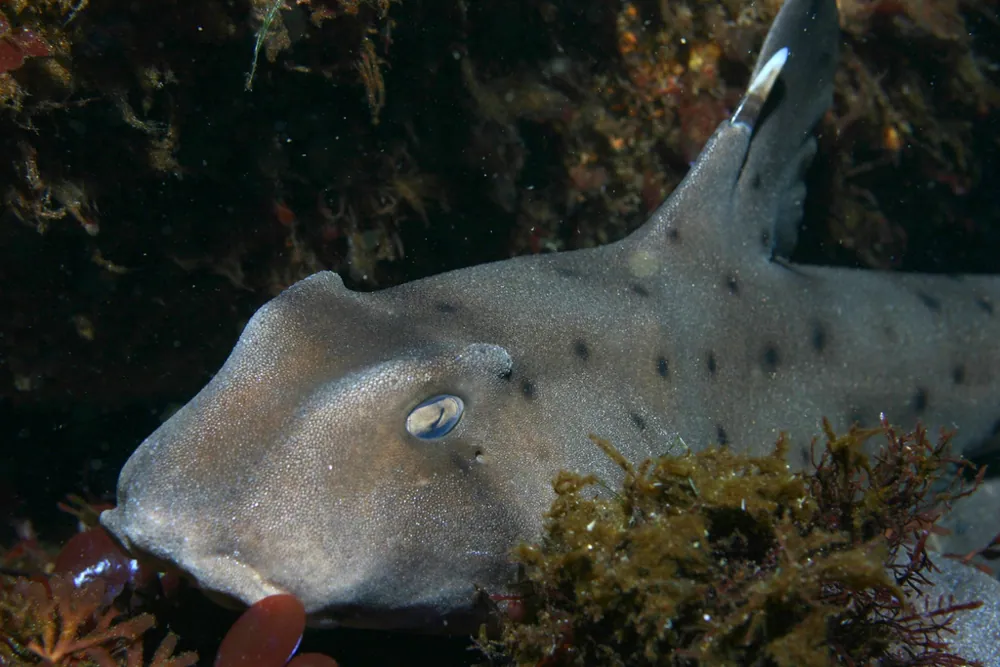
 Näin tunnistat sen
Myrkkyvoima
Terävissä piikeissä on myrkkyä. Sen päälle astuminen tai siihen tarttuminen sattuu.
Kuinka vaarallinen se on ihmisille?
Vaara ihmisille: LieväKuin mehiläisen pisto tai vähemmän. Käytännössä vaaraton ihmisille.Horn sharks are harmless unless they are harassed. They are not targeted by commercial or recreational fisheries, though small numbers are caught by accident.1
Mitä se tekee, kun se pelästyy?
During the day they stay still in hiding places, but they swim away quickly if disturbed.1
 Jos sen piikit uppoavat ihoosi
- Laita haava kuumaan veteen, niin kuumaan kuin henkilö kestää polttamatta itseään (kokeile omalla kädelläsi), 30–90 minuutiksi. Hae lääkärin apua, etenkin kivikalan ja rauskun pistoihin.
Soita aina ensin hätänumeroon (112, 000, 911). Nämä ovat yleisiä ensiapuohjeita, eivät lääketieteellisiä neuvoja. Ensiavun perusteet
 Pysy turvassa
- Älä koskaan koske villieläimeen, pyydystä sitä tai kiusaa sitä, ei edes pientä, eikä silloinkaan, kun se näyttää nukkuvan tai olevan kuollut.
- Anna sille tilaa. Jos kohtaat sellaisen, pysy rauhallisena, peräänny hitaasti ja anna sen mennä omaa tietään.
- Jos sen piikit uppoavat ihoosi: pysy rauhallisena, pysy paikallasi, soita hätänumeroon (112, 000, 911) tai mene nopeasti sairaalaan. Muista, miltä se näytti, valokuva auttaa.
Se ei ole sinun perässäsi. Se käyttää myrkkyään saadakseen ruokaa tai suojellakseen itseään, ja se piiloutuu paljon mieluummin. Lisää turvallisuudesta
Missä päin maailmaa?
Kuinka iso se on?
Kuinka pitkä se on?
 yhtä pitkä kuin 2,5 kotikissaa kuonosta häntään
 yhtä pitkä kuin 7 banaania peräkkäin
 voisi uida ison uima-altaan (50 m) päästä päähän 9 sekunnissa
Kuinka iso Horn shark on SINUUN verrattuna?
Pelkkää matematiikkaa selaimessasi. Mitään ei tallenneta eikä lähetetä minnekään.
Kuinka nopea se on?

Faktat
For its size, the horn shark has the strongest bite of any shark that has been measured.1
To pull prey loose, the shark pushes its head up with a downward stroke of its tail. No other shark has been seen doing this.1
Large horn sharks that eat many sea urchins can have purple-stained teeth and fin spines.1
A Pacific angelshark was filmed trying to swallow a juvenile horn shark, but spat it out because of the spines.1
Horn sharks have only 148 electroreceptors (ampullae of Lorenzini), far fewer than most sharks, which may have over 2,000. They rely mainly on smell to find food.1
A dropped tooth takes about 4 weeks to be replaced.1
Myrkkyasiantuntijoille
- Tieteellinen nimi
- Heterodontus francisci
- Ryhmä
- Myrkylliset kalat
- Perhe
- Heterodontidae2
- Järjestys
- Heterodontiformes
- Maanosat
- Tyynimeri, Kalifornianlahti, Valtameret
- Vauvat
- They lay eggs. From February to April, females lay up to 24 eggs, two at a time, every 11 to 14 days, and wedge the egg cases into crevices to protect them.1
- Miten sillä menee luonnossa
- Insufficient data (IUCN); population listed as stable on 10 October 20251
- Vaara ihmisille
- 1 / 5: Lievä3
Mistä tiedot ovat peräisin
- Horn shark (Wikipedia (CC BY-SA 4.0))
- Heterodontus francisci (iNaturalist): nimet ja luokittelu.
- Venom Wiki: vaarataso, tyypillinen koko ja nopeusarvio ovat omia arvioitamme. Katso, miten laskemme ne: Näin arvioimme vaaran.
Jokaisella tämän sivun tiedolla on numero, joka viittaa sen lähteeseen. Jos jokin meni pieleen, anteeksi, olemme eläinfaneja emmekä tiedelehti. Kerro meille osoitteeseen [email protected], niin korjaamme sen.
 Skorpionilla on nälkä! Venom Wiki on yhden miehen projekti: ilmainen, ilman mainoksia ja ilman seurantaa. Pieni tippi auttaa pitämään sen verkossa.Ruoki skorpioni
Lisää samasta ryhmästä: Myrkylliset kalat
 Reef stonefishMyrkylliset kalatVoi tappaaÄlä koske
 Red lionfishMyrkylliset kalatVaatii lääkäriäÄlä koske
 Estuarine stonefishMyrkylliset kalatVoi tappaaÄlä koske
 Short-tail stingrayMyrkylliset kalatVoi tappaa
 Striped eel catfishMyrkylliset kalatVoi tappaaÄlä koske
 Bluespotted ribbontail rayMyrkylliset kalatVaatii lääkäriä
Elää myös: Tyynimeri
 MeriampiainenMeduusat ja muut polttavat merieläimetTappavaÄlä koske
 KarttakartiokotiloKartiokotilot ja mustekalatTappava
 Suuri sinirengasmustekalaKartiokotilot ja mustekalatTappava
 JapaninpallokalaMuut passiivisesti myrkylliset eläimetTappava
 Eteläinen sinirengasmustekalaKartiokotilot ja mustekalatTappava
 Hawksbill sea turtleMuut passiivisesti myrkylliset eläimetVoi tappaa