
 Afrikka
 Aasia
Aasia Eurooppa
 Etelä-Amerikka
 Australia ja Oseania
 Etelämanner
 Tyynimeri
 Atlantti
 Intian valtameri
 Pohjoinen jäämeri
 Välimeri
 Punainenmeri
 Karibianmeri
 Korallimeri
 Etelä-Kiinan meri
 Filippiinienmeri
 Andamaanienmeri
 Pohjanmeri
 Timorinmeri ja Arafuranmeri
 Bengalinlahti
 Kalifornianlahti
Iberian ribbed newt
 MyrkkypiikitSyö: LihaPassiivisesti myrkyllinen, ei aktiivisesti myrkyllinen
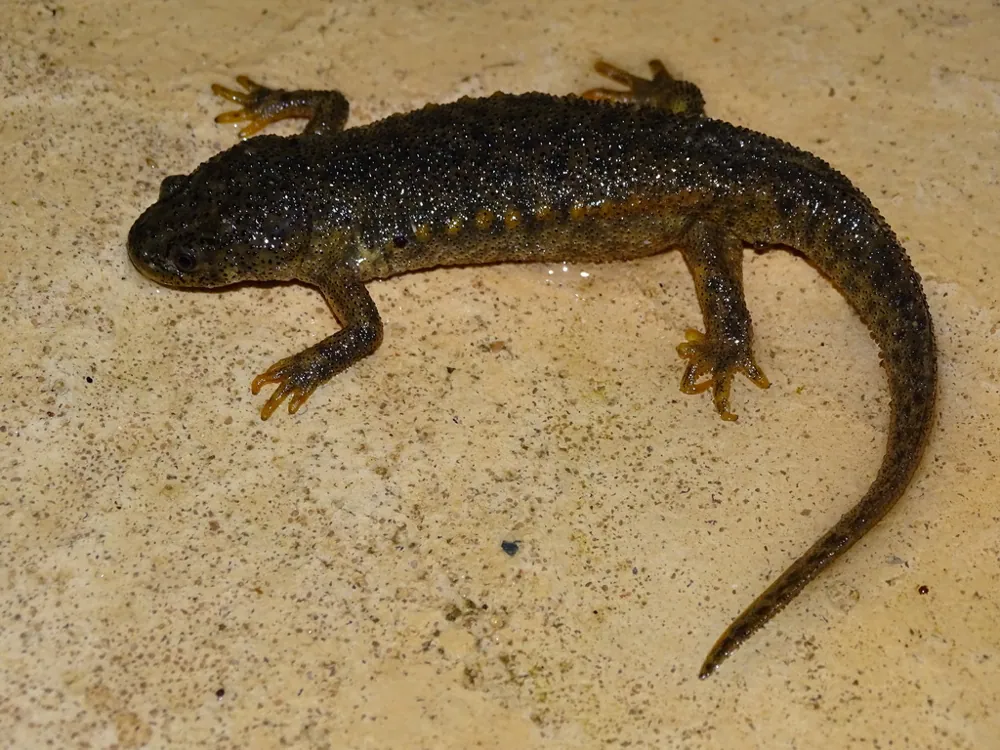
The Iberian ribbed newt is a salamander that lives in ponds and wells in Spain, Portugal and northern Morocco. It is the largest European newt species. When threatened, it can push its sharp ribs out through its skin, which gives it a way to defend itself against predators.1



 Näin tunnistat sen
- Dark grey on its back and lighter grey on its belly, with small rust-coloured spots1
- Usually 8 to 10 orange, wart-like bumps (tubercles) running down each side of the body1
- Flat, spade-shaped head and a long tail, about half of its body length1
- Males are more slender and usually smaller than females1
- Larvae have bushy external gills and paler colours than adults1
Sekoitetaan usein: It is sometimes confused with the Iberian newt (Lissotriton boscai), a different species with a similar common name.1
Myrkkyvoima
Terävissä piikeissä on myrkkyä. Sen päälle astuminen tai siihen tarttuminen sattuu.
Mitä sen myrkky tekee, kun se puree tai pistää?
When threatened, the newt releases a milky, thick poison from glands on its neck, back, sides and tail as its ribs push out. The poison coats the ribs, which can pierce the skin of a predator's mouth and inject toxins.1
Kuinka vaarallinen se on ihmisille?
Vaara ihmisille: LieväKuin mehiläisen pisto tai vähemmän. Käytännössä vaaraton ihmisille.The rib defence is completely harmless to humans. The ribs cause only little harm to the newt itself, and its skin quickly heals without infection.1
Mitä se tekee, kun se pelästyy?
It tries to run away from predators first. If it cannot escape, it pushes its sharp ribs through its sides and releases poison.1
 Jos sen piikit uppoavat ihoosi
- Jos joku on koskenut sellaiseen: pese kädet hyvin äläkä koske silmiin tai suuhun. Jos lapsi tai lemmikki on nuollut tai syönyt sellaisen: soita Myrkytystietokeskukseen tai hätänumeroon.
Soita aina ensin hätänumeroon (112, 000, 911). Nämä ovat yleisiä ensiapuohjeita, eivät lääketieteellisiä neuvoja. Ensiavun perusteet
 Pysy turvassa
- Älä koskaan koske villieläimeen, pyydystä sitä tai kiusaa sitä, ei edes pientä, eikä silloinkaan, kun se näyttää nukkuvan tai olevan kuollut.
- Anna sille tilaa. Jos kohtaat sellaisen, pysy rauhallisena, peräänny hitaasti ja anna sen mennä omaa tietään.
- Jos sen piikit uppoavat ihoosi: pysy rauhallisena, pysy paikallasi, soita hätänumeroon (112, 000, 911) tai mene nopeasti sairaalaan. Muista, miltä se näytti, valokuva auttaa.
Se ei ole sinun perässäsi. Se käyttää myrkkyään saadakseen ruokaa tai suojellakseen itseään, ja se piiloutuu paljon mieluummin. Lisää turvallisuudesta
Missä päin maailmaa?
Kuinka iso se on?
Kuinka pitkä se on?
 yhtä pitkä kuin 9 rakennuspalikkaa rivissä
Kuinka iso Iberian ribbed newt on SINUUN verrattuna?
Pelkkää matematiikkaa selaimessasi. Mitään ei tallenneta eikä lähetetä minnekään.
Kuinka nopea se on?


Faktat
Its ribs can push through its skin to act as a defence, a primitive and rudimentary form of envenomation.1
It is a model animal for regeneration research. It can regrow lost limbs, injured heart tissue, brain cells, eye lenses and parts of its spinal cord.1
This newt has been sent into space on at least six missions, starting in 1985.1
In genetic males and females, temperature can override sex chromosomes. Some ZW larvae reared at 32 °C (90 °F) become functional males.1
Its immune system, rib-coated collagen and antimicrobial peptides let the pierced skin heal quickly without infection.1
Females can keep live sperm in their cloaca for up to five months.1
Myyttien murtaja
Myytti: The newt's ribs and poison are dangerous to people.
Totuus: The ribs and poison are a defence against predators. The rib defence is completely harmless to humans.1
Myrkkyasiantuntijoille
- Tieteellinen nimi
- Pleurodeles waltl
- Ryhmä
- Nuolimyrkkysammakot, konnat ja vesiliskot
- Perhe
- Salamandridae2
- Järjestys
- Caudata
- Maanosat
- Eurooppa, Afrikka
- Vauvat
- The young are born in water as larvae, breathing through gills. They lose their gills as their limbs grow and can then live on land as well as in water.1
- Miten sillä menee luonnossa
- Least Concern (IUCN, assessed October 2020)1
- Vaara ihmisille
- 1 / 5: Lievä3
Mistä tiedot ovat peräisin
- Iberian ribbed newt (Wikipedia (CC BY-SA 4.0))
- Pleurodeles waltl (iNaturalist): nimet ja luokittelu.
- Venom Wiki: vaarataso, tyypillinen koko ja nopeusarvio ovat omia arvioitamme. Katso, miten laskemme ne: Näin arvioimme vaaran.
Jokaisella tämän sivun tiedolla on numero, joka viittaa sen lähteeseen. Jos jokin meni pieleen, anteeksi, olemme eläinfaneja emmekä tiedelehti. Kerro meille osoitteeseen [email protected], niin korjaamme sen.
 Skorpionilla on nälkä! Venom Wiki on yhden miehen projekti: ilmainen, ilman mainoksia ja ilman seurantaa. Pieni tippi auttaa pitämään sen verkossa.Ruoki skorpioni
Lisää samasta ryhmästä: Nuolimyrkkysammakot, konnat ja vesiliskot
 Fire salamanderNuolimyrkkysammakot, konnat ja vesiliskotSattuu vainÄlä koske
 Common toadNuolimyrkkysammakot, konnat ja vesiliskotSattuu vainÄlä koske
 European fire-bellied toadNuolimyrkkysammakot, konnat ja vesiliskotVaaraton
 Golden mantellaNuolimyrkkysammakot, konnat ja vesiliskotVaaraton
 Natterjack toadNuolimyrkkysammakot, konnat ja vesiliskotVaaraton
 Tomato frogNuolimyrkkysammakot, konnat ja vesiliskotVaaraton
Elää myös: Eurooppa
 Common European adderKyyt ja kyykäärmeetVaatii lääkäriä
 Spanish flyMuut passiivisesti myrkylliset eläimetVaatii lääkäriäÄlä koske
 Common waspMehiläiset, ampiaiset ja herhiläisetSattuu vain
 European hornetMehiläiset, ampiaiset ja herhiläisetSattuu vain
 Western honey beeMehiläiset, ampiaiset ja herhiläisetSattuu vain
 Blunt-nosed viperKyyt ja kyykäärmeetVoi tappaa