
 Afrikka
 Aasia
Aasia Eurooppa
 Etelä-Amerikka
 Australia ja Oseania
 Etelämanner
 Tyynimeri
 Atlantti
 Intian valtameri
 Pohjoinen jäämeri
 Välimeri
 Punainenmeri
 Karibianmeri
 Korallimeri
 Etelä-Kiinan meri
 Filippiinienmeri
 Andamaanienmeri
 Pohjanmeri
 Timorinmeri ja Arafuranmeri
 Bengalinlahti
 Kalifornianlahti
Pine processionary
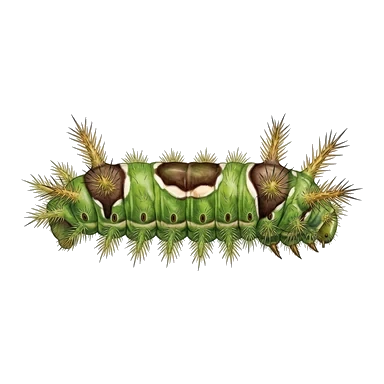 Polttavat karvat
The pine processionary is a moth whose caterpillars are famous for marching in long, nose-to-tail lines through pine woods. Their hairs cause painful rashes and eye irritation, and they can strip the needles from whole trees. It lives around the Mediterranean and is spreading north.1
 Näin tunnistat sen
- Caterpillars are orange-brown and hairy, with blue bands.1
- Large silken nests in pine trees, often with several in one tree and signs of stripped needles.1
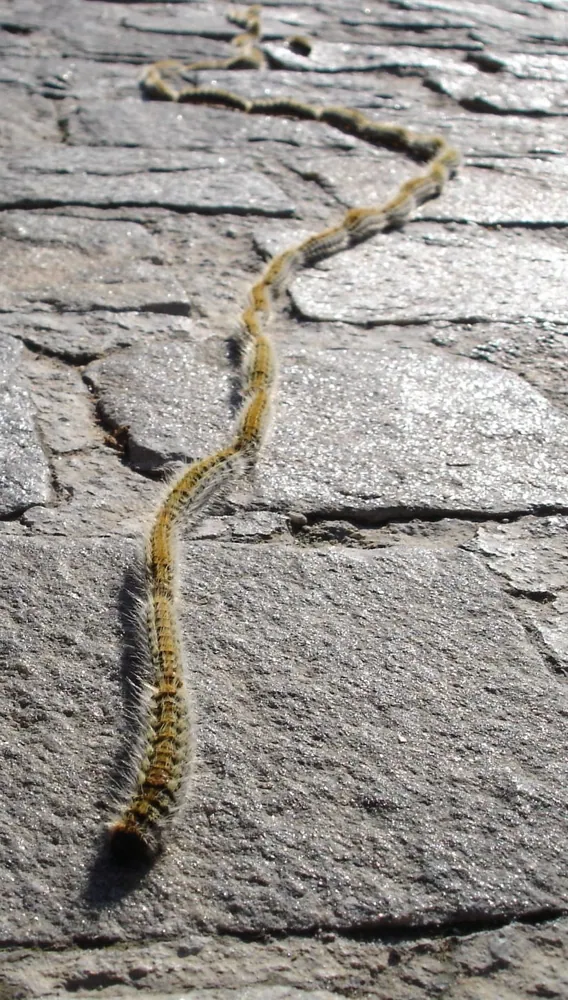
- Caterpillars move in single-file processions, usually at night and when leaving the tree to pupate.1
- Adults have predominantly light brown forewings with brown markings and white hindwings.1
- Adult males have a crescent marking on the wings and are larger than the oak processionary.1
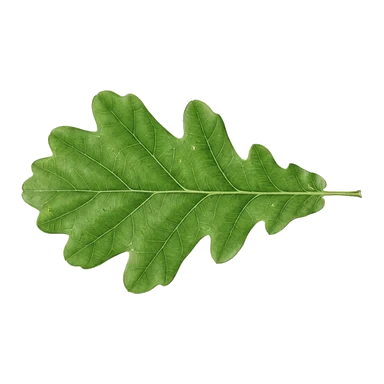
Sekoitetaan usein: The oak processionary (Thaumetopoea processionea) is smaller as an adult, has an indistinct wing marking rather than a crescent, and lives in broad-leaved rather than coniferous forests. The pale eggar moth has no crescent marking on its wings.1
Myrkkyvoima
Pikkuruiset karvat tai harjakset katkeavat ihoon ja polttavat.
Mitä sen myrkky tekee, kun se puree tai pistää?
The species is not venomous. Its caterpillars have hairs containing an irritant chemical called thaumetopoein, which causes skin rashes (urticaria) and eye irritation on contact. Some people may have an allergic reaction. The hairs of fifth-stage larvae can also break off and spread across nearby exposed skin.1
Kuinka vaarallinen se on ihmisille?
Vaara ihmisille: KivuliasSe voi sattua tosi paljon, mutta se ei ole juuri koskaan vakavaa.Simple contact with the caterpillar hairs can cause severe rashes and eye irritation in humans and other mammals. Some individuals may have an allergic reaction.1
Mitä se tekee, kun se pelästyy?
When stressed or threatened, fifth-stage caterpillars eject harpoon-shaped hairs that irritate any exposed skin nearby.1
 Jos kosket sen karvoihin
- Toukkien polttaville karvoille: irrota ne teipillä ja pese sitten iho. Älä hankaa.
- Puremiin: pese ja viilennä. Hae lääkärin apua, jos henkilö voi huonosti tai vuotaa helposti verta.
Soita aina ensin hätänumeroon (112, 000, 911). Nämä ovat yleisiä ensiapuohjeita, eivät lääketieteellisiä neuvoja. Ensiavun perusteet
 Pysy turvassa
- Älä koskaan koske villieläimeen, pyydystä sitä tai kiusaa sitä, ei edes pientä, eikä silloinkaan, kun se näyttää nukkuvan tai olevan kuollut.
- Anna sille tilaa. Jos kohtaat sellaisen, pysy rauhallisena, peräänny hitaasti ja anna sen mennä omaa tietään.
- Jos kosket sen karvoihin: pysy rauhallisena, pysy paikallasi, soita hätänumeroon (112, 000, 911) tai mene nopeasti sairaalaan. Muista, miltä se näytti, valokuva auttaa.
Se ei ole sinun perässäsi. Se käyttää myrkkyään saadakseen ruokaa tai suojellakseen itseään, ja se piiloutuu paljon mieluummin. Lisää turvallisuudesta
Missä päin maailmaa?
Kuinka iso se on?
Kuinka pitkä se on?
 suunnilleen yhtä pitkä kuin paperiliitin
 hitaampi kuin puutarhaetana
Kuinka iso Pine processionary on SINUUN verrattuna?
Pelkkää matematiikkaa selaimessasi. Mitään ei tallenneta eikä lähetetä minnekään.
Kuinka nopea se on?


Faktat
Caterpillars in a procession hold together through touch from the caterpillar in front, which takes priority over the trail pheromone or silk.1
The caterpillars are one of the few temperate-zone insects whose larvae develop through the winter, living in silk nests high in pine trees.1
Adults live for only a single day, during which they mate and lay eggs.1
The Greek physician Dioscorides described the itching caused by this caterpillar in the 1st century AD, and Pliny the Elder recorded a treatment for it.1
Outbreaks are somewhat cyclical, with a period of 7 to 9 years.1
Myyttien murtaja
Myytti: Fabre's caterpillars marched in a circle around a flower pot only because they were trapped on its rim.
Totuus: Young caterpillars' circular trails continue for as long as 12 hours even when they are free on a flat surface.1
Myrkkyasiantuntijoille
- Tieteellinen nimi
- Thaumetopoea pityocampa
- Ryhmä
- Toukat ja ötökät
- Perhe
- Notodontidae2
- Järjestys
- Lepidoptera
- Maanosat
- Eurooppa, Afrikka, Aasia
- Vauvat
- Each female lays an enormous number of eggs near the tops of pine trees, in cylindrical egg masses 4 to 5 cm long covered with scales that mimic pine shoots.1
- Vaara ihmisille
- 2 / 5: Kivulias3
Mistä tiedot ovat peräisin
- Pine processionary (Wikipedia (CC BY-SA 4.0))
- Thaumetopoea pityocampa (iNaturalist): nimet ja luokittelu.
- Venom Wiki: vaarataso, tyypillinen koko ja nopeusarvio ovat omia arvioitamme. Katso, miten laskemme ne: Näin arvioimme vaaran.
Jokaisella tämän sivun tiedolla on numero, joka viittaa sen lähteeseen. Jos jokin meni pieleen, anteeksi, olemme eläinfaneja emmekä tiedelehti. Kerro meille osoitteeseen [email protected], niin korjaamme sen.
 Skorpionilla on nälkä! Venom Wiki on yhden miehen projekti: ilmainen, ilman mainoksia ja ilman seurantaa. Pieni tippi auttaa pitämään sen verkossa.Ruoki skorpioni
Lisää samasta ryhmästä: Toukat ja ötökät
 Oak processionaryToukat ja ötökätSattuu vainÄlä koske
 White-spotted assassin bugToukat ja ötökätSattuu vain
 Common bombardier beetleToukat ja ötökätVaaraton
 Asian giant water bugToukat ja ötökätSattuu vain
 Blue-striped nettle grubToukat ja ötökätSattuu vainÄlä koske
 Brown-tail mothToukat ja ötökätSattuu vainÄlä koske
Elää myös: Eurooppa
 Common European adderKyyt ja kyykäärmeetVaatii lääkäriä
 Spanish flyMuut passiivisesti myrkylliset eläimetVaatii lääkäriäÄlä koske
 Common waspMehiläiset, ampiaiset ja herhiläisetSattuu vain
 European hornetMehiläiset, ampiaiset ja herhiläisetSattuu vain
 Fire salamanderNuolimyrkkysammakot, konnat ja vesiliskotSattuu vainÄlä koske
 Western honey beeMehiläiset, ampiaiset ja herhiläisetSattuu vain