
 Afrikka
 Aasia
Aasia Eurooppa
 Etelä-Amerikka
 Australia ja Oseania
 Etelämanner
 Tyynimeri
 Atlantti
 Intian valtameri
 Pohjoinen jäämeri
 Välimeri
 Punainenmeri
 Karibianmeri
 Korallimeri
 Etelä-Kiinan meri
 Filippiinienmeri
 Andamaanienmeri
 Pohjanmeri
 Timorinmeri ja Arafuranmeri
 Bengalinlahti
 Kalifornianlahti
Spotted wolf spider
 Puremat
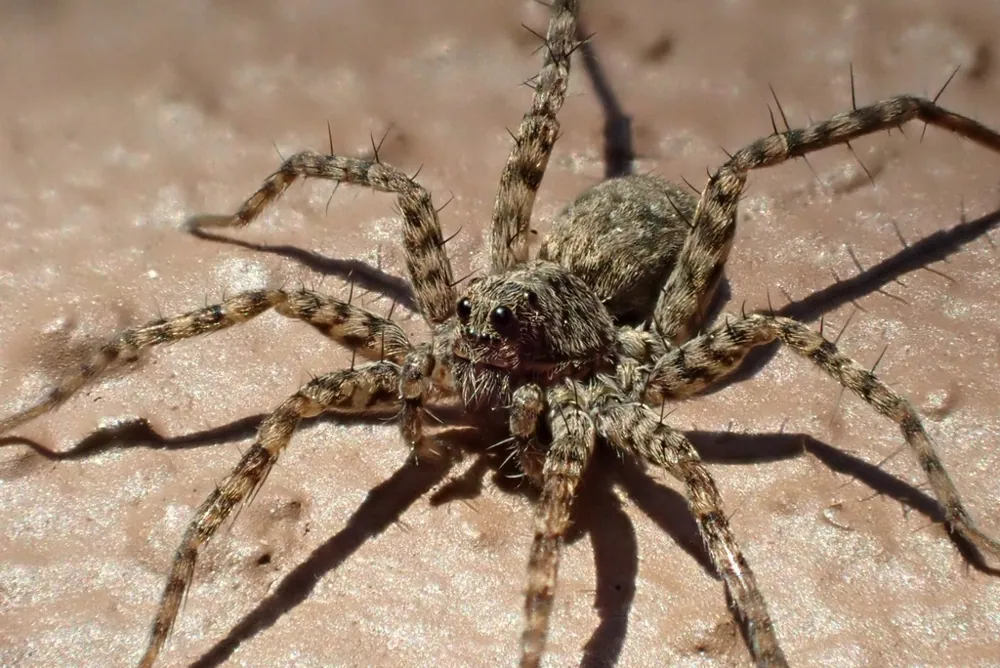
The spotted wolf spider is a small, brown ground spider that hunts on foot rather than in a web. It lives across central and north-western Europe and is common in the British Isles. It is a fast, active hunter that often hunts in daylight.1


 Näin tunnistat sen
- Adults are 5 mm to 8 mm long.1
- The body is brownish with darker brown markings or spots.1
- Females are usually slightly larger than males.1
- Eight eyes: two large and four smaller eyes face forward, and two more sit on top of the head.1
- It does not weave a web. It is often seen running in the open or on low plants.1
Myrkkyvoima
Myrkky tulee ulos myrkkyhampaista tai hampaista, kun se puree.
Kuinka vaarallinen se on ihmisille?
Vaara ihmisille: LieväKuin mehiläisen pisto tai vähemmän. Käytännössä vaaraton ihmisille. Jos se puree
- Pese purema ja laita sen päälle kylmäpussi kipuun. Hae lääkärin apua, jos kipu on kova, leviää tai henkilö voi huonosti.
Soita aina ensin hätänumeroon (112, 000, 911). Nämä ovat yleisiä ensiapuohjeita, eivät lääketieteellisiä neuvoja. Ensiavun perusteet
 Pysy turvassa
- Älä koskaan koske villieläimeen, pyydystä sitä tai kiusaa sitä, ei edes pientä, eikä silloinkaan, kun se näyttää nukkuvan tai olevan kuollut.
- Anna sille tilaa. Jos kohtaat sellaisen, pysy rauhallisena, peräänny hitaasti ja anna sen mennä omaa tietään.
- Jos sellainen puree sinua: pysy rauhallisena, pysy paikallasi, soita hätänumeroon (112, 000, 911) tai mene nopeasti sairaalaan. Muista, miltä se näytti, valokuva auttaa.
Se ei ole sinun perässäsi. Se käyttää myrkkyään saadakseen ruokaa tai suojellakseen itseään, ja se piiloutuu paljon mieluummin. Lisää turvallisuudesta
Missä päin maailmaa?
Kuinka iso se on?
Kuinka pitkä se on?
 niin pieni, että mahtuu kynnellesi
Kuinka iso Spotted wolf spider on SINUUN verrattuna?
Pelkkää matematiikkaa selaimessasi. Mitään ei tallenneta eikä lähetetä minnekään.
Kuinka nopea se on?


Faktat
Mothers carry their young on their backs after they hatch, until the young moult for the second time.1
During courtship, the male raises himself high on his hind legs, stretches out and waves his palps, and moves closer to the female bit by bit.1
If the female rejects him, she lunges forward and the smaller male backs off, then returns a few seconds later to display again.1
It relies heavily on its eyesight to locate and stalk prey.1
It is often active very early in spring and between March and July, and it warms itself in the sunshine on patches of bare soil.1
Myrkkyasiantuntijoille
- Tieteellinen nimi
- Pardosa amentata
- Ryhmä
- Hämähäkit
- Perhe
- Lycosidae2
- Järjestys
- Araneae
- Maanosat
- Eurooppa
- Vauvat
- The female carries her eggs in a round silk sac beneath her abdomen. After hatching, the spiderlings ride on her back until their second moult, when they can fend for themselves.1
- Vaara ihmisille
- 1 / 5: Lievä3
Mistä tiedot ovat peräisin
- Pardosa amentata (Wikipedia (CC BY-SA 4.0))
- Pardosa amentata (iNaturalist): nimet ja luokittelu.
- Venom Wiki: vaarataso, tyypillinen koko ja nopeusarvio ovat omia arvioitamme. Katso, miten laskemme ne: Näin arvioimme vaaran.
Jokaisella tämän sivun tiedolla on numero, joka viittaa sen lähteeseen. Jos jokin meni pieleen, anteeksi, olemme eläinfaneja emmekä tiedelehti. Kerro meille osoitteeseen [email protected], niin korjaamme sen.
 Skorpionilla on nälkä! Venom Wiki on yhden miehen projekti: ilmainen, ilman mainoksia ja ilman seurantaa. Pieni tippi auttaa pitämään sen verkossa.Ruoki skorpioni
Lisää samasta ryhmästä: Hämähäkit
 Mediterranean black widow
 Diving bell spider
 European yellow sac spider
 Noble false widow
 Tarantula wolf spider
 Daddy long-legs spider
Elää myös: Eurooppa
 Common European adderKyyt ja kyykäärmeetVaatii lääkäriä
 Spanish flyMuut passiivisesti myrkylliset eläimetVaatii lääkäriäÄlä koske
 Common waspMehiläiset, ampiaiset ja herhiläisetSattuu vain
 European hornetMehiläiset, ampiaiset ja herhiläisetSattuu vain
 Fire salamanderNuolimyrkkysammakot, konnat ja vesiliskotSattuu vainÄlä koske
 Western honey beeMehiläiset, ampiaiset ja herhiläisetSattuu vain