
 Afrikka
 Aasia
Aasia Eurooppa
 Etelä-Amerikka
 Australia ja Oseania
 Etelämanner
 Tyynimeri
 Atlantti
 Intian valtameri
 Pohjoinen jäämeri
 Välimeri
 Punainenmeri
 Karibianmeri
 Korallimeri
 Etelä-Kiinan meri
 Filippiinienmeri
 Andamaanienmeri
 Pohjanmeri
 Timorinmeri ja Arafuranmeri
 Bengalinlahti
 Kalifornianlahti
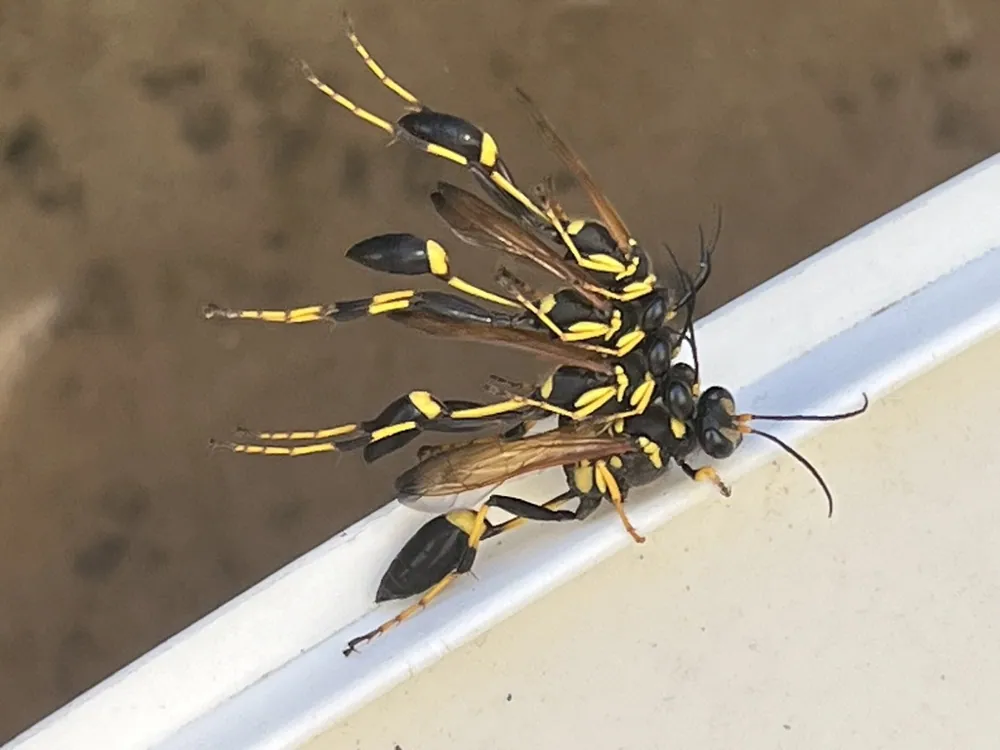
Yellow-legged mud dauber
 Pistot
The yellow-legged mud dauber is a wasp that builds nests from mud balls and fills each cell with paralysed spiders for its young. It is found across North and Central America and the West Indies, and it has spread to many other parts of the world. Its stings are rare because it is usually gentle and tends to keep to itself.1


 Näin tunnistat sen
- Black abdomen with yellow markings on the thorax1
- Yellow legs with black trochanters and femurs1
- Black eyes and black antennae with yellow scapes1
- Tawny wings1
- Body length of about 24 to 28 mm; the population in the desert southwest often has a yellow petiole1
Sekoitetaan usein: There are 33 other Sceliphron species around the world that look and behave much like this one. Within the United States, it is the only species in its genus with yellow-marked legs, which is the main way to tell it apart there.1
Myrkkyvoima
Myrkky tulee ulos pistimestä.
Kuinka vaarallinen se on ihmisille?
Vaara ihmisille: LieväKuin mehiläisen pisto tai vähemmän. Käytännössä vaaraton ihmisille.Stings are rare because the wasps are solitary and usually nonaggressive. The species has a low reproductive rate.1
 Jos se pistää
- Raaputa mehiläisen pistin pois ja viilennä kohta.
- Jos henkilöllä on hengitysvaikeuksia, kasvojen tai kurkun turvotusta tai hän tuntee olevansa pyörtymäisillään, kyse on allergisesta hätätilanteesta: soita hätänumeroon ja käytä hänen adrenaliinikynäänsä, jos hänellä on sellainen.
Soita aina ensin hätänumeroon (112, 000, 911). Nämä ovat yleisiä ensiapuohjeita, eivät lääketieteellisiä neuvoja. Ensiavun perusteet
 Pysy turvassa
- Älä koskaan koske villieläimeen, pyydystä sitä tai kiusaa sitä, ei edes pientä, eikä silloinkaan, kun se näyttää nukkuvan tai olevan kuollut.
- Anna sille tilaa. Jos kohtaat sellaisen, pysy rauhallisena, peräänny hitaasti ja anna sen mennä omaa tietään.
- Jos sellainen pistää sinua: pysy rauhallisena, pysy paikallasi, soita hätänumeroon (112, 000, 911) tai mene nopeasti sairaalaan. Muista, miltä se näytti, valokuva auttaa.
Se ei ole sinun perässäsi. Se käyttää myrkkyään saadakseen ruokaa tai suojellakseen itseään, ja se piiloutuu paljon mieluummin. Lisää turvallisuudesta
Missä päin maailmaa?
Kuinka iso se on?
Kuinka pitkä se on?
 suunnilleen yhtä pitkä kuin paperiliitin
 voisi lentää kokonaisen jalkapallokentän yli 12 sekunnissa
Kuinka iso Yellow-legged mud dauber on SINUUN verrattuna?
Pelkkää matematiikkaa selaimessasi. Mitään ei tallenneta eikä lähetetä minnekään.
Kuinka nopea se on?


Faktat
A completed nest can be as large as an average human fist, built from many mud cells stacked vertically.1
A common cuckoo wasp, Chrysis angolensis, often steals food from Sceliphron nests as a kleptoparasite.1
After finishing a series of cells, the female leaves and never returns to the nest.1
Adults are often seen feeding on nectar at flowers in mid-summer.1
Myyttien murtaja
Myytti: Mud dauber wasps are aggressive and likely to sting people.
Totuus: They are solitary and usually nonaggressive, so stings are rare.1
Myrkkyasiantuntijoille
- Tieteellinen nimi
- Sceliphron caementarium
- Ryhmä
- Mehiläiset, ampiaiset ja herhiläiset
- Perhe
- Sphecidae2
- Järjestys
- Hymenoptera
- Maanosat
- Pohjois-Amerikka
- Vauvat
- The female lays a single egg on the prey in each cell, and each nest can have up to 25 cells. Each cell holds about 6 to 15 spiders for the larva to eat.1
- Vaara ihmisille
- 1 / 5: Lievä3
Mistä tiedot ovat peräisin
- Sceliphron caementarium (Wikipedia (CC BY-SA 4.0))
- Sceliphron caementarium (iNaturalist): nimet ja luokittelu.
- Venom Wiki: vaarataso, tyypillinen koko ja nopeusarvio ovat omia arvioitamme. Katso, miten laskemme ne: Näin arvioimme vaaran.
Jokaisella tämän sivun tiedolla on numero, joka viittaa sen lähteeseen. Jos jokin meni pieleen, anteeksi, olemme eläinfaneja emmekä tiedelehti. Kerro meille osoitteeseen [email protected], niin korjaamme sen.
 Skorpionilla on nälkä! Venom Wiki on yhden miehen projekti: ilmainen, ilman mainoksia ja ilman seurantaa. Pieni tippi auttaa pitämään sen verkossa.Ruoki skorpioni
Lisää samasta ryhmästä: Mehiläiset, ampiaiset ja herhiläiset
 Tarantula hawkMehiläiset, ampiaiset ja herhiläisetSattuu vain
 Executioner waspMehiläiset, ampiaiset ja herhiläisetVaatii lääkäriä
 Warrior waspMehiläiset, ampiaiset ja herhiläisetVaatii lääkäriä
 Bald-faced hornetMehiläiset, ampiaiset ja herhiläisetSattuu vain
 Cow killer velvet antMehiläiset, ampiaiset ja herhiläisetSattuu vain
 Eastern cicada killerMehiläiset, ampiaiset ja herhiläisetVaaraton
 Terciopelo
 Eastern coral snake
 Eastern diamondback rattlesnake
 Eyelash viper
 Timber rattlesnake
 Western diamondback rattlesnake