
 Afrique
 Asie
Asie Europe
 Amérique du Sud
 Australie et Océanie
 Antarctique
 Océan Pacifique
 Océan Atlantique
 Océan Indien
 Océan Arctique
 Mer Méditerranée
 Mer Rouge
 Mer des Caraïbes
 Mer de Corail
 Mer de Chine méridionale
 Mer des Philippines
 Mer d'Andaman
 Mer du Nord
 Mer de Timor et d'Arafura
 Golfe du Bengale
 Golfe de Californie
Northern scorpion
 Piqûres
The northern scorpion is a small scorpion that lives across much of western and central North America. It is the only scorpion found in Canada, and it lives further north than any other scorpion species.1

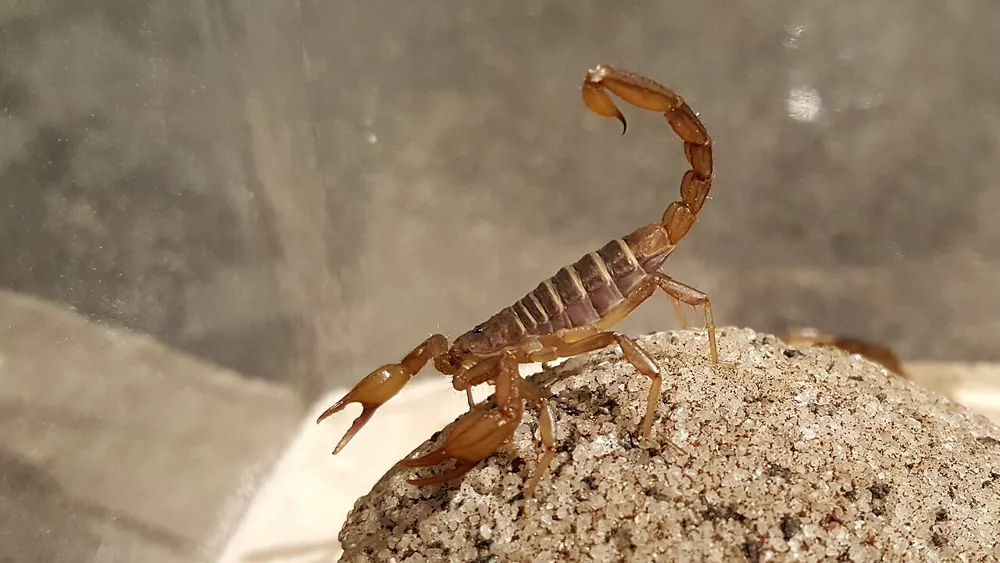
 Comment le reconnaître
Puissance du venin
Le venin sort par un dard.
Que fait son venin ?
Its sting can carry paralysing toxins, which stop prey from moving. Stung prey usually stops struggling within one minute.1
À quel point est-il dangereux pour l'homme ?
Danger pour l'homme: LégerComme une piqûre d'abeille ou moins. Pratiquement inoffensif pour l'homme.Que fait-il quand il a peur ?
Younger scorpions are more willing than adults to use their stinger both to defend themselves and to attack.1
 S'il pique
- Refroidis la piqûre avec de la glace et garde la personne immobile. Va vite voir un médecin, surtout pour les enfants : certains scorpions sont mortels pour eux.
Appelle toujours d'abord ton numéro d'urgence (112, 000, 911). Ce sont des conseils généraux de premiers secours, pas un avis médical. Les bases des premiers secours
 Reste en sécurité
- Ne touche, n'attrape et n'embête jamais un animal sauvage, même petit, et même s'il a l'air endormi ou mort.
- Laisse-lui de la place. Si tu en croises un, reste calme, recule doucement et laisse-le passer son chemin.
- S'il te pique : reste calme, ne bouge pas, appelle ton numéro d'urgence (112, 000, 911) ou va vite à l'hôpital. Souviens-toi de quoi il avait l'air, une photo aide.
Il ne t'en veut pas. Il utilise son venin pour attraper sa nourriture ou se protéger, et il préfère de loin se cacher. Plus d'infos pour rester en sécurité
Où dans le monde ?
Quelle taille fait-il ?
Quelle longueur fait-il ?
 à peu près aussi long qu'un trombone
 pourrait parcourir 100 mètres en 300 secondes (l'humain le plus rapide met 9,6)
Quelle taille fait Northern scorpion comparé à TOI ?
Juste des calculs dans ton navigateur. Rien n'est enregistré ni envoyé nulle part.
À quelle vitesse va-t-il ?


Faits
When two northern scorpions fight over territory, the larger one usually wins and eats the loser. Smaller females have sometimes been seen eating larger males.1
Stinger use changes with age. Juveniles sting all their prey, while adults use their stingers on only about 30% of prey.1
Individuals can go without food for phases lasting up to 5 months.1
Young scorpions sit on their mother's back and cannot hunt until they are about 13 to 14 days old.1
Males can roam up to six times as far each day as females.1
They are almost always active at night. They come out of their burrows between 21:30 and 23:00 and stay in during rain or when temperatures drop below 10 °C.1
Pour les experts en venin
D'où viennent les faits
- Paruroctonus boreus (Wikipedia (CC BY-SA 4.0))
- Paruroctonus boreus (iNaturalist): noms et classification.
- Venom Wiki: le niveau de danger, la taille typique et la vitesse estimée sont les nôtres. Regarde comment on les calcule : Comment on évalue le danger.
Chaque fait sur cette page a un numéro qui renvoie à sa source. Si on s'est trompés, désolés, on est des fans d'animaux, pas une revue scientifique. Dis-le-nous à [email protected] et on corrigera.
 Le scorpion a faim ! Venom Wiki est le projet d'une seule personne : gratuit, sans pub et sans traceurs. Un petit pourboire aide à le garder en ligne.Nourris le scorpion
 Arizona bark scorpion
 Cuban blue scorpion
 Striped bark scorpion
 Giant desert hairy scorpion
 Colima scorpion
 Durango scorpion
 Fer-de-lance d'Amérique centrale
 Eastern coral snake
 Eastern diamondback rattlesnake
 Eyelash viper
 Timber rattlesnake
 Western diamondback rattlesnake