
 अफ़्रीका
 एशिया
एशिया यूरोप
यूरोप दक्षिण अमेरिका
 ऑस्ट्रेलिया और ओशिनिया
 अंटार्कटिका
 प्रशांत महासागर
 अटलांटिक महासागर
 हिंद महासागर
 आर्कटिक महासागर
 भूमध्य सागर
 लाल सागर
 कैरिबियन सागर
 कोरल सागर
 दक्षिण चीन सागर
 फ़िलीपीन सागर
 अंडमान सागर
 उत्तरी सागर
 तिमोर और अराफ़ुरा सागर
 बंगाल की खाड़ी
 कैलिफ़ोर्निया की खाड़ी
Bluebottle
 डंक वाले टेंटेकल्स
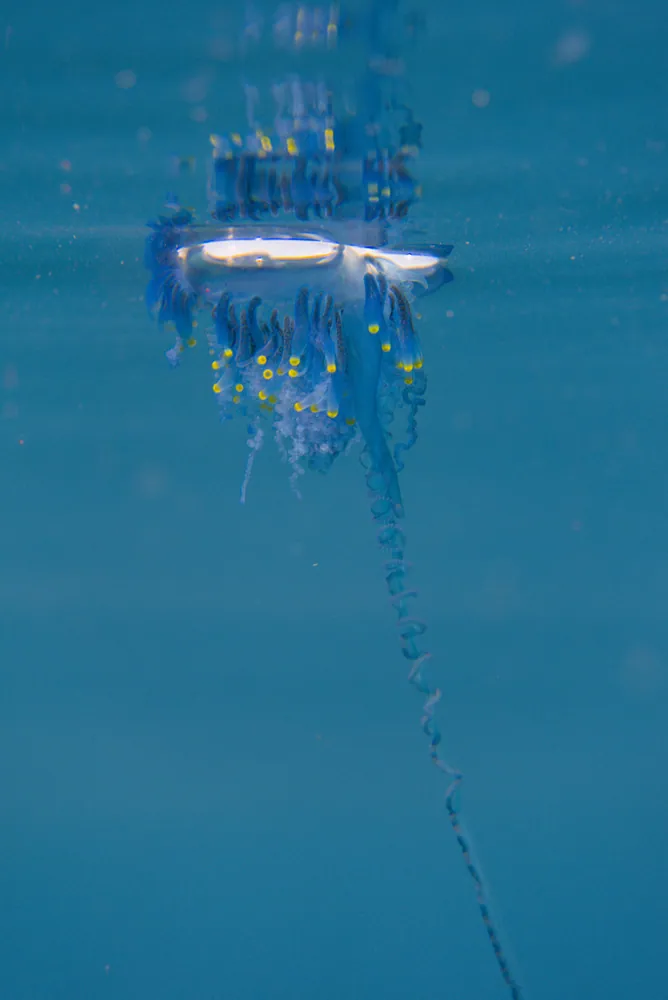
The bluebottle is a floating sea creature that looks like a jellyfish, but it is actually a colony of many linked animals that work together. It drifts on the surface of warm oceans and often washes up on beaches in large numbers. Its long tentacle can cause painful stings, so it is important to know what it looks like.1
 इसे कैसे पहचानें
- A gas-filled float that sits on the surface, with a sail on top of it1
- A single long tentacle hanging below the float1
- A float about 16 cm across, smaller than the Atlantic Portuguese man o' war, whose float is about 30 cm1
- Often found in large groups called swarms1
- Often washed up in large numbers on beaches after strong winds1
अक्सर इससे भ्रम होता है: The Atlantic Portuguese man o' war (Physalia physalis) is closely related and looks similar. It has a larger float, about 30 cm across, while the bluebottle's float is about 16 cm. The bluebottle has a single long fishing tentacle.1
विष की ताकत
कोई चीज़ छूते ही हज़ारों छोटी डंक वाली कोशिकाएँ चल पड़ती हैं।
इसका विष क्या करता है?
Its tentacle is covered in venomous cells called cnidocytes, which fire stinging threads called nematocysts. These toxic stinging cells cause painful injuries when they touch human skin. The stings can cause painful injuries at the beach.1
यह इंसानों के लिए कितना खतरनाक है?
इंसानों के लिए खतरा: दर्दनाकबहुत दर्द हो सकता है, लेकिन लगभग कभी गंभीर नहीं होता।On Australia's east coast, 10,000 to 30,000 stings per year from animals of the genus Physalia are reported, and most incidents happen on the eastern coast. No deaths have been recorded from stings by this species. The Atlantic Portuguese man o' war has caused at least three deaths.1
 अगर यह डंक मारे
- पानी से बाहर निकलो और सारे टेंटेकल्स (दस्ताने या कपड़े से) हटा दो।
- गर्म समुद्रों की बॉक्स जेलीफ़िश के लिए: डंक पर कम से कम 30 सेकंड सिरका डालो, मदद बुलाओ और CPR के लिए तैयार रहो। ब्लूबॉटल और ज़्यादातर दूसरी जेलीफ़िश के लिए: समुद्री पानी से धोओ, फिर दर्द के लिए गर्म पानी।
हमेशा पहले अपना आपातकालीन नंबर (112, 000, 911) मिलाओ। यह सामान्य प्राथमिक उपचार की जानकारी है, डॉक्टरी सलाह नहीं। प्राथमिक उपचार की बुनियादी बातें
 सुरक्षित रहो
- किसी जंगली जानवर को कभी मत छुओ, पकड़ो या छेड़ो, चाहे वह छोटा हो, और चाहे वह सोया हुआ या मरा हुआ लगे।
- इसे जगह दो। अगर तुम्हें यह मिले, तो शांत रहो, धीरे-धीरे पीछे हटो और इसे अपने रास्ते जाने दो।
- अगर यह तुम्हें डंक मारे: शांत रहो, हिलो मत, अपना आपातकालीन नंबर (112, 000, 911) मिलाओ या जल्दी अस्पताल पहुँचो। याद रखो कि यह कैसा दिखता था, फ़ोटो मदद करती है।
यह तुम्हारे पीछे नहीं पड़ा है। यह अपने विष से खाना पकड़ता है या अपनी रक्षा करता है, और यह छिपना ज़्यादा पसंद करता है। सुरक्षित रहने के बारे में और
दुनिया में कहाँ?
यह कितना बड़ा है?
यह कितना लंबा है?
 2 खिलौना ईंटें एक कतार में जितना लंबा
 180 सेकंड में बड़े स्विमिंग पूल (50 मीटर) की लंबाई तैर सकता है
Bluebottle तुम्हारे मुकाबले कितना बड़ा है?
बस तुम्हारे ब्राउज़र में थोड़ा गणित। कुछ भी सेव या कहीं भेजा नहीं जाता।
यह कितना तेज़ है?

तथ्य
It is not a single animal. It is a colony of four separate types of polyps and medusoids that work together.1
Its stinging cells can remain harmful on beaches for weeks or months if the sand stays moist.1
It moves across the sea using the wind, currents and tides, helped by the sail on top of its float.1
विष के जानकारों के लिए
- वैज्ञानिक नाम
- Physalia utriculus
- समूह
- जेलीफ़िश और डंक मारने वाले समुद्री जीव
- परिवार
- Physaliidae2
- क्रम
- Siphonophorae
- महाद्वीप
- प्रशांत महासागर, हिंद महासागर, अटलांटिक महासागर, दक्षिणी महासागर, कोरल सागर, अंटार्कटिका, तिमोर और अराफ़ुरा सागर, बंगाल की खाड़ी, महासागर
- बच्चे
- Its reproductive parts, called gonozooids, release eggs or sperm into the water.1
- इंसानों के लिए खतरा
- 2 / 5: दर्दनाक3
तथ्य कहाँ से आते हैं
- Physalia utriculus (Wikipedia (CC BY-SA 4.0))
- Physalia utriculus (iNaturalist): नाम और वर्गीकरण।
- Venom Wiki: खतरे का स्तर, आम आकार और रफ़्तार का अंदाज़ा हमारा अपना है। देखो हम उन्हें कैसे निकालते हैं: हम खतरे को कैसे आँकते हैं.
इस पेज के हर तथ्य के साथ एक नंबर है जो उसके स्रोत की ओर इशारा करता है। अगर हमसे कुछ गलत हुआ, तो माफ़ करना, हम जानवरों के शौकीन हैं, कोई विज्ञान पत्रिका नहीं। हमें [email protected] पर बताओ, हम ठीक कर देंगे।
 बिच्छू भूखा है! Venom Wiki एक इंसान का प्रोजेक्ट है: मुफ़्त, बिना विज्ञापन और बिना ट्रैकर। एक छोटी-सी टिप इसे ऑनलाइन रखने में मदद करती है।बिच्छू को खाना खिलाओ
इसी समूह के और जीव: जेलीफ़िश और डंक मारने वाले समुद्री जीव
 Australian box jellyfishजेलीफ़िश और डंक मारने वाले समुद्री जीवजानलेवामत छुओ
 Irukandji jellyfishजेलीफ़िश और डंक मारने वाले समुद्री जीवजान ले सकता हैमत छुओ
 Portuguese man o' warजेलीफ़िश और डंक मारने वाले समुद्री जीवडॉक्टर की ज़रूरत हैमत छुओ
 Lion's mane jellyfishजेलीफ़िश और डंक मारने वाले समुद्री जीवबस दर्द होता हैमत छुओ
 Moon jellyfishजेलीफ़िश और डंक मारने वाले समुद्री जीवहानिरहित
 Common kingslayerजेलीफ़िश और डंक मारने वाले समुद्री जीवजान ले सकता हैमत छुओ
 Geography cone
 Greater blue-ringed octopus
 Japanese pufferfish
 Southern blue-ringed octopus
 Hawksbill sea turtle
 Reef stonefish