
 अफ़्रीका
 एशिया
एशिया यूरोप
यूरोप दक्षिण अमेरिका
 ऑस्ट्रेलिया और ओशिनिया
 अंटार्कटिका
 प्रशांत महासागर
 अटलांटिक महासागर
 हिंद महासागर
 आर्कटिक महासागर
 भूमध्य सागर
 लाल सागर
 कैरिबियन सागर
 कोरल सागर
 दक्षिण चीन सागर
 फ़िलीपीन सागर
 अंडमान सागर
 उत्तरी सागर
 तिमोर और अराफ़ुरा सागर
 बंगाल की खाड़ी
 कैलिफ़ोर्निया की खाड़ी
Cobalt blue tarantula
 काटना
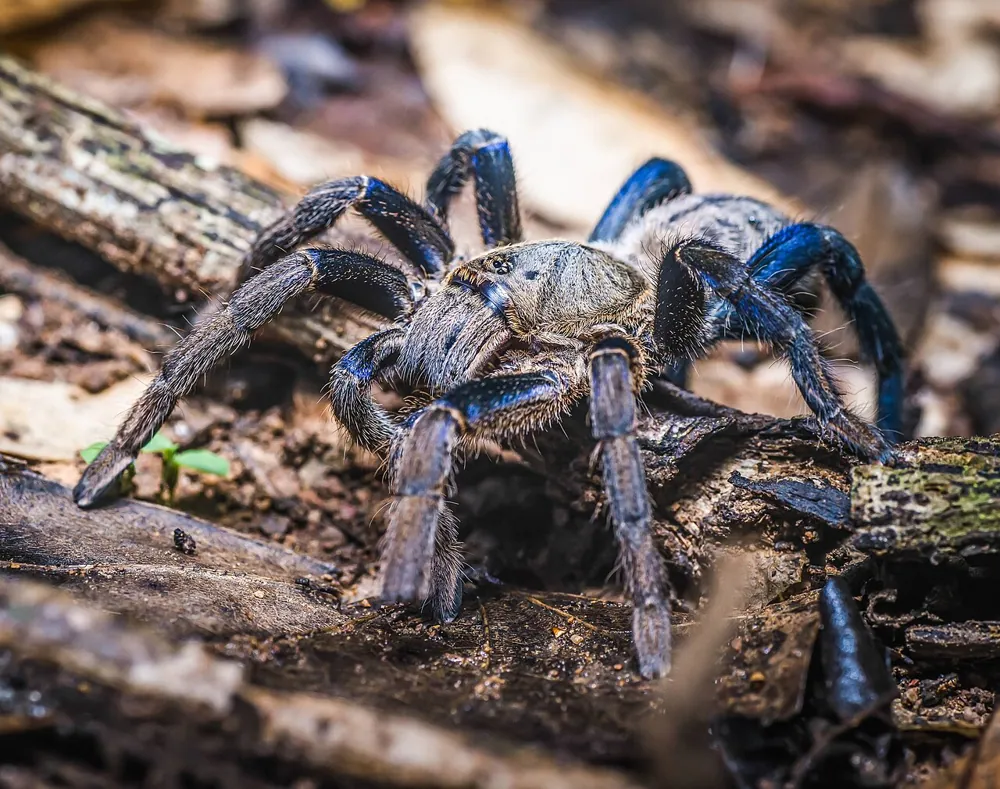
काटनाThe cobalt blue tarantula is a medium-sized spider with bright blue legs. It lives in tropical rainforests in Myanmar and Thailand, mostly underground. It is popular in the pet trade, so people sometimes meet it in homes.1
 इसे कैसे पहचानें
- Medium-sized, with a leg span of around 13 cm.1
- Iridescent blue legs.1
- Light grey body, which may have darker grey chevron markings on the abdomen.1
- Adult males turn light tan or bronze and look longer-legged after their final moult. They also gain mating hooks and a palpal bulb on the pedipalps.1
- Females look the same as males until the males' final moult, and they grow larger than males.1
विष की ताकत
काटते समय विष इसके विषदंतों या दाँतों से बाहर आता है।
इसका विष क्या करता है?
Its venom is not enough to kill a human, but bites can be extremely painful. In a 2001 case from Japan, two people bitten by a pet reported severe pain and inflammation, which faded after several hours. One person had stiffness for a few weeks. Bites can also cause severe muscle cramps.1
यह इंसानों के लिए कितना खतरनाक है?
इंसानों के लिए खतरा: दर्दनाकबहुत दर्द हो सकता है, लेकिन लगभग कभी गंभीर नहीं होता।The venom is not enough to kill a person, but bites are very painful and can cause inflammation and severe muscle cramps. The species is described as having potent venom, so bites should still be taken seriously.1
डरने पर यह क्या करता है?
It is described as a fast and defensive tarantula.1
 अगर यह काटे
- काटे हुए हिस्से को धोओ और ठंडा करो। अगर दर्द तेज़ हो या व्यक्ति की तबीयत बिगड़े तो डॉक्टरी मदद लो।
हमेशा पहले अपना आपातकालीन नंबर (112, 000, 911) मिलाओ। यह सामान्य प्राथमिक उपचार की जानकारी है, डॉक्टरी सलाह नहीं। प्राथमिक उपचार की बुनियादी बातें
 सुरक्षित रहो
- किसी जंगली जानवर को कभी मत छुओ, पकड़ो या छेड़ो, चाहे वह छोटा हो, और चाहे वह सोया हुआ या मरा हुआ लगे।
- इसे जगह दो। अगर तुम्हें यह मिले, तो शांत रहो, धीरे-धीरे पीछे हटो और इसे अपने रास्ते जाने दो।
- अगर यह तुम्हें काटे: शांत रहो, हिलो मत, अपना आपातकालीन नंबर (112, 000, 911) मिलाओ या जल्दी अस्पताल पहुँचो। याद रखो कि यह कैसा दिखता था, फ़ोटो मदद करती है।
यह तुम्हारे पीछे नहीं पड़ा है। यह अपने विष से खाना पकड़ता है या अपनी रक्षा करता है, और यह छिपना ज़्यादा पसंद करता है। सुरक्षित रहने के बारे में और
यह कितना बड़ा है?
यह कितना लंबा है?
 4 खिलौना ईंटें एक कतार में जितना लंबा
 220 सेकंड में 100 मीटर पार कर सकता है (सबसे तेज़ इंसान को 9.6 लगते हैं)
Cobalt blue tarantula तुम्हारे मुकाबले कितना बड़ा है?
बस तुम्हारे ब्राउज़र में थोड़ा गणित। कुछ भी सेव या कहीं भेजा नहीं जाता।
यह कितना तेज़ है?


तथ्य
Its blue colour comes from iridescent legs, which shimmer in light.1
Adult males change colour after their final moult, turning light tan or bronze.1
Despite its potent venom, it is a mainstay of the pet trade.1
It is a fossorial species, meaning it spends nearly all its time in deep burrows that it digs itself.1
Females grow larger than males and live for years longer.1
मिथक तोड़क
मिथक: Tarantula venom is deadly to people.
सच: The venom of this tarantula is not enough to kill a human, but its bites can be extremely painful.1
तथ्य कहाँ से आते हैं
- Cobalt blue tarantula (Wikipedia (CC BY-SA 4.0))
- Cyriopagopus lividus (iNaturalist): नाम और वर्गीकरण।
- Venom Wiki: खतरे का स्तर, आम आकार और रफ़्तार का अंदाज़ा हमारा अपना है। देखो हम उन्हें कैसे निकालते हैं: हम खतरे को कैसे आँकते हैं.
इस पेज के हर तथ्य के साथ एक नंबर है जो उसके स्रोत की ओर इशारा करता है। अगर हमसे कुछ गलत हुआ, तो माफ़ करना, हम जानवरों के शौकीन हैं, कोई विज्ञान पत्रिका नहीं। हमें [email protected] पर बताओ, हम ठीक कर देंगे।
 बिच्छू भूखा है! Venom Wiki एक इंसान का प्रोजेक्ट है: मुफ़्त, बिना विज्ञापन और बिना ट्रैकर। एक छोटी-सी टिप इसे ऑनलाइन रखने में मदद करती है।बिच्छू को खाना खिलाओ
इसी समूह के और जीव: टैरेंटुला और फ़नल-वेब
 Gooty sapphire tarantulaटैरेंटुला और फ़नल-वेबडॉक्टर की ज़रूरत है
 Indian ornamental tarantulaटैरेंटुला और फ़नल-वेबडॉक्टर की ज़रूरत है
 Chinese bird spiderटैरेंटुला और फ़नल-वेबडॉक्टर की ज़रूरत है
 Chinese black earth tiger tarantulaटैरेंटुला और फ़नल-वेबडॉक्टर की ज़रूरत है
 Fringed ornamental tarantulaटैरेंटुला और फ़नल-वेबडॉक्टर की ज़रूरत है
 Japanese funnel-web spiderटैरेंटुला और फ़नल-वेबडॉक्टर की ज़रूरत है
 डेथस्टॉकर बिच्छू
 भारतीय नाग
 फुरसा
फुरसा किंग कोबरा
 पफ़ एडर
 रसेल वाइपर