
 अफ़्रीका
 एशिया
एशिया यूरोप
यूरोप दक्षिण अमेरिका
 ऑस्ट्रेलिया और ओशिनिया
 अंटार्कटिका
 प्रशांत महासागर
 अटलांटिक महासागर
 हिंद महासागर
 आर्कटिक महासागर
 भूमध्य सागर
 लाल सागर
 कैरिबियन सागर
 कोरल सागर
 दक्षिण चीन सागर
 फ़िलीपीन सागर
 अंडमान सागर
 उत्तरी सागर
 तिमोर और अराफ़ुरा सागर
 बंगाल की खाड़ी
 कैलिफ़ोर्निया की खाड़ी
Desert night snake
 काटना
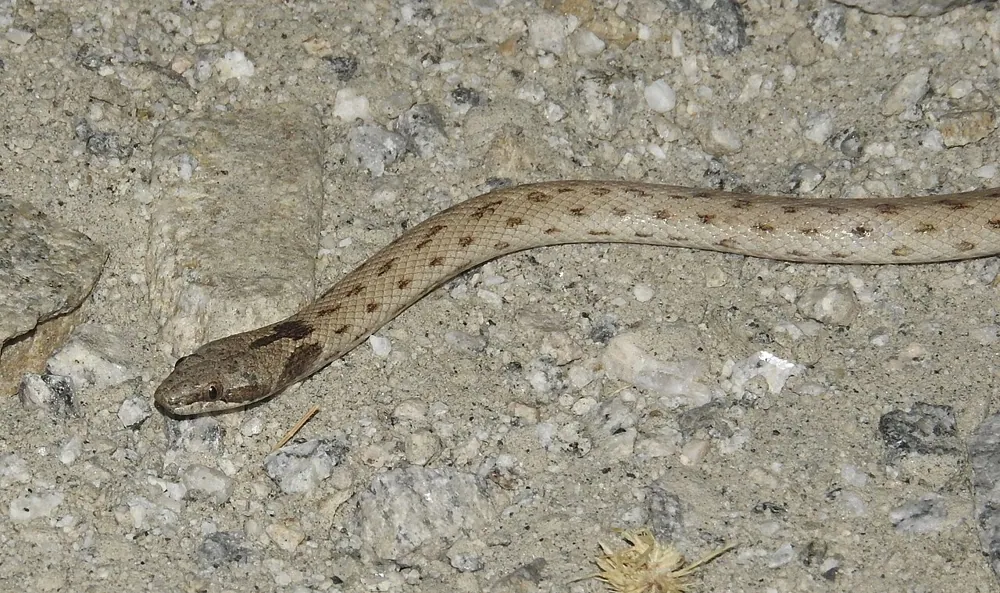
काटनाThe desert nightsnake is a small, slender snake that hunts at night and spends the day hidden. It lives in dry parts of western North America, from the southwestern United States into northwestern Mexico. It is mildly venomous, but it poses no danger to people.1



 इसे कैसे पहचानें
- Small and slender, usually 30 to 66 cm long in total.1
- Base colour is beige, yellowish or grey, with dark grey-brown blotches that usually form offset pairs down the back.1
- Three long dark blotches on the neck and one behind each eye.1
- Triangular head with vertical pupils.1
- Smooth scales on the back and no rattle at the tail.1
अक्सर इससे भ्रम होता है: It is often mistaken for a juvenile rattlesnake because of its triangular head, vertical pupils and blotched pattern. Unlike a rattlesnake, it has no rattle and its back scales are smooth.1
विष की ताकत
काटते समय विष इसके विषदंतों या दाँतों से बाहर आता है।
इसका विष क्या करता है?
It is mildly venomous and uses its venom to subdue prey. It has rear fangs, which are grooved teeth at the back of the upper jaw.1
यह इंसानों के लिए कितना खतरनाक है?
इंसानों के लिए खतरा: हल्कामधुमक्खी के डंक जितना या उससे कम। इंसानों के लिए लगभग हानिरहित।It is mildly venomous and poses no danger to humans.1
 अगर यह काटे
- काटे हुए हिस्से को धोओ, व्यक्ति को शांत रखो और डॉक्टरी मदद लो। कुछ प्रजातियाँ (जैसे बूमस्लैंग) घंटों बाद जानलेवा हो सकती हैं।
हमेशा पहले अपना आपातकालीन नंबर (112, 000, 911) मिलाओ। यह सामान्य प्राथमिक उपचार की जानकारी है, डॉक्टरी सलाह नहीं। प्राथमिक उपचार की बुनियादी बातें
 सुरक्षित रहो
- किसी जंगली जानवर को कभी मत छुओ, पकड़ो या छेड़ो, चाहे वह छोटा हो, और चाहे वह सोया हुआ या मरा हुआ लगे।
- इसे जगह दो। अगर तुम्हें यह मिले, तो शांत रहो, धीरे-धीरे पीछे हटो और इसे अपने रास्ते जाने दो।
- अगर यह तुम्हें काटे: शांत रहो, हिलो मत, अपना आपातकालीन नंबर (112, 000, 911) मिलाओ या जल्दी अस्पताल पहुँचो। याद रखो कि यह कैसा दिखता था, फ़ोटो मदद करती है।
यह तुम्हारे पीछे नहीं पड़ा है। यह अपने विष से खाना पकड़ता है या अपनी रक्षा करता है, और यह छिपना ज़्यादा पसंद करता है। सुरक्षित रहने के बारे में और
यह कितना बड़ा है?
यह कितना लंबा है?
 4 केले एक के बाद एक रखने जितना लंबा
 80 सेकंड में 100 मीटर पार कर सकता है (सबसे तेज़ इंसान को 9.6 लगते हैं)
Desert night snake तुम्हारे मुकाबले कितना बड़ा है?
बस तुम्हारे ब्राउज़र में थोड़ा गणित। कुछ भी सेव या कहीं भेजा नहीं जाता।
यह कितना तेज़ है?


तथ्य
It is a rear-fanged snake, with enlarged grooved teeth at the back of the upper jaw that help it subdue prey.1
In Canada, it is federally listed as Endangered, because its small population is threatened by habitat loss.1
Females are generally longer and heavier than males.1
It is mainly active at night and at dusk, which is why it has the name nightsnake.1
मिथक तोड़क
मिथक: It is a juvenile rattlesnake.
सच: It is a separate species. It has no rattle and its back scales are smooth.1
विष के जानकारों के लिए
- वैज्ञानिक नाम
- Hypsiglena chlorophaea
- समूह
- पीछे के दाँत वाले साँप
- परिवार
- Colubridae2
- क्रम
- Squamata
- महाद्वीप
- उत्तरी अमेरिका
- बच्चे
- It lays eggs. Females lay a single clutch of 2 to 9 eggs, usually around 4, between April and July, hidden in rock crevices or abandoned burrows. The eggs hatch in late summer, and the hatchlings are about 17 cm long.1
- जंगल में इसका हाल कैसा है
- Least Concern globally (IUCN); Endangered in Canada (COSEWIC)1
- इंसानों के लिए खतरा
- 1 / 5: हल्का3
तथ्य कहाँ से आते हैं
- Hypsiglena chlorophaea (Wikipedia (CC BY-SA 4.0))
- Hypsiglena chlorophaea (iNaturalist): नाम और वर्गीकरण।
- Venom Wiki: खतरे का स्तर, आम आकार और रफ़्तार का अंदाज़ा हमारा अपना है। देखो हम उन्हें कैसे निकालते हैं: हम खतरे को कैसे आँकते हैं.
इस पेज के हर तथ्य के साथ एक नंबर है जो उसके स्रोत की ओर इशारा करता है। अगर हमसे कुछ गलत हुआ, तो माफ़ करना, हम जानवरों के शौकीन हैं, कोई विज्ञान पत्रिका नहीं। हमें [email protected] पर बताओ, हम ठीक कर देंगे।
 बिच्छू भूखा है! Venom Wiki एक इंसान का प्रोजेक्ट है: मुफ़्त, बिना विज्ञापन और बिना ट्रैकर। एक छोटी-सी टिप इसे ऑनलाइन रखने में मदद करती है।बिच्छू को खाना खिलाओ
 Western hognose snake
 Brown vine snake
 Eastern hognose snake
 Green vine snake
 Night snake
 Sonoran lyre snake
 टेर्सियोपेलो
 Eastern coral snake
 Eastern diamondback rattlesnake
 Eyelash viper
 Timber rattlesnake
 Western diamondback rattlesnake