
 Afrika
 Azija
Azija Europa
 Južna Amerika
 Australija i Oceanija
 Antarktika
 Tihi ocean
 Atlantski ocean
 Indijski ocean
 Arktički ocean
 Sredozemno more
 Crveno more
 Karipsko more
 Koraljno more
 Južnokinesko more
 Filipinsko more
 Andamansko more
 Sjeverno more
 Timorsko i Arafursko more
 Bengalski zaljev
 Kalifornijski zaljev
Compass jellyfish
 Krakovi koji žare
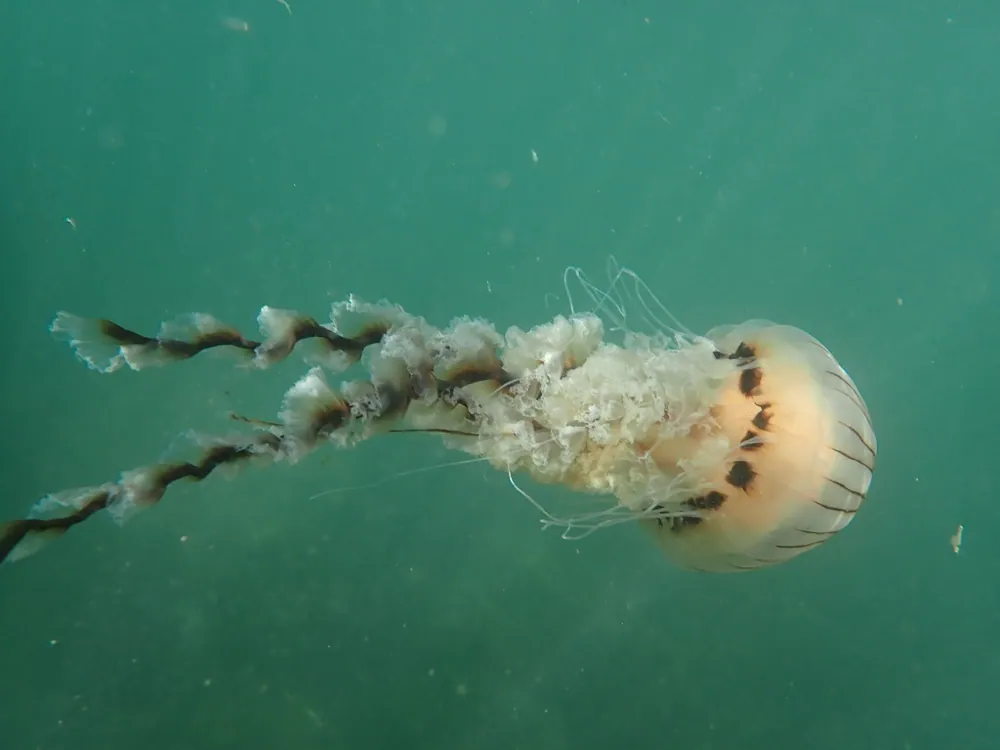
The compass jellyfish is a common jellyfish that lives in cool coastal seas of the northeast Atlantic, including the North Sea and the Mediterranean. Its bell has a pattern that looks like the face of a compass, which gives it its name. Its tentacles carry stinging cells, so it is best left alone.1



 Kako ga prepoznati
- Adults have a bell 15 to 25 cm across, usually yellowish white with some brown.1
- The bell has 16 brown, elongated V-shaped markings around a central brown spot.1
- It has 24 tentacles arranged in eight groups of three.1
- It has four oral arms that are noticeably longer than the tentacles and look folded and frilly.1
- Juveniles lack the compass pattern. They look white and polka-dotted, with a reddish fringe on the bell edge.1
Često se miješa s: Records of this species from the southeastern Atlantic, including South Africa, were caused by confusion with close relatives: C. africana, C. fulgida and an undescribed species tentatively called "C. agulhensis".1
Otrovna snaga
Tisuće sićušnih žarnih stanica okidaju se kad ih nešto dotakne.
Što radi njegov otrov kad ugrize ili ubode?
Each tentacle has stinging cells used to capture prey and to defend against predators. Jellyfish stings are painful and can be deadly to humans.1
Koliko je opasno za ljude?
Opasnost za ljude: BolnoMože jako boljeti, ali gotovo nikad nije ozbiljno.Jellyfish stings are painful and sometimes deadly to humans.1
Što radi kad se uplaši?
Stinging cells on its tentacles are used to defend it from predators.1
 Ako ubode
- Izađi iz vode i skini preostale krakove (rukavicama ili krpom).
- Kod tropskih kubomeduza: prelij ubode octom najmanje 30 sekundi, pozovi pomoć i budi spreman započeti KPR (oživljavanje). Kod portugalske galije i većine drugih: isperi morskom vodom, a zatim stavi vruću vodu protiv boli.
Uvijek prvo nazovi broj za hitne slučajeve (112, 000, 911). Ovo su opće upute za prvu pomoć, a ne liječnički savjet. Osnove prve pomoći
 Ostani na sigurnom
- Nikad ne diraj, ne hvataj i ne zadirkuj divlju životinju, čak ni malu, i čak ni ako izgleda kao da spava ili je mrtva.
- Ostavi joj prostora. Ako je sretneš, ne paniči, polako se odmakni i pusti je da ode svojim putem.
- Ako te neka ubode: ne paniči, miruj, nazovi broj za hitne slučajeve (112, 000, 911) ili brzo idi u bolnicu. Zapamti kako je izgledala, fotografija pomaže.
Ne želi ti ništa loše. Otrov koristi za lov hrane ili za obranu i mnogo bi se radije sakrilo. Više o sigurnosti
Gdje u svijetu?
Koliko je veliko?
Koliko je dugo?
 dugo kao 8 kockica za slaganje u nizu
Koliko je Compass jellyfish velika životinja u usporedbi s TOBOM?
Samo matematika u tvom pregledniku. Ništa se ne sprema niti šalje nikamo.
Koliko je brzo?


Činjenice
Males release sperm from their mouths into the water, and females can fertilise sperm from several males.1
Adults often carry a parasite called Hyperia medusarum, which settles inside the body, especially the gonads.1
Compass jellyfish have very few predators. Leatherback sea turtles and ocean sunfish are known to eat them.1
Warmer winters allow longer release periods for young, and the species is predicted to move further north as the seas warm.1
Razbijač mitova
Mit: Compass jellyfish live in the southeastern Atlantic, including South Africa.
Istina: Earlier records from there were due to confusion with close relatives. The species lives in the northeast Atlantic.1
Za stručnjake za otrove
- Znanstveni naziv
- Chrysaora hysoscella
- Skupina
- Meduze i morski žarnjaci
- Obitelj
- Pelagiidae2
- Redoslijed
- Semaeostomeae
- Kontinenti
- Atlantski ocean, Sredozemno more, Sjeverno more, Oceani
- Mladunci
- Females release planular larvae, which settle on the seabed and grow into polyps. The polyps then release young medusae.1
- Opasnost za ljude
- 2 / 5: Bolno3
Odakle su činjenice
- Chrysaora hysoscella (Wikipedia (CC BY-SA 4.0))
- Chrysaora hysoscella (iNaturalist): imena i klasifikacija.
- Venom Wiki: razina opasnosti, tipična veličina i procijenjena brzina naše su. Pogledaj kako ih izračunavamo: Kako ocjenjujemo opasnost.
Svaka činjenica na ovoj stranici ima broj koji upućuje na njezin izvor. Ako smo nešto pogriješili, oprosti, mi smo ljubitelji životinja, a ne znanstveni časopis. Javi nam na [email protected] i ispravit ćemo to.
 Škorpion je gladan! Venom Wiki je projekt jednog čovjeka: besplatan, bez oglasa i bez praćenja. Mala napojnica pomaže da ostane na internetu.Nahrani škorpiona
Više iz iste skupine: Meduze i morski žarnjaci
 Australian box jellyfishMeduze i morski žarnjaciSmrtonosnoNe diraj
 Irukandji jellyfishMeduze i morski žarnjaciMože ubitiNe diraj
 Portuguese man o' warMeduze i morski žarnjaciTreba liječnikaNe diraj
 Lion's mane jellyfishMeduze i morski žarnjaciSamo boliNe diraj
 Moon jellyfishMeduze i morski žarnjaciBezopasno
 Common kingslayerMeduze i morski žarnjaciMože ubitiNe diraj
Živi i u: Atlantski ocean
 Hawksbill sea turtleDruge životinje otrovne na dodir ili za jeloMože ubiti
 Blue sea dragonStožasti puževi i hobotniceSamo boli
 Greenland sharkDruge životinje otrovne na dodir ili za jeloSamo boli
 Common octopusStožasti puževi i hobotniceBezopasno
 Common stingrayOtrovne ribeTreba liječnika
 Greater weeverOtrovne ribeTreba liječnikaNe diraj