
 Afrika
 Azija
Azija Europa
 Južna Amerika
 Australija i Oceanija
 Antarktika
 Tihi ocean
 Atlantski ocean
 Indijski ocean
 Arktički ocean
 Sredozemno more
 Crveno more
 Karipsko more
 Koraljno more
 Južnokinesko more
 Filipinsko more
 Andamansko more
 Sjeverno more
 Timorsko i Arafursko more
 Bengalski zaljev
 Kalifornijski zaljev
Pygmy slow loris
 Ugrizi
The pygmy slow loris is a small, nocturnal primate that moves slowly through forest trees at night. It lives in parts of Vietnam, Laos, Cambodia and China. It is one of the few primates that can produce a toxic bite, which makes it special and very rare.1



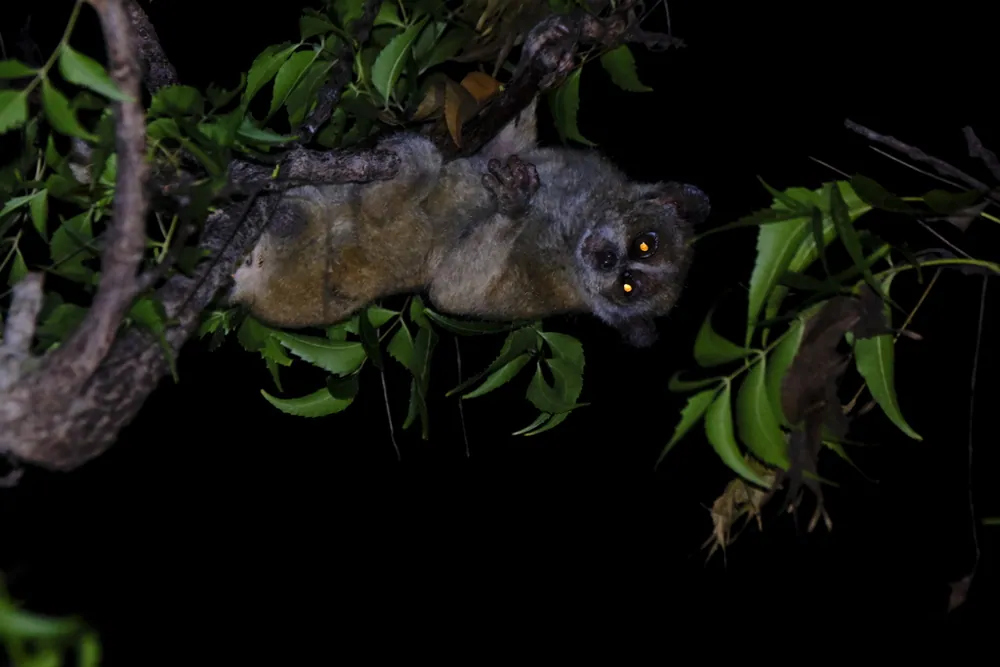
 Kako ga prepoznati
- Rings around the eyes that are seal brown in adults and darker in young animals1
- A white stripe running from the nose up to the forehead1
- Small black ears, about 23 mm long, with no fur on the tips1
- A rufous to brownish-black stripe along the back, from the nape to the middle of the lower back1
- Silvery white hands and feet with yellowish-white nails1
Često se miješa s: The Bengal slow loris (N. bengalensis) lives in some of the same areas, near the border of southern China and Vietnam. The two can be told apart by differences in their chromosomes, not by appearance alone.1
Otrovna snaga
Otrov izlazi kroz očnjake ili zube kad ugrize.
Što radi njegov otrov kad ugrize ili ubode?
The bite is toxic. The animal licks a clear, oily secretion from glands on the inside of its elbows and mixes it with its saliva, which creates a noxious toxin. The secretion contains over 200 chemical components, and one of them is a protein similar to an allergen found in cat dander. In people who are sensitive to it, this can cause anaphylaxis, a severe allergic reaction.1
Koliko je opasno za ljude?
Opasnost za ljude: BolnoMože jako boljeti, ali gotovo nikad nije ozbiljno.The main risk is anaphylaxis, which can affect people who are sensitive to the protein in its secretion.1
Što radi kad se uplaši?
When startled, it licks the secretion from its elbow glands and spreads it over its head.1
 Ako ugrize
- Dobro operi ranu i potraži liječničku pomoć.
Uvijek prvo nazovi broj za hitne slučajeve (112, 000, 911). Ovo su opće upute za prvu pomoć, a ne liječnički savjet. Osnove prve pomoći
 Ostani na sigurnom
- Nikad ne diraj, ne hvataj i ne zadirkuj divlju životinju, čak ni malu, i čak ni ako izgleda kao da spava ili je mrtva.
- Ostavi joj prostora. Ako je sretneš, ne paniči, polako se odmakni i pusti je da ode svojim putem.
- Ako te neka ugrize: ne paniči, miruj, nazovi broj za hitne slučajeve (112, 000, 911) ili brzo idi u bolnicu. Zapamti kako je izgledala, fotografija pomaže.
Ne želi ti ništa loše. Otrov koristi za lov hrane ili za obranu i mnogo bi se radije sakrilo. Više o sigurnosti
Koliko je veliko?
Koliko je dugo?
Koliko je teško?

 dugo kao 7 kockica za slaganje u nizu
 moglo bi pretrčati 100 metara za 180 sekundi (najbržem čovjeku treba 9,6)
Koliko je Pygmy slow loris velika životinja u usporedbi s TOBOM?
Samo matematika u tvom pregledniku. Ništa se ne sprema niti šalje nikamo.
Koliko je brzo?


Činjenice
Its lower teeth form a comb-like toothcomb, which it uses for grooming and for scraping resin from tree bark.1
Its weight changes with the seasons. Adults can be about 50 percent heavier in winter than in summer, and individuals up to 700 grams have been recorded.1
Unlike most other primates, it does not leap. It moves by crawling slowly along branches.1
Males mark their territories with scent, and females prefer males whose scent is familiar.1
Females are only fertile for a short time each year, so mating opportunities are rare.1
Razbijač mitova
Mit: Animals found near Hòa Bình in Vietnam were a separate species, N. intermedius.
Istina: DNA analysis showed these were adults of the pygmy slow loris. Differences in dorsal stripes and silvery hairs are seasonal variation.1
Za stručnjake za otrove
- Znanstveni naziv
- Xanthonycticebus pygmaeus
- Skupina
- Otrovni sisavci
- Obitelj
- Lorisidae2
- Redoslijed
- Primates
- Kontinenti
- Azija
- Mladunci
- It usually has one or two offspring after a gestation of about six months, and the young cling to their mother's belly for the first few days.1
- Životni vijek
- oko 20 godina1
- Kako mu ide u divljini
- Endangered1
- Opasnost za ljude
- 2 / 5: Bolno3
Odakle su činjenice
- Pygmy slow loris (Wikipedia (CC BY-SA 4.0))
- Xanthonycticebus pygmaeus (iNaturalist): imena i klasifikacija.
- Venom Wiki: razina opasnosti, tipična veličina i procijenjena brzina naše su. Pogledaj kako ih izračunavamo: Kako ocjenjujemo opasnost.
Svaka činjenica na ovoj stranici ima broj koji upućuje na njezin izvor. Ako smo nešto pogriješili, oprosti, mi smo ljubitelji životinja, a ne znanstveni časopis. Javi nam na [email protected] i ispravit ćemo to.
 Škorpion je gladan! Venom Wiki je projekt jednog čovjeka: besplatan, bez oglasa i bez praćenja. Mala napojnica pomaže da ostane na internetu.Nahrani škorpiona
 Bengal slow loris
 Javan slow loris
 Sunda slow loris
 Kayan River slow loris
 Philippine slow loris
 Eurasian water shrew
 Palestinski žuti škorpion
 Indijska kobra
 Indijska pilasta ljutica
 Kraljevska kobra
 Puhalica
 Russellova ljutica