
 Afrika
 Ázsia
Ázsia Európa
 Dél-Amerika
 Ausztrália és Óceánia
 Antarktisz
 Csendes-óceán
 Atlanti-óceán
 Indiai-óceán
 Északi-sarki-óceán
 Földközi-tenger
 Vörös-tenger
 Karib-tenger
 Korall-tenger
 Dél-kínai-tenger
 Fülöp-tenger
 Andamán-tenger
 Északi-tenger
 Timor-tenger és Arafura-tenger
 Bengáli-öböl
 Kaliforniai-öböl
Brown widow
 Harapások
The brown widow is a spider in the widow family, a close cousin of the black widow. It lives in many parts of the world, often around houses and buildings. Its bite is painful but usually not dangerous.1
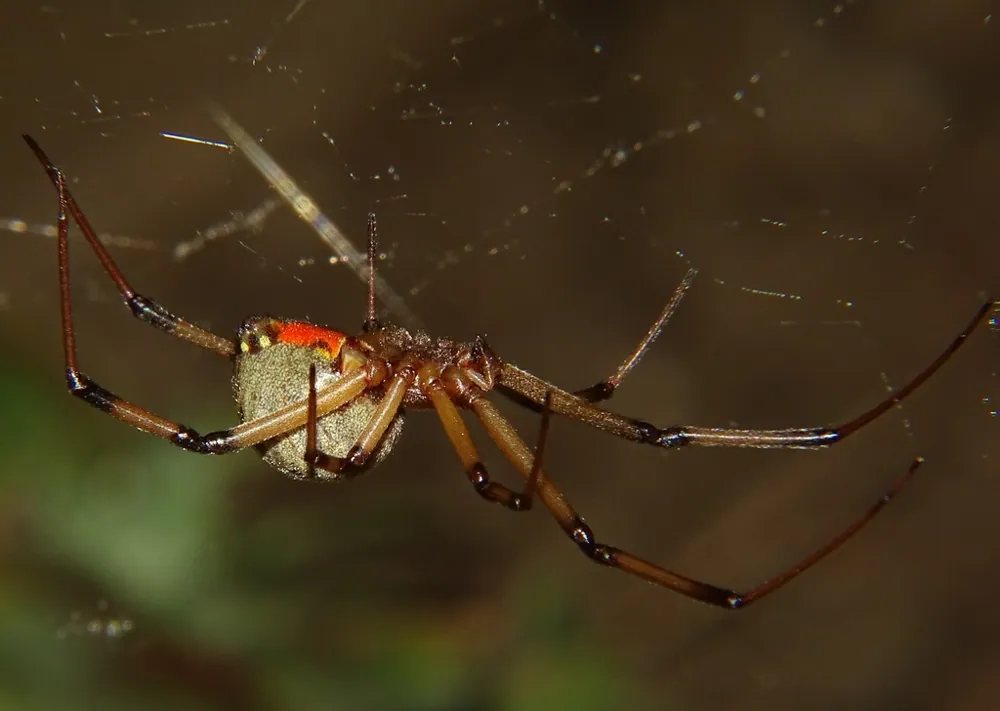
 Hogyan ismerd fel
- Black and white geometric pattern on the top of the abdomen1
- Usually a bright orange or yellowish hourglass marking on the underside of the abdomen1
- Body colour ranges from tan and dark brown to black, with shades of grey also possible1
- Stripes on the legs1
- Egg sacs are spiky, like a sandspur, and sometimes described as tufted, fluffy or spiky1
Gyakran összetévesztik ezzel: The black widow is slightly larger and darker, and has a red hourglass on the underside. The brown widow is lighter, has an orange or yellow hourglass, and has a black and white pattern on top of the abdomen that the black widow does not have. In southern Africa, the brown widow's relative L. rhodesiensis, native to Zimbabwe, is also called a brown button spider.1
Méregerő
Harapáskor a méreg a méregfogain vagy a fogain keresztül jut ki.
Mit tesz a mérge?
Like all widow spiders, the brown widow has a neurotoxic venom, which attacks the nerves. It causes latrodectism, a set of very unpleasant symptoms. The effects are usually confined to the bite area and the tissue around it.1
Mennyire veszélyes az emberre?
Veszély az emberre: FájdalmasNagyon tud fájni, de szinte soha nem súlyos.Brown widow bites are usually not very dangerous, and are much less dangerous than black widow bites. The spider cannot deliver as much venom as a black widow, so its bites are considered minor. They are painful.1
 Ha harap
- Mosd le a harapást, és tegyél rá jégakkut a fájdalom ellen. Kérj orvosi segítséget, ha erős a fájdalom, terjed, vagy a sérült rosszul érzi magát.
Mindig először a segélyhívó számot hívd (112, 000, 911). Ez általános elsősegély-tájékoztató, nem orvosi tanács. Elsősegély alapjai
 Maradj biztonságban
- Soha ne érints meg, ne fogj meg és ne bosszants vadállatot, még ha kicsi is, és még ha alszik vagy döglöttnek tűnik is.
- Hagyj neki helyet. Ha találkozol eggyel, maradj nyugodt, lassan lépj hátra, és hagyd, hogy menjen a maga útján.
- Ha megharap: maradj nyugodt, ne mozogj, hívd a segélyhívó számot (112, 000, 911), vagy juss el gyorsan kórházba. Jegyezd meg, hogyan nézett ki, egy fotó sokat segít.
Nem akar elkapni téged. A mérgét arra használja, hogy élelmet fogjon vagy megvédje magát, és sokkal szívesebben elbújik. Még több a biztonságról
Hol él a világban?
Mekkora?
Milyen hosszú?
 nagyjából olyan hosszú, mint egy gemkapocs
Mekkora Brown widow hozzád képest?
Csak matek a böngésződben. Semmit nem mentünk és nem küldünk el sehova.
Milyen gyors?


Tények
In Southern California, researchers suggest the brown widow may be pushing black widows out of the area by competing and fighting for territory.1
Its egg sacs are so spiky that they are easy to tell apart from those of most other spiders.1
A female can make up to 20 egg sacs over her lifetime, with 120 to 150 eggs in each.1
Brown widows are preyed upon by wasps, including blue mud-dauber wasps and digger wasps.1
Tévhitromboló
Tévhit: The brown widow is as dangerous as the black widow.
Az igazság: Brown widow bites are usually not very dangerous and are much less dangerous than black widow bites.1
Méregszakértőknek
- Tudományos név
- Latrodectus geometricus
- Csoport
- Pókok
- Család
- Theridiidae2
- Rend
- Araneae
- Kontinensek
- Afrika
- Kicsinyek
- Eggs hatch in about 20 days. Each female lays about 120 to 150 eggs per sac and can make up to 20 sacs in her lifetime.1
- Hogy áll a vadonban
- Least Concern (South African National Biodiversity Institute)1
- Veszély az emberre
- 2 / 5: Fájdalmas3
Honnan származnak a tények
- Latrodectus geometricus (Wikipedia (CC BY-SA 4.0))
- Latrodectus geometricus (iNaturalist): nevek és rendszertan.
- Venom Wiki: a veszélyszint, a tipikus méret és a sebességbecslés a saját értékelésünk. Nézd meg, hogyan számoljuk ki: Hogyan értékeljük a veszélyt.
Ezen az oldalon minden tény mellett van egy szám, amely a forrására mutat. Ha valamit elrontottunk, bocsi, mi állatrajongók vagyunk, nem tudományos folyóirat. Írj nekünk ide: [email protected], és kijavítjuk.
 A skorpió éhes! A Venom Wiki egyszemélyes projekt: ingyenes, reklámok és nyomkövetés nélkül. Egy kis borravaló segít, hogy online maradjon.Etesd meg a skorpiót
 Mediterranean black widow
 Six-eyed sand spider
 Noble false widow
 Darwin's bark spider
 Wasp spider
 Black button spider
 Black mamba
 Deathstalker
 Egyptian cobra
 Puff adder
 Boomslang
 Fat-tailed scorpion