
 Afrika
 Ázsia
Ázsia Európa
 Dél-Amerika
 Ausztrália és Óceánia
 Antarktisz
 Csendes-óceán
 Atlanti-óceán
 Indiai-óceán
 Északi-sarki-óceán
 Földközi-tenger
 Vörös-tenger
 Karib-tenger
 Korall-tenger
 Dél-kínai-tenger
 Fülöp-tenger
 Andamán-tenger
 Északi-tenger
 Timor-tenger és Arafura-tenger
 Bengáli-öböl
 Kaliforniai-öböl
European paper wasp
 Csípések
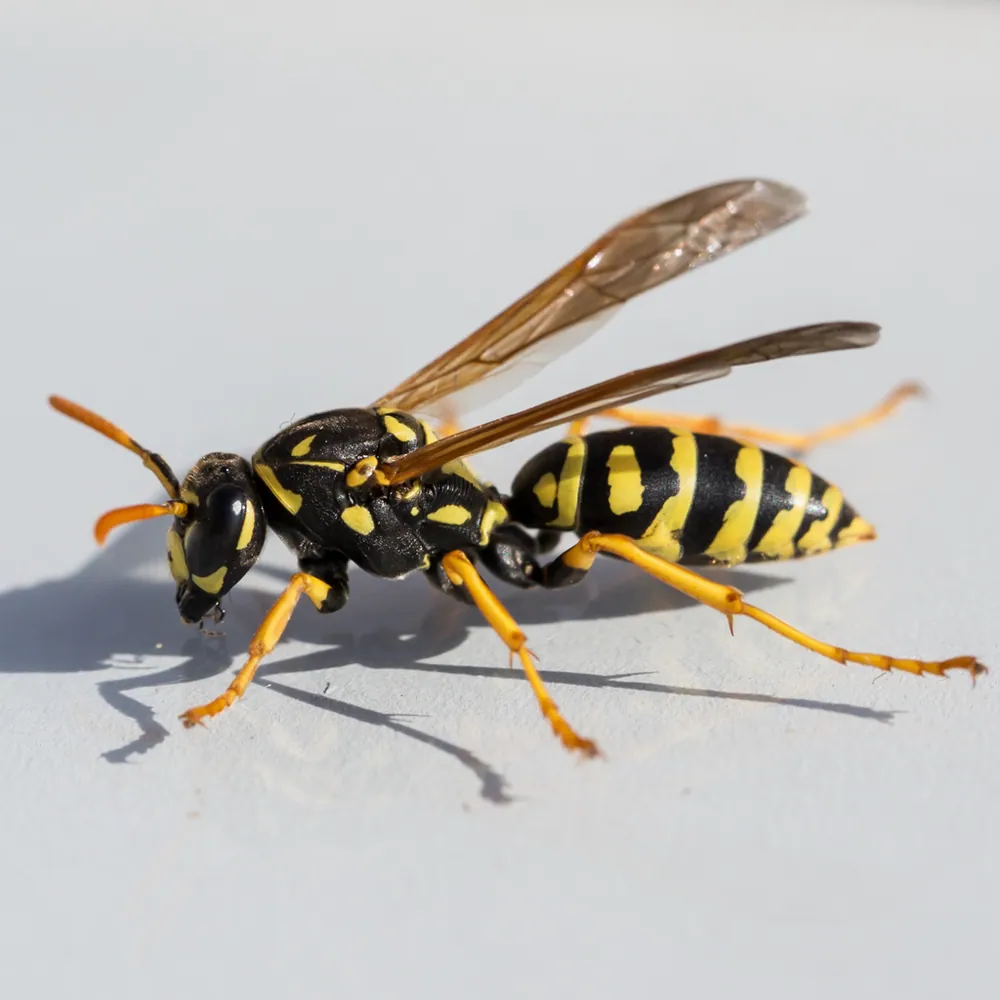
The European paper wasp is a yellow and black social wasp that builds nests from chewed plant fibre mixed with saliva, which looks like grey paper. It lives in warm, temperate parts of Europe, North Africa and Asia, and it has spread to many other continents. It matters because it has become a common invasive species in North America.1

 Hogyan ismerd fel
- Its body is coloured entirely yellow and black.1
- The female's mandible (jaw) is black and sometimes has a yellow spot.1
- The outer half of the antennae (feelers) is orange-yellow.1
- Wings are about 8.5 to 13 mm long, with little variation between individuals.1
- Males have curled antennae and no stinger.1
Gyakran összetévesztik ezzel: Its yellow and black body is similar to that of Vespula germanica, one of the most common and defensive wasps in its native range. In older literature it was often confused with Polistes gallicus, which is now recognised as a separate species.1
Méregerő
A méreg egy fullánkon keresztül jut ki.
Mennyire veszélyes az emberre?
Veszély az emberre: FájdalmasNagyon tud fájni, de szinte soha nem súlyos.Mit csinál, ha megijed?
Its bright yellow and black colouring is a warning colour, and its nests are built in well-protected places to help it avoid predators.1
 Ha csíp
- Kapard ki a méhfullánkot, és hűtsd le a helyét.
- Ha a sérült nehezen lélegzik, bedagad az arca vagy a torka, vagy ájulás környékezi, az allergiás vészhelyzet: hívd a segélyhívó számot, és használd az adrenalin autoinjektorát, ha van neki.
Mindig először a segélyhívó számot hívd (112, 000, 911). Ez általános elsősegély-tájékoztató, nem orvosi tanács. Elsősegély alapjai
 Maradj biztonságban
- Soha ne érints meg, ne fogj meg és ne bosszants vadállatot, még ha kicsi is, és még ha alszik vagy döglöttnek tűnik is.
- Hagyj neki helyet. Ha találkozol eggyel, maradj nyugodt, lassan lépj hátra, és hagyd, hogy menjen a maga útján.
- Ha megcsíp: maradj nyugodt, ne mozogj, hívd a segélyhívó számot (112, 000, 911), vagy juss el gyorsan kórházba. Jegyezd meg, hogyan nézett ki, egy fotó sokat segít.
Nem akar elkapni téged. A mérgét arra használja, hogy élelmet fogjon vagy megvédje magát, és sokkal szívesebben elbújik. Még több a biztonságról
Hol él a világban?
Mekkora?
Milyen hosszú?
 elég kicsi ahhoz, hogy elférjen a körmödön
 15 másodperc alatt repülne át egy egész focipályán
Mekkora European paper wasp hozzád képest?
Csak matek a böngésződben. Semmit nem mentünk és nem küldünk el sehova.
Milyen gyors?


Tények
Its colonies can include many unrelated wasps: about 35% of the wasps in a colony are unrelated, which is unusual for social insects.1
Males' abdominal spots vary in size, location and pattern, and they signal social rank within the colony.1
If the queen is removed from a nest, the second most dominant female takes over her role.1
In spring, some North American colonies have been seen with more than 80 wasps joining to reuse and expand an old nest.1
The first North American record was in Massachusetts in the late 1970s, and it had spread across the northeastern USA by 1995.1
Tévhitromboló
Tévhit: The species name is sometimes spelled "dominulus", as authors wrongly assumed the name was an adjective.
Az igazság: Dominula is a noun meaning "little mistress", so under the International Code of Zoological Nomenclature it does not change when the species moves genus.1
Honnan származnak a tények
- European paper wasp (Wikipedia (CC BY-SA 4.0))
- Polistes dominula (iNaturalist): nevek és rendszertan.
- Venom Wiki: a veszélyszint, a tipikus méret és a sebességbecslés a saját értékelésünk. Nézd meg, hogyan számoljuk ki: Hogyan értékeljük a veszélyt.
Ezen az oldalon minden tény mellett van egy szám, amely a forrására mutat. Ha valamit elrontottunk, bocsi, mi állatrajongók vagyunk, nem tudományos folyóirat. Írj nekünk ide: [email protected], és kijavítjuk.
 A skorpió éhes! A Venom Wiki egyszemélyes projekt: ingyenes, reklámok és nyomkövetés nélkül. Egy kis borravaló segít, hogy online maradjon.Etesd meg a skorpiót
Még több ugyanebből a csoportból: Méhek, darazsak és lódarazsak
 Asian giant hornetMéhek, darazsak és lódarazsakÖlni is tud
 Common waspMéhek, darazsak és lódarazsakCsak fáj
 European hornetMéhek, darazsak és lódarazsakCsak fáj
 Western honey beeMéhek, darazsak és lódarazsakCsak fáj
 Giant honey beeMéhek, darazsak és lódarazsakOrvos kell
 Asian hornetMéhek, darazsak és lódarazsakCsak fáj
Itt is él:: Európa
 Common European adderViperák és keresztes viperákOrvos kell
 Spanish flyMás mérgező állatokOrvos kellNe nyúlj hozzá
 Fire salamanderNyílméregbékák, varangyok és gőtékCsak fájNe nyúlj hozzá
 Blunt-nosed viperViperák és keresztes viperákÖlni is tud
 Nose-horned viperViperák és keresztes viperákÖlni is tud
 Ottoman viperViperák és keresztes viperákÖlni is tud