
 Afrika
 Ázsia
Ázsia Európa
 Dél-Amerika
 Ausztrália és Óceánia
 Antarktisz
 Csendes-óceán
 Atlanti-óceán
 Indiai-óceán
 Északi-sarki-óceán
 Földközi-tenger
 Vörös-tenger
 Karib-tenger
 Korall-tenger
 Dél-kínai-tenger
 Fülöp-tenger
 Andamán-tenger
 Északi-tenger
 Timor-tenger és Arafura-tenger
 Bengáli-öböl
 Kaliforniai-öböl
Giant house spider
 Harapások
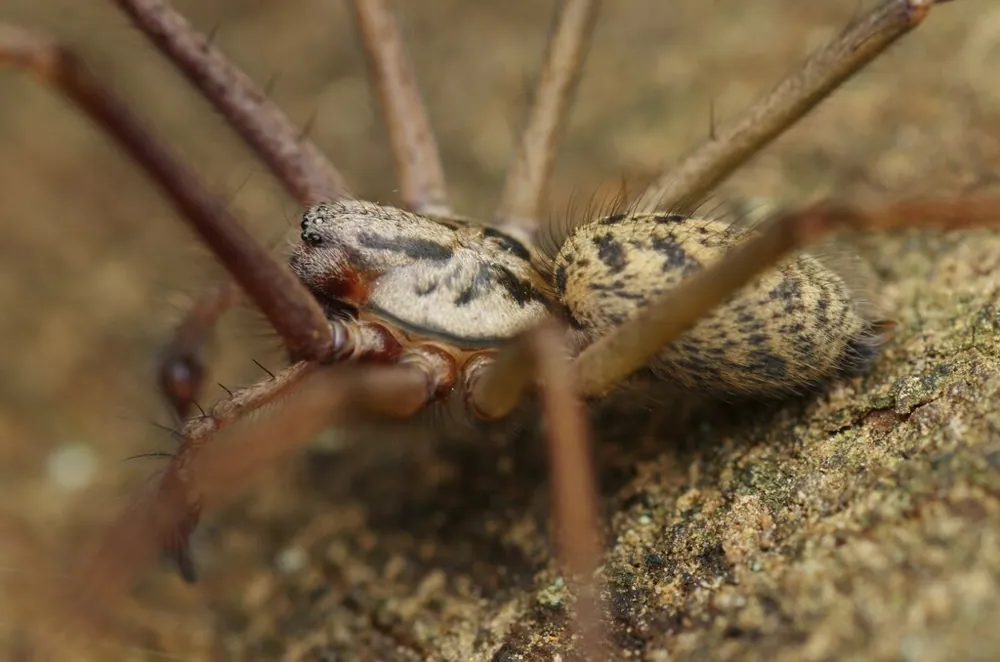
The giant house spider is a large, brown spider that often lives indoors, especially in Europe, where it is native. It is also found in parts of North America, where it was introduced. Its bite is not considered dangerous to people or pets.1
 Hogyan ismerd fel
- Mainly dark-brown body, in earthy tones of brown and muddy-red or yellow.1
- A lighter arrow-shaped marking on the front part of the body (the sternum), with three light spots on each side.1
- A lighter middle line on the abdomen, with six light spots on each side.1
- Conspicuously hairy legs, palps and abdomen.1
- Females reach up to 18.5 mm in body length. Males are slightly smaller, at around 12 to 15 mm. Males have larger palps and a slimmer abdomen than females.1
Gyakran összetévesztik ezzel: The giant house spider has the same colouring as the domestic house spider, Tegenaria domestica. The two closest relatives, E. duellica and E. saeva, look the same as E. atrica. The three species can only be separated by microscopic measurements of the body parts.1
Méregerő
Harapáskor a méreg a méregfogain vagy a fogain keresztül jut ki.
Mennyire veszélyes az emberre?
Veszély az emberre: EnyheOlyan, mint egy méhcsípés, vagy enyhébb. Az emberre gyakorlatilag ártalmatlan.Bites are not considered dangerous to humans or pets.1
 Ha harap
- Mosd le a harapást, és tegyél rá jégakkut a fájdalom ellen. Kérj orvosi segítséget, ha erős a fájdalom, terjed, vagy a sérült rosszul érzi magát.
Mindig először a segélyhívó számot hívd (112, 000, 911). Ez általános elsősegély-tájékoztató, nem orvosi tanács. Elsősegély alapjai
 Maradj biztonságban
- Soha ne érints meg, ne fogj meg és ne bosszants vadállatot, még ha kicsi is, és még ha alszik vagy döglöttnek tűnik is.
- Hagyj neki helyet. Ha találkozol eggyel, maradj nyugodt, lassan lépj hátra, és hagyd, hogy menjen a maga útján.
- Ha megharap: maradj nyugodt, ne mozogj, hívd a segélyhívó számot (112, 000, 911), vagy juss el gyorsan kórházba. Jegyezd meg, hogyan nézett ki, egy fotó sokat segít.
Nem akar elkapni téged. A mérgét arra használja, hogy élelmet fogjon vagy megvédje magát, és sokkal szívesebben elbújik. Még több a biztonságról
Hol él a világban?
Mekkora?
Milyen hosszú?
 rövidebb a kisujjadnál
 190 másodperc alatt futná le a 100 métert (a leggyorsabb embernek 9,6 kell)
Mekkora Giant house spider hozzád képest?
Csak matek a böngésződben. Semmit nem mentünk és nem küldünk el sehova.
Milyen gyors?


Tények
The eyes are all the same size and sit in two rows. They contain few visual cells, so the spider can probably only tell light from dark.1
Until 2018, the giant house spider was treated as one species. Research then showed three separate species, which can only be told apart under a microscope.1
Males wander while searching for females during mating season, which runs from late summer into autumn. This is when they are most often noticed.1
Males have no Y chromosome. Males carry X1 and X2, and females carry two pairs of X chromosomes. This form of sex determination is the most common in spiders and is probably the ancestral form.1
Honnan származnak a tények
- Eratigena atrica (Wikipedia (CC BY-SA 4.0))
- Eratigena atrica (iNaturalist): nevek és rendszertan.
- Venom Wiki: a veszélyszint, a tipikus méret és a sebességbecslés a saját értékelésünk. Nézd meg, hogyan számoljuk ki: Hogyan értékeljük a veszélyt.
Ezen az oldalon minden tény mellett van egy szám, amely a forrására mutat. Ha valamit elrontottunk, bocsi, mi állatrajongók vagyunk, nem tudományos folyóirat. Írj nekünk ide: [email protected], és kijavítjuk.
 A skorpió éhes! A Venom Wiki egyszemélyes projekt: ingyenes, reklámok és nyomkövetés nélkül. Egy kis borravaló segít, hogy online maradjon.Etesd meg a skorpiót
Még több ugyanebből a csoportból: Pókok
 Mediterranean black widow
 Diving bell spider
 European yellow sac spider
 Noble false widow
 Tarantula wolf spider
 Daddy long-legs spider
Itt is él:: Európa
 Common European adderViperák és keresztes viperákOrvos kell
 Spanish flyMás mérgező állatokOrvos kellNe nyúlj hozzá
 Common waspMéhek, darazsak és lódarazsakCsak fáj
 European hornetMéhek, darazsak és lódarazsakCsak fáj
 Fire salamanderNyílméregbékák, varangyok és gőtékCsak fájNe nyúlj hozzá
 Western honey beeMéhek, darazsak és lódarazsakCsak fáj