
 Afrika
 Ázsia
Ázsia Európa
 Dél-Amerika
 Ausztrália és Óceánia
 Antarktisz
 Csendes-óceán
 Atlanti-óceán
 Indiai-óceán
 Északi-sarki-óceán
 Földközi-tenger
 Vörös-tenger
 Karib-tenger
 Korall-tenger
 Dél-kínai-tenger
 Fülöp-tenger
 Andamán-tenger
 Északi-tenger
 Timor-tenger és Arafura-tenger
 Bengáli-öböl
 Kaliforniai-öböl
Greenland shark
 Megenni mérgező
The Greenland shark is a huge, slow shark that lives in the cold, deep waters of the North Atlantic and Arctic Oceans. It is famous for living longer than any known vertebrate (animal with a backbone). Its flesh is poisonous to eat unless it is specially prepared.1



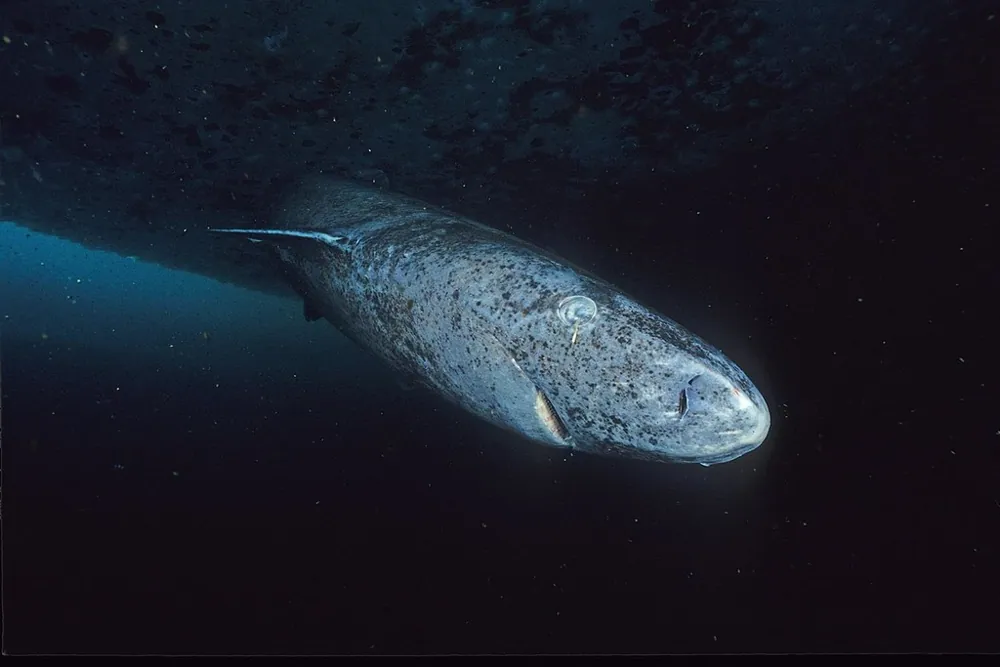
 Hogyan ismerd fel
- A thickset, heavy body with a short, rounded snout1
- Small eyes and small dorsal and pectoral fins1
- Five very small gill openings for its size1
- Colour ranges from pale creamy-grey to blackish-brown, usually uniform, sometimes with whitish spots or faint dark streaks on the back1
- Often has small parasitic copepods (crustaceans) attached to its eyes1
Méregerő
Csak akkor ártalmas, ha valami megeszi.
Mit tesz a méreganyaga?
The shark is not venomous. Its meat is poisonous to mammals because it contains high levels of trimethylamine N-oxide (TMAO), a natural chemical that makes the flesh toxic.1
Mennyire veszélyes az emberre?
Veszély az emberre: FájdalmasNagyon tud fájni, de szinte soha nem súlyos.Greenland sharks are not considered a threat to people, because they live deep in remote, cold waters. Only one possible attack is recorded, in 1936, and it was never linked to this species. One unverified report from around 1859 describes a human leg found in a shark's stomach.1
Mit csinál, ha megijed?
When hauled onto a boat, it thrashes its tail so violently that it is dangerous to stand near it, and its muscles can still twitch after death.1
 Ha valaki megérintette vagy megette
- Ha valaki megette, vagy evés után tünetei vannak: azonnal hívd a segélyhívó számot vagy a toxikológiai központot.
Mindig először a segélyhívó számot hívd (112, 000, 911). Ez általános elsősegély-tájékoztató, nem orvosi tanács. Elsősegély alapjai
 Maradj biztonságban
- Soha ne érints meg, ne fogj meg és ne bosszants vadállatot, még ha kicsi is, és még ha alszik vagy döglöttnek tűnik is.
- Hagyj neki helyet. Ha találkozol eggyel, maradj nyugodt, lassan lépj hátra, és hagyd, hogy menjen a maga útján.
- Ha megérintetted vagy megetted: ne dörzsöld a szemed vagy a szád, moss kezet, és kérj orvosi segítséget.
Nem akar elkapni téged. A méreganyaga csak azért van, hogy semmi ne egye meg. Még több a biztonságról
Hol él a világban?
Mekkora?
Milyen hosszú?
Milyen nehéz?
 olyan hosszú, mint 6 kutya orrtól farokig
 olyan hosszú, mint 36 banán egymás után
 69 másodperc alatt úszná át egy nagy uszoda hosszát (50 m)
Mekkora Greenland shark hozzád képest?
Csak matek a böngésződben. Semmit nem mentünk és nem küldünk el sehova.
Milyen gyors?

Tények
It is thought to have the longest lifespan of any known vertebrate, estimated at between 272 and 510 years.1
It is one of the slowest-swimming fish for its size, with a fastest cruising speed of about 2.7 km/h.1
Parasitic copepods often attach to its eyes and can damage them, but this does not seem to shorten its life, because it relies mainly on smell and hearing.1
It is one of the largest shark species alive, with the largest confirmed specimen weighing around 1,023 kg.1
In Iceland, a specially treated form of its meat is eaten as a pungent delicacy called kæstur hákarl.1
Its slow metabolism is thought to be linked to its very long life, although this is still a hypothesis.1
Tévhitromboló
Tévhit: The Greenland shark is a dangerous threat to humans.
Az igazság: It is not considered a threat to people. It lives deep in cold, remote waters, and the only report of a possible attack was never confirmed as this species.1
Méregszakértőknek
- Tudományos név
- Somniosus microcephalus
- Csoport
- Más mérgező állatok
- Család
- Somniosidae2
- Rend
- Squaliformes
- Kontinensek
- Északi-sarki-óceán, Atlanti-óceán, Az óceánok
- Kicsinyek
- Pups are born alive, after an estimated gestation period of 8 to 18 years. Females reach sexual maturity at around 150 years of age.1
- Veszély az emberre
- 2 / 5: Fájdalmas3
Honnan származnak a tények
- Greenland shark (Wikipedia (CC BY-SA 4.0))
- Somniosus microcephalus (iNaturalist): nevek és rendszertan.
- Venom Wiki: a veszélyszint, a tipikus méret és a sebességbecslés a saját értékelésünk. Nézd meg, hogyan számoljuk ki: Hogyan értékeljük a veszélyt.
Ezen az oldalon minden tény mellett van egy szám, amely a forrására mutat. Ha valamit elrontottunk, bocsi, mi állatrajongók vagyunk, nem tudományos folyóirat. Írj nekünk ide: [email protected], és kijavítjuk.
 A skorpió éhes! A Venom Wiki egyszemélyes projekt: ingyenes, reklámok és nyomkövetés nélkül. Egy kis borravaló segít, hogy online maradjon.Etesd meg a skorpiót
 Japán gömbhal
 Hawksbill sea turtle
 Silver-cheeked toadfish
 Blackspotted puffer
 White-spotted puffer
 Long-spine porcupinefish
 Lion's mane jellyfish
 Moon jellyfish
 Spiny dogfish
 Bootlace worm