
 Afrika
 Ázsia
Ázsia Európa
 Dél-Amerika
 Ausztrália és Óceánia
 Antarktisz
 Csendes-óceán
 Atlanti-óceán
 Indiai-óceán
 Északi-sarki-óceán
 Földközi-tenger
 Vörös-tenger
 Karib-tenger
 Korall-tenger
 Dél-kínai-tenger
 Fülöp-tenger
 Andamán-tenger
 Északi-tenger
 Timor-tenger és Arafura-tenger
 Bengáli-öböl
 Kaliforniai-öböl
Indian ornamental tarantula
 Harapások
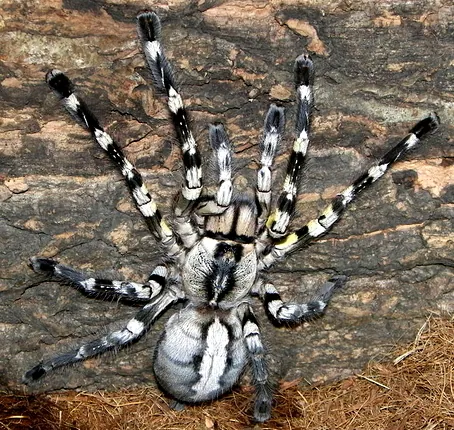
The Indian ornamental tarantula is a large spider that lives high in trees in southeastern India. It is known for its striking patterned body and is a popular spider among tarantula keepers. It has a medically significant bite, though no death from any tarantula bite has ever been recorded.1

 Hogyan ismerd fel
Méregerő
Harapáskor a méreg a méregfogain vagy a fogain keresztül jut ki.
Mit tesz a mérge?
The venom may cause intense pain. This is judged from the experience of keepers bitten by other spiders in the same genus, so the exact effects are not fully known for this species. The large fangs also make puncture wounds that can become infected.1
Mennyire veszélyes az emberre?
Veszély az emberre: SúlyosA harapással orvoshoz kell menni. Haláleset nagyon ritka.No death has ever been recorded from any tarantula bite. The species is still considered to have a medically significant bite. It generally prefers flight to fight but may attack when cornered.1
Mit csinál, ha megijed?
It tends to be quite defensive, and may attack when cornered, though it generally prefers to escape.1
 Ha harap
- Bites need proper treatment, because the fang punctures can lead to a secondary bacterial infection if they are not treated properly.1
- Mosd le és hűtsd a harapást. Kérj orvosi segítséget, ha erős a fájdalom, vagy a sérült rosszul érzi magát.
Mindig először a segélyhívó számot hívd (112, 000, 911). Ez általános elsősegély-tájékoztató, nem orvosi tanács. Elsősegély alapjai
 Maradj biztonságban
- Soha ne érints meg, ne fogj meg és ne bosszants vadállatot, még ha kicsi is, és még ha alszik vagy döglöttnek tűnik is.
- Hagyj neki helyet. Ha találkozol eggyel, maradj nyugodt, lassan lépj hátra, és hagyd, hogy menjen a maga útján.
- Ha megharap: maradj nyugodt, ne mozogj, hívd a segélyhívó számot (112, 000, 911), vagy juss el gyorsan kórházba. Jegyezd meg, hogyan nézett ki, egy fotó sokat segít.
Nem akar elkapni téged. A mérgét arra használja, hogy élelmet fogjon vagy megvédje magát, és sokkal szívesebben elbújik. Még több a biztonságról
Hol él a világban?
Mekkora?
Milyen hosszú?
 olyan hosszú, mint 6 játék építőkocka egy sorban
 190 másodperc alatt futná le a 100 métert (a leggyorsabb embernek 9,6 kell)
Mekkora Indian ornamental tarantula hozzád képest?
Csak matek a böngésződben. Semmit nem mentünk és nem küldünk el sehova.
Milyen gyors?


Tények
No case of anaphylactic shock, a severe allergic reaction, has ever been reported from tarantula venom.1
Some individuals of this genus live communally when territory is limited, sharing a tree with several holes.1
Females can live upwards of 12 years, while males usually live only 3 to 5 years.1
In captivity, it is usually fed crickets and grasshoppers, and adults can occasionally be fed small rodents.1
It is one of the most popular arboreal tarantulas among amateur collectors.1
Tévhitromboló
Tévhit: Tarantula bites are always deadly.
Az igazság: No death has ever been recorded from any tarantula bite, although the bite of this species can still be medically significant and cause intense pain.1
Honnan származnak a tények
- Poecilotheria regalis (Wikipedia (CC BY-SA 4.0))
- Poecilotheria regalis (iNaturalist): nevek és rendszertan.
- Venom Wiki: a veszélyszint, a tipikus méret és a sebességbecslés a saját értékelésünk. Nézd meg, hogyan számoljuk ki: Hogyan értékeljük a veszélyt.
Ezen az oldalon minden tény mellett van egy szám, amely a forrására mutat. Ha valamit elrontottunk, bocsi, mi állatrajongók vagyunk, nem tudományos folyóirat. Írj nekünk ide: [email protected], és kijavítjuk.
 A skorpió éhes! A Venom Wiki egyszemélyes projekt: ingyenes, reklámok és nyomkövetés nélkül. Egy kis borravaló segít, hogy online maradjon.Etesd meg a skorpiót
Még több ugyanebből a csoportból: Madárpókok és tölcsérhálós pókok
 Gooty sapphire tarantulaMadárpókok és tölcsérhálós pókokOrvos kell
 Cobalt blue tarantulaMadárpókok és tölcsérhálós pókokCsak fáj
 Chinese bird spiderMadárpókok és tölcsérhálós pókokOrvos kell
 Chinese black earth tiger tarantulaMadárpókok és tölcsérhálós pókokOrvos kell
 Fringed ornamental tarantulaMadárpókok és tölcsérhálós pókokOrvos kell
 Japanese funnel-web spiderMadárpókok és tölcsérhálós pókokOrvos kell
 Sárga skorpió
 Pápaszemes kobra
 Fűrészes vipera
 Királykobra
 Puffogó vipera
 Láncos vipera