
 Afrika
 Ázsia
Ázsia Európa
 Dél-Amerika
 Ausztrália és Óceánia
 Antarktisz
 Csendes-óceán
 Atlanti-óceán
 Indiai-óceán
 Északi-sarki-óceán
 Földközi-tenger
 Vörös-tenger
 Karib-tenger
 Korall-tenger
 Dél-kínai-tenger
 Fülöp-tenger
 Andamán-tenger
 Északi-tenger
 Timor-tenger és Arafura-tenger
 Bengáli-öböl
 Kaliforniai-öböl
Irukandji jellyfish
 Csalánozó csápok
The Irukandji jellyfish is a tiny box jellyfish with a sting that can cause a serious illness called Irukandji syndrome. It lives in the open water near Australia, and it is hard to spot because it is so small.1



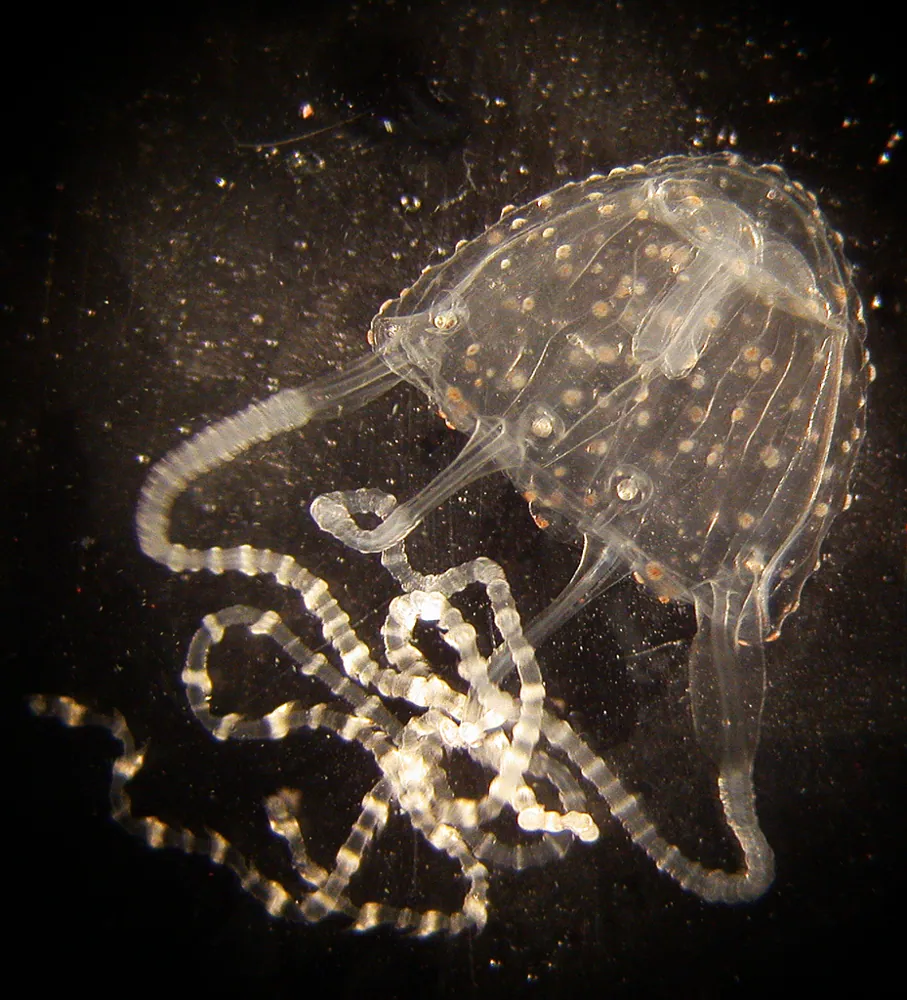
 Hogyan ismerd fel
- The bell is square-shaped and very small, about 12 mm high and 30 mm across.1
- It has four long tentacles, one from each corner of the bell.1
- The tentacles range from 5 to 50 cm long.1
- Its small size means it often goes unseen in open water.1
Gyakran összetévesztik ezzel: The common name Irukandji jellyfish is also used for other Irukandji jellyfish, such as Malo kingi. The name alone does not tell them apart.1
Méregerő
Több ezer apró csalánsejt sül el, ha valami hozzáér.
Mit tesz a mérge?
This jellyfish is extremely venomous. Its venom comes from stinging cells called nematocysts in its tentacles and bell, and it changes as the jellyfish matures. A sting can cause Irukandji syndrome, with muscle aches, back pain, nausea, headaches, chest and stomach pains, sweating, high blood pressure and difficulty breathing.1
Mennyire veszélyes az emberre?
Veszély az emberre: Nagyon veszélyesHa valaki nem kap kezelést, megölheti.Irukandji syndrome can be severe, and the symptoms are described in detail in medical accounts. Most reported incidents have been in Australia during the warm summer season. Because the jellyfish is so small, people often do not see it before they are stung.1
 Ha csíp
- In hospital, patients are given intravenous morphine, hydromorphone or fentanyl for pain. Pethidine is avoided because of its toxic metabolite norpethidine.1
- Gyere ki a vízből, és szedd le a csápokat (kesztyűben vagy egy ruhadarabbal).
- Trópusi kockamedúzánál: önts ecetet a csípésekre legalább 30 másodpercig, hívj segítséget, és készülj fel az újraélesztésre. Portugál gályánál és a legtöbb másiknál: öblítsd le tengervízzel, aztán forró vízzel enyhítsd a fájdalmat.
Mindig először a segélyhívó számot hívd (112, 000, 911). Ez általános elsősegély-tájékoztató, nem orvosi tanács. Elsősegély alapjai
 Maradj biztonságban
- Soha ne érints meg, ne fogj meg és ne bosszants vadállatot, még ha kicsi is, és még ha alszik vagy döglöttnek tűnik is.
- Hagyj neki helyet. Ha találkozol eggyel, maradj nyugodt, lassan lépj hátra, és hagyd, hogy menjen a maga útján.
- Ha megcsíp: maradj nyugodt, ne mozogj, hívd a segélyhívó számot (112, 000, 911), vagy juss el gyorsan kórházba. Jegyezd meg, hogyan nézett ki, egy fotó sokat segít.
Nem akar elkapni téged. A mérgét arra használja, hogy élelmet fogjon vagy megvédje magát, és sokkal szívesebben elbújik. Még több a biztonságról
Hol él a világban?
Mekkora?
Milyen hosszú?
 rövidebb a kisujjadnál
 36 másodperc alatt úszná át egy nagy uszoda hosszát (50 m)
Mekkora Irukandji jellyfish hozzád képest?
Csak matek a böngésződben. Semmit nem mentünk és nem küldünk el sehova.
Milyen gyors?
Tények
Jack Barnes of Cairns, Australia, discovered the species. During an exploration aimed at finding the cause of Irukandji syndrome, he allowed himself, a lifeguard and his 9-year-old son to be stung.1
Irukandji syndrome, which this jellyfish can cause, was first identified after a group of swimmers were stung in open water near North Queensland, Australia.1
Its venom changes in composition as the jellyfish grows, matching its change in prey from invertebrates to fish.1
Its life cycle alternates between a young form that attaches to a reef or rock and an adult form that swims freely in the water.1
This jellyfish is a type of box jellyfish, a group known for potent venom.1
Méregszakértőknek
- Tudományos név
- Carukia barnesi
- Csoport
- Medúzák és tengeri csalánozók
- Család
- Carukiidae2
- Rend
- Carybdeida
- Kontinensek
- Indiai-óceán, Csendes-óceán, Korall-tenger, Timor-tenger és Arafura-tenger, Az óceánok
- Kicsinyek
- Young jellyfish begin as a swimming planula larva, which settles on a reef or rock and grows into a polyp. The polyp later forms a colony that develops into an adult medusa.1
- Veszély az emberre
- 4 / 5: Nagyon veszélyes3
Honnan származnak a tények
- Carukia barnesi (Wikipedia (CC BY-SA 4.0))
- Carukia barnesi (iNaturalist): nevek és rendszertan.
- Venom Wiki: a veszélyszint, a tipikus méret és a sebességbecslés a saját értékelésünk. Nézd meg, hogyan számoljuk ki: Hogyan értékeljük a veszélyt.
Ezen az oldalon minden tény mellett van egy szám, amely a forrására mutat. Ha valamit elrontottunk, bocsi, mi állatrajongók vagyunk, nem tudományos folyóirat. Írj nekünk ide: [email protected], és kijavítjuk.
 A skorpió éhes! A Venom Wiki egyszemélyes projekt: ingyenes, reklámok és nyomkövetés nélkül. Egy kis borravaló segít, hogy online maradjon.Etesd meg a skorpiót
Még több ugyanebből a csoportból: Medúzák és tengeri csalánozók
 Ausztrál kockamedúzaMedúzák és tengeri csalánozókHalálosNe nyúlj hozzá
 Portuguese man o' warMedúzák és tengeri csalánozókOrvos kellNe nyúlj hozzá
 Lion's mane jellyfishMedúzák és tengeri csalánozókCsak fájNe nyúlj hozzá
 Moon jellyfishMedúzák és tengeri csalánozókÁrtalmatlan
 Common kingslayerMedúzák és tengeri csalánozókÖlni is tudNe nyúlj hozzá
 Hell's fire anemoneMedúzák és tengeri csalánozókOrvos kellNe nyúlj hozzá
Itt is él:: Indiai-óceán
 Földrajzi kúpcsigaKúpcsigák és polipokHalálos
 Nagy kékgyűrűs polipKúpcsigák és polipokHalálos
 Déli kékgyűrűs polipKúpcsigák és polipokHalálos
 Hawksbill sea turtleMás mérgező állatokÖlni is tud
 Reef stonefishMérges halakÖlni is tudNe nyúlj hozzá
 Crown-of-thorns starfishTengeri sünök, tengeri csillagok és férgekOrvos kellNe nyúlj hozzá