
 Afrika
 Ázsia
Ázsia Európa
 Dél-Amerika
 Ausztrália és Óceánia
 Antarktisz
 Csendes-óceán
 Atlanti-óceán
 Indiai-óceán
 Északi-sarki-óceán
 Földközi-tenger
 Vörös-tenger
 Karib-tenger
 Korall-tenger
 Dél-kínai-tenger
 Fülöp-tenger
 Andamán-tenger
 Északi-tenger
 Timor-tenger és Arafura-tenger
 Bengáli-öböl
 Kaliforniai-öböl
Masked hunter
 Harapások
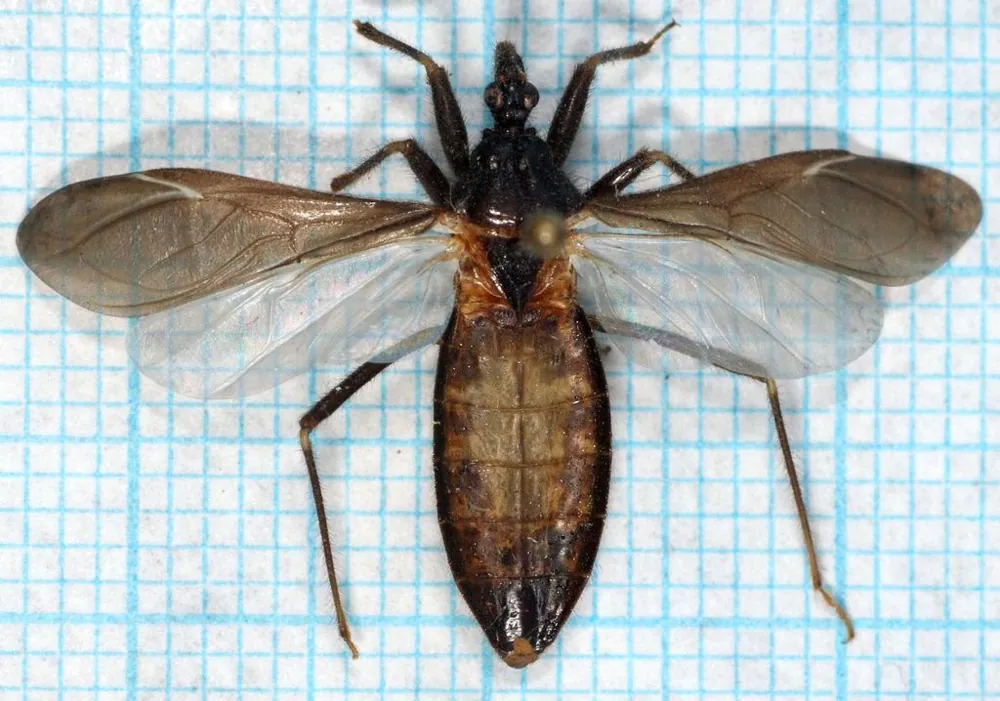
The masked hunter is a dark brown to black insect from the assassin bug family. It hunts small creatures such as bed bugs, woodlice and termites, and it is often found in homes. Its nymphs hide by covering their bodies with dust and debris.1

 Hogyan ismerd fel
- Adults are uniformly dark brown to black and measure 17–22 mm in length.1
- The head is elongated, with a short, three-segmented beak and long, slender antennae.1
- The abdomen is wide and extends beyond the wings in the middle, showing the edges of its abdominal segments.1
- Nymphs look like small adults but are often grey or light-coloured, because a sticky body coat collects dust, lint and small particles.1
Gyakran összetévesztik ezzel: Masked hunters are sometimes mistaken for the kissing bug. Unlike the kissing bug, masked hunters do not carry Chagas disease.1
Méregerő
Harapáskor a méreg a méregfogain vagy a fogain keresztül jut ki.
Mennyire veszélyes az emberre?
Veszély az emberre: FájdalmasNagyon tud fájni, de szinte soha nem súlyos.A handled or trapped masked hunter can deliver a rostral stab, which is painful and comparable to a bee's sting. The swelling can last for about a week. They do not feed on human blood.1
Mit csinál, ha megijed?
When handled or trapped, it defends itself by delivering a stab with its beak.1
 Ha harap
- A hernyók csalánozó szőreinél: emeld le őket ragasztószalaggal, aztán mosd le a bőrt. Ne dörzsöld.
- Harapásnál: mosd le és hűtsd. Kérj orvosi segítséget, ha a sérült rosszul érzi magát vagy könnyen vérzik.
Mindig először a segélyhívó számot hívd (112, 000, 911). Ez általános elsősegély-tájékoztató, nem orvosi tanács. Elsősegély alapjai
 Maradj biztonságban
- Soha ne érints meg, ne fogj meg és ne bosszants vadállatot, még ha kicsi is, és még ha alszik vagy döglöttnek tűnik is.
- Hagyj neki helyet. Ha találkozol eggyel, maradj nyugodt, lassan lépj hátra, és hagyd, hogy menjen a maga útján.
- Ha megharap: maradj nyugodt, ne mozogj, hívd a segélyhívó számot (112, 000, 911), vagy juss el gyorsan kórházba. Jegyezd meg, hogyan nézett ki, egy fotó sokat segít.
Nem akar elkapni téged. A mérgét arra használja, hogy élelmet fogjon vagy megvédje magát, és sokkal szívesebben elbújik. Még több a biztonságról
Hol él a világban?
Mekkora?
Milyen hosszú?
 nagyjából olyan hosszú, mint egy gemkapocs
Mekkora Masked hunter hozzád képest?
Csak matek a böngésződben. Semmit nem mentünk és nem küldünk el sehova.
Milyen gyors?


Tények
Nymphs build two layers of camouflage on their bodies, an inner layer of fine particles and an outer layer of coarser ones, using their hind legs and a tarsal fan.1
Their sticky body coat catches dust, lint and other small particles, which hides them from both predators and prey.1
Because they hunt bed bugs, a masked hunter in the home can be a sign of a bed bug problem, and controlling the bed bugs usually deals with the hunters too.1
Masked hunters were probably introduced to North America by accident in the late 1800s to early 1900s. They were first found in Canada in 1905 and in the United States in 1917.1
Tévhitromboló
Tévhit: Masked hunters are kissing bugs and carry Chagas disease.
Az igazság: Masked hunters are sometimes mistaken for kissing bugs, but they do not carry Chagas disease. Their stab is painful, but it does not spread that disease.1
Honnan származnak a tények
- Reduvius personatus (Wikipedia (CC BY-SA 4.0))
- Reduvius personatus (iNaturalist): nevek és rendszertan.
- Venom Wiki: a veszélyszint, a tipikus méret és a sebességbecslés a saját értékelésünk. Nézd meg, hogyan számoljuk ki: Hogyan értékeljük a veszélyt.
Ezen az oldalon minden tény mellett van egy szám, amely a forrására mutat. Ha valamit elrontottunk, bocsi, mi állatrajongók vagyunk, nem tudományos folyóirat. Írj nekünk ide: [email protected], és kijavítjuk.
 A skorpió éhes! A Venom Wiki egyszemélyes projekt: ingyenes, reklámok és nyomkövetés nélkül. Egy kis borravaló segít, hogy online maradjon.Etesd meg a skorpiót
Még több ugyanebből a csoportból: Hernyók és rovarok
 Oak processionaryHernyók és rovarokCsak fájNe nyúlj hozzá
 Pine processionaryHernyók és rovarokCsak fájNe nyúlj hozzá
 Common bombardier beetleHernyók és rovarokÁrtalmatlan
 Asian giant water bugHernyók és rovarokCsak fáj
 Blue-striped nettle grubHernyók és rovarokCsak fájNe nyúlj hozzá
 Brown-tail mothHernyók és rovarokCsak fájNe nyúlj hozzá
Itt is él:: Európa
 Common European adderViperák és keresztes viperákOrvos kell
 Spanish flyMás mérgező állatokOrvos kellNe nyúlj hozzá
 Common waspMéhek, darazsak és lódarazsakCsak fáj
 European hornetMéhek, darazsak és lódarazsakCsak fáj
 Fire salamanderNyílméregbékák, varangyok és gőtékCsak fájNe nyúlj hozzá
 Western honey beeMéhek, darazsak és lódarazsakCsak fáj