
 Afrika
 Ázsia
Ázsia Európa
 Dél-Amerika
 Ausztrália és Óceánia
 Antarktisz
 Csendes-óceán
 Atlanti-óceán
 Indiai-óceán
 Északi-sarki-óceán
 Földközi-tenger
 Vörös-tenger
 Karib-tenger
 Korall-tenger
 Dél-kínai-tenger
 Fülöp-tenger
 Andamán-tenger
 Északi-tenger
 Timor-tenger és Arafura-tenger
 Bengáli-öböl
 Kaliforniai-öböl
Mexican fireleg tarantula
 Harapások
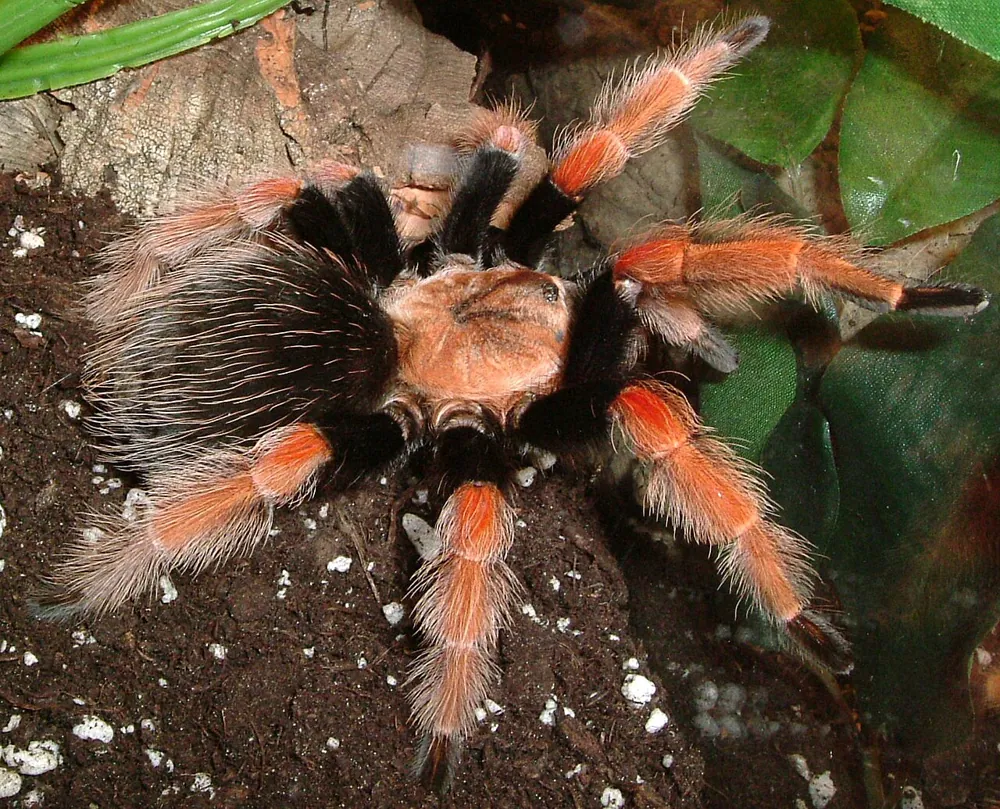
The Mexican fireleg tarantula is a large, long-lived spider with bright orange and black colouring. It lives in dry scrubland in western Guerrero state, Mexico, where it hides in burrows. It is popular in the pet trade, which has put pressure on wild numbers.1



 Hogyan ismerd fel
- Dramatic orange and black colouring.1
- Orange carapace (the upper body shell) with a dark black band on the upper legs (femora).1
- Bright, fiery red knees (patellae) that fade to a paler orange further down the leg.1
- Black tips on the feet (tarsi).1
- Adults are 12.7 to 15.2 cm across, converted from 5 to 6 inches.1
Gyakran összetévesztik ezzel: It resembles the Mexican redknee tarantula (Brachypelma hamorii). The main difference is the legs: the knees of the Mexican fireleg are bright red, while the joints of the redknee are orange.1
Méregerő
Harapáskor a méreg a méregfogain vagy a fogain keresztül jut ki.
Mennyire veszélyes az emberre?
Veszély az emberre: EnyheOlyan, mint egy méhcsípés, vagy enyhébb. Az emberre gyakorlatilag ártalmatlan.The spider is not particularly defensive. Its main defence is its urticating hairs, which it can flick when threatened. Some individuals may have a nervous temperament.1
Mit csinál, ha megijed?
When it feels threatened, it flicks urticating hairs at the attacker.1
 Ha harap
- Mosd le és hűtsd a harapást. Kérj orvosi segítséget, ha erős a fájdalom, vagy a sérült rosszul érzi magát.
Mindig először a segélyhívó számot hívd (112, 000, 911). Ez általános elsősegély-tájékoztató, nem orvosi tanács. Elsősegély alapjai
 Maradj biztonságban
- Soha ne érints meg, ne fogj meg és ne bosszants vadállatot, még ha kicsi is, és még ha alszik vagy döglöttnek tűnik is.
- Hagyj neki helyet. Ha találkozol eggyel, maradj nyugodt, lassan lépj hátra, és hagyd, hogy menjen a maga útján.
- Ha megharap: maradj nyugodt, ne mozogj, hívd a segélyhívó számot (112, 000, 911), vagy juss el gyorsan kórházba. Jegyezd meg, hogyan nézett ki, egy fotó sokat segít.
Nem akar elkapni téged. A mérgét arra használja, hogy élelmet fogjon vagy megvédje magát, és sokkal szívesebben elbújik. Még több a biztonságról
Hol él a világban?
Mekkora?
Milyen hosszú?
 olyan hosszú, mint 5 játék építőkocka egy sorban
 210 másodperc alatt futná le a 100 métert (a leggyorsabb embernek 9,6 kell)
Mekkora Mexican fireleg tarantula hozzád képest?
Csak matek a böngésződben. Semmit nem mentünk és nem küldünk el sehova.
Milyen gyors?


Tények
Tarantulas of this genus are long-lived. Females may live about ten years after reaching maturity, while males usually live only up to a year after their final moult.1
It is commonly kept as a pet and is regarded as suitable for beginners, which has led to heavy collection from the wild.1
It is mostly active after dark, but can sometimes be active during the day, especially in the morning and evening.1
Adults moult at the end of the dry season, between November and June. Males then begin searching for mates.1
Méregszakértőknek
- Tudományos név
- Brachypelma boehmei
- Csoport
- Madárpókok és tölcsérhálós pókok
- Család
- Theraphosidae2
- Rend
- Araneae
- Kontinensek
- Észak-Amerika
- Kicsinyek
- Mated females produce an egg sac. If it succeeds, the eggs generally hatch three to four weeks before the rainy season begins.1
- Hogy áll a vadonban
- Listed on CITES Appendix II, which regulates international trade. Ongoing habitat destruction, illegal pet trade and high mortality before maturity are a considerable concern for its future.1
- Veszély az emberre
- 1 / 5: Enyhe3
Honnan származnak a tények
- Brachypelma boehmei (Wikipedia (CC BY-SA 4.0))
- Brachypelma boehmei (iNaturalist): nevek és rendszertan.
- Venom Wiki: a veszélyszint, a tipikus méret és a sebességbecslés a saját értékelésünk. Nézd meg, hogyan számoljuk ki: Hogyan értékeljük a veszélyt.
Ezen az oldalon minden tény mellett van egy szám, amely a forrására mutat. Ha valamit elrontottunk, bocsi, mi állatrajongók vagyunk, nem tudományos folyóirat. Írj nekünk ide: [email protected], és kijavítjuk.
 A skorpió éhes! A Venom Wiki egyszemélyes projekt: ingyenes, reklámok és nyomkövetés nélkül. Egy kis borravaló segít, hogy online maradjon.Etesd meg a skorpiót
Még több ugyanebből a csoportból: Madárpókok és tölcsérhálós pókok
 Mexican redknee tarantulaMadárpókok és tölcsérhálós pókokÁrtalmatlan
 Arizona blond tarantulaMadárpókok és tölcsérhálós pókokÁrtalmatlan
 Ravine trapdoor spiderMadárpókok és tölcsérhálós pókokÁrtalmatlan
 Trinidad chevron tarantulaMadárpókok és tölcsérhálós pókokCsak fáj
 Antilles pinktoe tarantulaMadárpókok és tölcsérhálós pókokÁrtalmatlan
 California trapdoor spiderMadárpókok és tölcsérhálós pókokÁrtalmatlan
 Érdes lándzsakígyó
 Eastern coral snake
 Eastern diamondback rattlesnake
 Eyelash viper
 Timber rattlesnake
 Western diamondback rattlesnake