
 Afrika
 Ázsia
Ázsia Európa
 Dél-Amerika
 Ausztrália és Óceánia
 Antarktisz
 Csendes-óceán
 Atlanti-óceán
 Indiai-óceán
 Északi-sarki-óceán
 Földközi-tenger
 Vörös-tenger
 Karib-tenger
 Korall-tenger
 Dél-kínai-tenger
 Fülöp-tenger
 Andamán-tenger
 Északi-tenger
 Timor-tenger és Arafura-tenger
 Bengáli-öböl
 Kaliforniai-öböl
Mojave rattlesnake
 Harapások
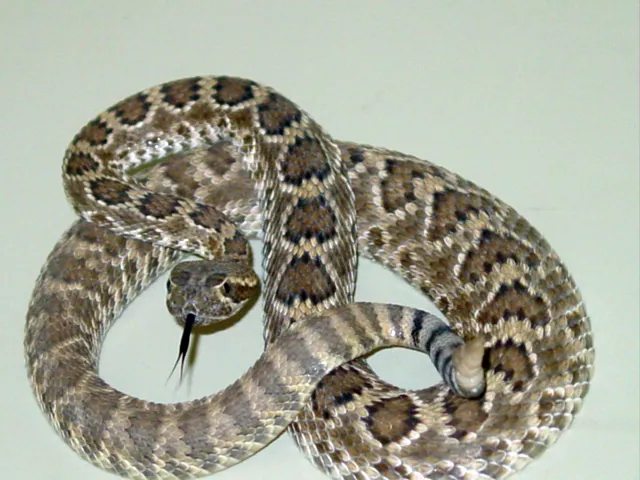
The Mojave rattlesnake is a venomous pit viper that lives in the deserts of the southwestern United States and northern Mexico. Its venom is among the most studied of any rattlesnake, and it varies a lot from one population to another. Knowing how to recognise it helps people in its range stay safe.1


 Hogyan ismerd fel
- Has a row of large diamond-shaped blotches along the back, without the dark speckling found on the Western Diamond-backed Rattlesnake.1
- The diamonds usually lack the white edges seen on most Western Diamond-backed Rattlesnakes.1
- The tail has pale and dark rings, and the dark rings are often narrower than the pale ones.1
- The rattle is usually yellow and black, or entirely yellow.1
- Its back colour ranges from green to brown, grey or yellowish, so colour alone is not a reliable guide.1
Gyakran összetévesztik ezzel: It closely resembles the Western Diamond-backed Rattlesnake, which lives in the same areas. The Mojave rattlesnake has no dark speckling on its back, usually lacks white edges on the diamonds, has a facial stripe that bends toward the neck rather than meeting the mouth, and usually has a yellow or bicoloured rattle rather than a black one. No single trait reliably separates the two.1
Méregerő
Harapáskor a méreg a méregfogain vagy a fogain keresztül jut ki.
Mit tesz a mérge?
Its venom comes in two main types. Venom A contains Mojave toxin, a neurotoxic venom that attacks the nerves and can cause delayed respiratory paralysis, meaning the muscles used for breathing fail, with little or no local tissue damage. Venom B has no Mojave toxin and instead contains tissue-destroying enzymes called metalloproteinases.1
Mennyire veszélyes az emberre?
Veszély az emberre: Nagyon veszélyesHa valaki nem kap kezelést, megölheti.For decades this snake has been described as one of the deadliest rattlesnakes, and some sources call it the most dangerous snake in the United States. The danger depends on the population, because the neurotoxic venom is not found everywhere in its range. Some animals in between produce a mix of both venom types.1
Mit csinál, ha megijed?
It is shy and tends to avoid confrontation, but it will strike and bite vigorously when disturbed, especially if surprised or if there is no nearby vegetation or burrow to escape into.1
 Ha harap
- Tartsd a sérültet mozdulatlanul és nyugodtan, a megharapott végtagot szívmagasságban, vedd le a gyűrűket és a szoros dolgokat, és gyorsan juss el kórházba.
Mindig először a segélyhívó számot hívd (112, 000, 911). Ez általános elsősegély-tájékoztató, nem orvosi tanács. Elsősegély alapjai
 Maradj biztonságban
- Soha ne érints meg, ne fogj meg és ne bosszants vadállatot, még ha kicsi is, és még ha alszik vagy döglöttnek tűnik is.
- Hagyj neki helyet. Ha találkozol eggyel, maradj nyugodt, lassan lépj hátra, és hagyd, hogy menjen a maga útján.
- Ha megharap: maradj nyugodt, ne mozogj, hívd a segélyhívó számot (112, 000, 911), vagy juss el gyorsan kórházba. Jegyezd meg, hogyan nézett ki, egy fotó sokat segít.
Nem akar elkapni téged. A mérgét arra használja, hogy élelmet fogjon vagy megvédje magát, és sokkal szívesebben elbújik. Még több a biztonságról
Hol él a világban?
Mekkora?
Milyen hosszú?
 olyan hosszú, mint 2,5 házimacska orrtól farokig
 olyan hosszú, mint 7 banán egymás után
 97 másodperc alatt futná le a 100 métert (a leggyorsabb embernek 9,6 kell)
Mekkora Mojave rattlesnake hozzád képest?
Csak matek a böngésződben. Semmit nem mentünk és nem küldünk el sehova.
Milyen gyors?


Tények
Tévhitromboló
Tévhit: Every Mojave rattlesnake bite is extraordinarily deadly.
Az igazság: The reputation for deadliness comes mainly from the neurotoxic venom, which is found in most populations but not all. Venom from some populations is non-neurotoxic and mainly destroys tissue.1
Méregszakértőknek
- Tudományos név
- Crotalus scutulatus
- Csoport
- Csörgőkígyók
- Család
- Viperidae2
- Rend
- Squamata
- Kontinensek
- Észak-Amerika
- Kicsinyek
- It bears live young, usually between 2 and 17 (average about eight), from July through September.1
- Hogy áll a vadonban
- Least Concern (IUCN Red List)1
- Veszély az emberre
- 4 / 5: Nagyon veszélyes3
Honnan származnak a tények
- Crotalus scutulatus (Wikipedia (CC BY-SA 4.0))
- Crotalus scutulatus (iNaturalist): nevek és rendszertan.
- Venom Wiki: a veszélyszint, a tipikus méret és a sebességbecslés a saját értékelésünk. Nézd meg, hogyan számoljuk ki: Hogyan értékeljük a veszélyt.
Ezen az oldalon minden tény mellett van egy szám, amely a forrására mutat. Ha valamit elrontottunk, bocsi, mi állatrajongók vagyunk, nem tudományos folyóirat. Írj nekünk ide: [email protected], és kijavítjuk.
 A skorpió éhes! A Venom Wiki egyszemélyes projekt: ingyenes, reklámok és nyomkövetés nélkül. Egy kis borravaló segít, hogy online maradjon.Etesd meg a skorpiót
 Eastern diamondback rattlesnake
 Timber rattlesnake
 Western diamondback rattlesnake
 Sidewinder
 Aruba rattlesnake
 Black-tailed rattlesnake
 Érdes lándzsakígyó
 Eastern coral snake
 Eyelash viper
 Arizona bark scorpion
 Brown recluse
 Cane toad