
 Afrika
 Ázsia
Ázsia Európa
 Dél-Amerika
 Ausztrália és Óceánia
 Antarktisz
 Csendes-óceán
 Atlanti-óceán
 Indiai-óceán
 Északi-sarki-óceán
 Földközi-tenger
 Vörös-tenger
 Karib-tenger
 Korall-tenger
 Dél-kínai-tenger
 Fülöp-tenger
 Andamán-tenger
 Északi-tenger
 Timor-tenger és Arafura-tenger
 Bengáli-öböl
 Kaliforniai-öböl
Oriental fire-bellied toad
 Méreg a bőrében
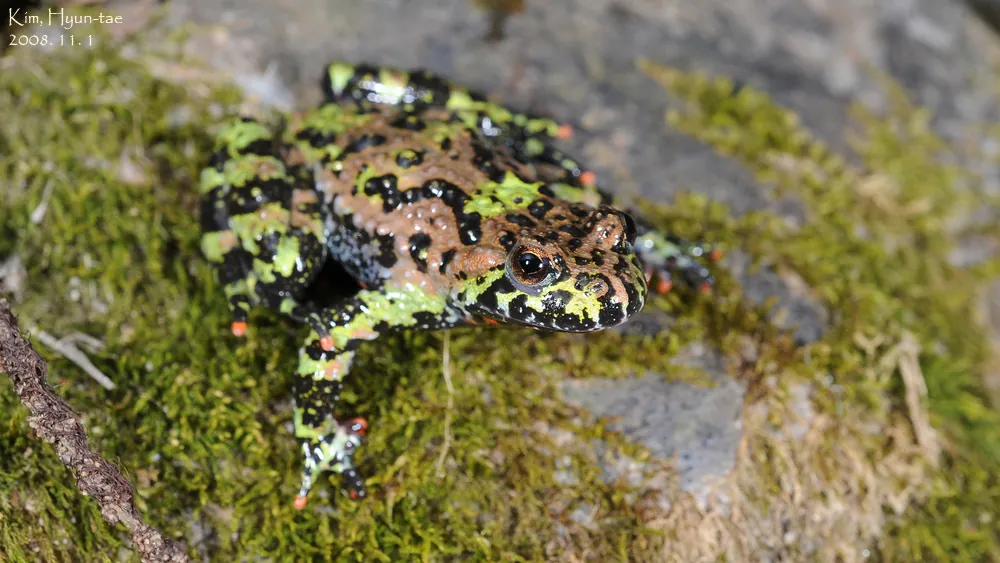
The Oriental fire-bellied toad is a small frog that lives in northeastern Asia, mostly near slow streams, ponds and forests. Its bright belly is a warning: when it is disturbed, it gives off a mild toxin through its skin. It is common across much of its range.1



 Hogyan ismerd fel
- Bright grey, brownish or green upper skin with black mottling.1
- Bright yellow, red or orange-red belly, mottled with dark spots.1
- Red finger and toe tips are usually present.1
- Skin on the upper side is covered in small bumps called tubercles, which give it a toad-like look.1
- Adults are about 3.8 to 5.1 cm long.1
Gyakran összetévesztik ezzel: It is often mistaken for a toad, but it is not a true toad. Compared with other Bombina frogs, it has no gular sacs (throat pouches), its belly is usually more red than yellow, and it has bright finger tips.1
Méregerő
A bőre mérgező. Veszélyes megérinteni, megnyalni vagy megenni.
Mit tesz a méreganyaga?
The toad's skin releases a milky, mildly toxic substance when it is disturbed or frightened, mostly from the hind legs and sometimes the belly. Its toxins are described as mild, and the toxin does not pose a significant threat to human health. Captive toads are generally less toxic than wild ones, because their diet in the wild adds to their toxicity.1
Mennyire veszélyes az emberre?
Veszély az emberre: EnyheOlyan, mint egy méhcsípés, vagy enyhébb. Az emberre gyakorlatilag ártalmatlan.The toxin does not pose a significant threat to human health, but its skin mucus can cause discomfort to the mouth and eyes if the toad is handled.1
Mit csinál, ha megijed?
When threatened, it releases toxin from its skin, lies on its back to show its brightly coloured belly, and arches its head and holds up its limbs as a warning.1
 Ha valaki megérintette vagy megette
- Ha valaki megérintett egyet: alaposan mosd meg a kezeket, és ne nyúlj a szemhez vagy a szájhoz. Ha egy gyerek vagy háziállat megnyalt vagy megevett egyet: hívd a toxikológiai központot vagy a segélyhívó számot.
Mindig először a segélyhívó számot hívd (112, 000, 911). Ez általános elsősegély-tájékoztató, nem orvosi tanács. Elsősegély alapjai
 Maradj biztonságban
- Soha ne érints meg, ne fogj meg és ne bosszants vadállatot, még ha kicsi is, és még ha alszik vagy döglöttnek tűnik is.
- Hagyj neki helyet. Ha találkozol eggyel, maradj nyugodt, lassan lépj hátra, és hagyd, hogy menjen a maga útján.
- Ha megérintetted vagy megetted: ne dörzsöld a szemed vagy a szád, moss kezet, és kérj orvosi segítséget.
Nem akar elkapni téged. A méreganyaga csak azért van, hogy semmi ne egye meg. Még több a biztonságról
Hol él a világban?
Mekkora?
Milyen hosszú?
Milyen nehéz?
 rövidebb a kisujjadnál
 180 másodperc alatt futná le a 100 métert (a leggyorsabb embernek 9,6 kell)
Mekkora Oriental fire-bellied toad hozzád képest?
Csak matek a böngésződben. Semmit nem mentünk és nem küldünk el sehova.
Milyen gyors?


Tények
Unusually for a frog, this species has no eardrum or resonator, and it makes its calls by inhaling.1
In experiments, these toads learned to solve mazes using water as a reward, which other frog types did not manage.1
Its skin contains bombesin, a peptide that affects stomach function in mammals. It was first found in its relative, the European fire-bellied toad.1
Males call to females with a light sound that is compared to a musical triangle.1
Grass snakes and other water-dwelling snakes are known to eat these toads without any ill effect.1
In captivity they often live for around 12 years, and some have lived up to 30 years.1
Tévhitromboló
Tévhit: It is a true toad.
Az igazság: It is not a true toad, although its bumpy skin gives it a toad-like appearance.1
Méregszakértőknek
Honnan származnak a tények
- Oriental fire-bellied toad (Wikipedia (CC BY-SA 4.0))
- Bombina orientalis (iNaturalist): nevek és rendszertan.
- Venom Wiki: a veszélyszint, a tipikus méret és a sebességbecslés a saját értékelésünk. Nézd meg, hogyan számoljuk ki: Hogyan értékeljük a veszélyt.
Ezen az oldalon minden tény mellett van egy szám, amely a forrására mutat. Ha valamit elrontottunk, bocsi, mi állatrajongók vagyunk, nem tudományos folyóirat. Írj nekünk ide: [email protected], és kijavítjuk.
 A skorpió éhes! A Venom Wiki egyszemélyes projekt: ingyenes, reklámok és nyomkövetés nélkül. Egy kis borravaló segít, hogy online maradjon.Etesd meg a skorpiót
Még több ugyanebből a csoportból: Nyílméregbékák, varangyok és gőték
 Japanese fire-bellied newtNyílméregbékák, varangyok és gőtékOrvos kellNe nyúlj hozzá
 Common toadNyílméregbékák, varangyok és gőtékCsak fájNe nyúlj hozzá
 Asian common toadNyílméregbékák, varangyok és gőtékOrvos kellNe nyúlj hozzá
 Asiatic toadNyílméregbékák, varangyok és gőtékCsak fájNe nyúlj hozzá
 Emperor newtNyílméregbékák, varangyok és gőtékCsak fájNe nyúlj hozzá
 Himalayan newtNyílméregbékák, varangyok és gőtékCsak fájNe nyúlj hozzá
 Sárga skorpió
 Pápaszemes kobra
 Fűrészes vipera
 Királykobra
 Puffogó vipera
 Láncos vipera