
 Afrika
 Ázsia
Ázsia Európa
 Dél-Amerika
 Ausztrália és Óceánia
 Antarktisz
 Csendes-óceán
 Atlanti-óceán
 Indiai-óceán
 Északi-sarki-óceán
 Földközi-tenger
 Vörös-tenger
 Karib-tenger
 Korall-tenger
 Dél-kínai-tenger
 Fülöp-tenger
 Andamán-tenger
 Északi-tenger
 Timor-tenger és Arafura-tenger
 Bengáli-öböl
 Kaliforniai-öböl
Peruvian giant centipede
 Harapások
The Peruvian giant centipede is the largest centipede species in the world, growing longer than 30 centimetres. It lives in northern South America and on several Caribbean islands, mostly in rainforests and dry forests. It hunts a wide range of animals, from insects to bats, and its venom is strong enough to stop small mammals.1



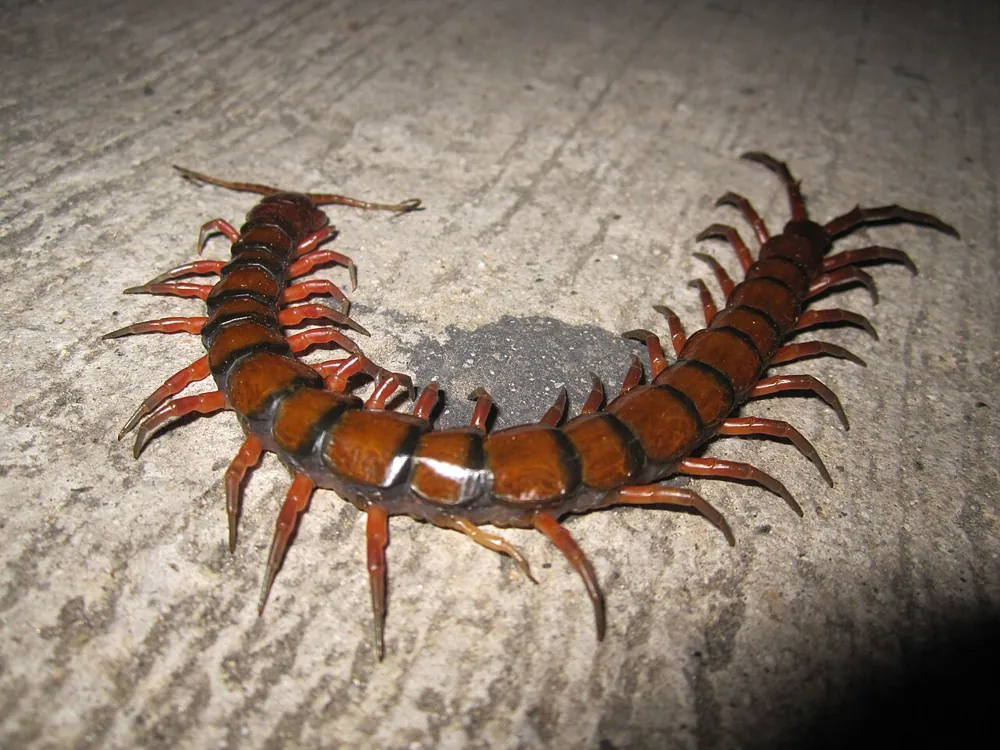
 Hogyan ismerd fel
Méregerő
Harapáskor a méreg a méregfogain vagy a fogain keresztül jut ki.
Mit tesz a mérge?
Its venom is strong enough to immobilise small mammals it hunts, such as bats and mice. The venom is produced in a modified pair of legs placed under the head.1
Mennyire veszélyes az emberre?
Veszély az emberre: SúlyosA harapással orvoshoz kell menni. Haláleset nagyon ritka.At least one human death has been linked to its venom. In 2014, a four-year-old child in Venezuela died after being bitten by a giant centipede hidden inside an open soda can. Researchers at Universidad de Oriente later confirmed the animal was this species.1
 Ha harap
- Mosd le a harapást, hűtsd, vagy áztasd meleg vízben a fájdalom ellen, és kérj orvosi segítséget, ha rosszabb lesz.
Mindig először a segélyhívó számot hívd (112, 000, 911). Ez általános elsősegély-tájékoztató, nem orvosi tanács. Elsősegély alapjai
 Maradj biztonságban
- Soha ne érints meg, ne fogj meg és ne bosszants vadállatot, még ha kicsi is, és még ha alszik vagy döglöttnek tűnik is.
- Hagyj neki helyet. Ha találkozol eggyel, maradj nyugodt, lassan lépj hátra, és hagyd, hogy menjen a maga útján.
- Ha megharap: maradj nyugodt, ne mozogj, hívd a segélyhívó számot (112, 000, 911), vagy juss el gyorsan kórházba. Jegyezd meg, hogyan nézett ki, egy fotó sokat segít.
Nem akar elkapni téged. A mérgét arra használja, hogy élelmet fogjon vagy megvédje magát, és sokkal szívesebben elbújik. Még több a biztonságról
Hol él a világban?
Mekkora?
Milyen hosszú?
 olyan hosszú, mint 9 játék építőkocka egy sorban
 140 másodperc alatt futná le a 100 métert (a leggyorsabb embernek 9,6 kell)
Mekkora Peruvian giant centipede hozzád képest?
Csak matek a böngésződben. Semmit nem mentünk és nem küldünk el sehova.
Milyen gyors?


Tények
Large individuals have a clever way of catching bats: they climb cave ceilings and hold their heavier prey with only a few legs attached to the ceiling.1
It is the largest centipede species in the world, with a length exceeding 30 centimetres.1
It can overpower animals as large as tarantulas, and it can also kill snakes up to 25 centimetres long.1
Its venom comes from a modified pair of legs placed just underneath its head.1
It climbs readily and will use hiding spaces under tree bark.1
Its natural predators include large birds, spiders, and mammals that hunt arthropods, such as the coati, kinkajou and opossum.1
Honnan származnak a tények
- Scolopendra gigantea (Wikipedia (CC BY-SA 4.0))
- Scolopendra gigantea (iNaturalist): nevek és rendszertan.
- Venom Wiki: a veszélyszint, a tipikus méret és a sebességbecslés a saját értékelésünk. Nézd meg, hogyan számoljuk ki: Hogyan értékeljük a veszélyt.
Ezen az oldalon minden tény mellett van egy szám, amely a forrására mutat. Ha valamit elrontottunk, bocsi, mi állatrajongók vagyunk, nem tudományos folyóirat. Írj nekünk ide: [email protected], és kijavítjuk.
 A skorpió éhes! A Venom Wiki egyszemélyes projekt: ingyenes, reklámok és nyomkövetés nélkül. Egy kis borravaló segít, hogy online maradjon.Etesd meg a skorpiót
Még több ugyanebből a csoportból: Százlábúak
 Amazonian giant green-horned centipede
 Galapagos centipede
 Chinese red-headed centipede
 Giant Australian centipede
 Giant desert centipede
 Mediterranean banded centipede
Itt is él:: Dél-Amerika
 Rettenetes levelibékaNyílméregbékák, varangyok és gőtékHalálosNe nyúlj hozzá
 Érdes lándzsakígyóGödörkésarcú viperákHalálos
 Brazilian wandering spiderPókokÖlni is tud
 Eyelash viperGödörkésarcú viperákÖlni is tud
 Golden lanceheadGödörkésarcú viperákÖlni is tud
 South American bushmasterGödörkésarcú viperákÖlni is tud