
 Afrika
 Ázsia
Ázsia Európa
 Dél-Amerika
 Ausztrália és Óceánia
 Antarktisz
 Csendes-óceán
 Atlanti-óceán
 Indiai-óceán
 Északi-sarki-óceán
 Földközi-tenger
 Vörös-tenger
 Karib-tenger
 Korall-tenger
 Dél-kínai-tenger
 Fülöp-tenger
 Andamán-tenger
 Északi-tenger
 Timor-tenger és Arafura-tenger
 Bengáli-öböl
 Kaliforniai-öböl
Red-bellied black snake
 Harapások
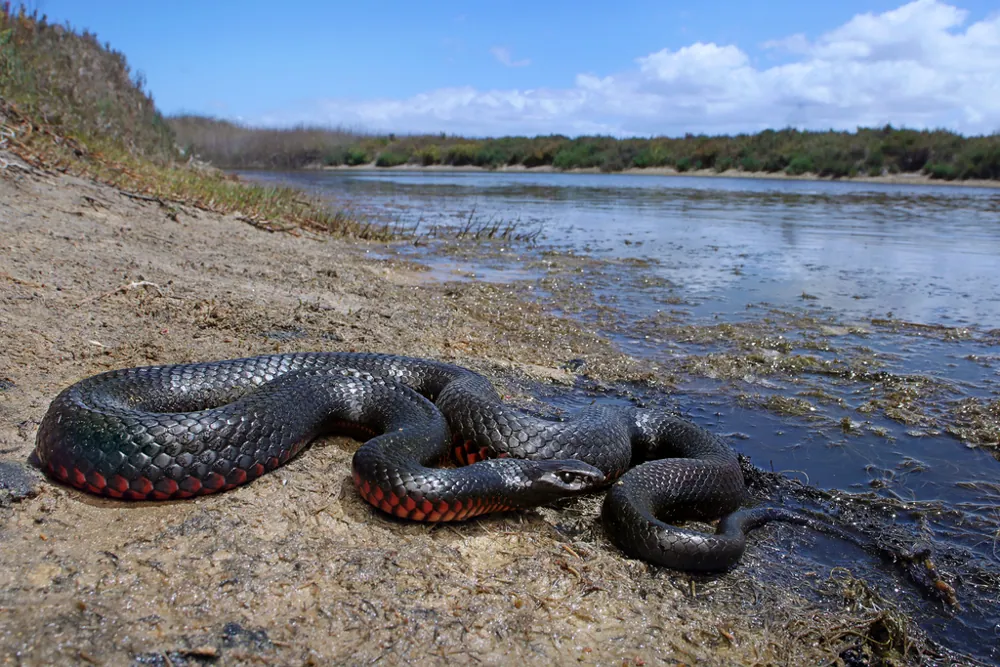
The red-bellied black snake is a venomous snake found along the east coast of Australia, where it is one of the most commonly met snakes. It is glossy black on top, with bright red or orange sides. It often lives near water, and it sometimes turns up in backyards in towns and cities.1



 Hogyan ismerd fel
- Glossy black upperparts with a light-grey snout and a completely black tail1
- Bright red or orange flanks that fade to a pink or dull red belly1
- No well-defined neck, so the head merges into the body1
- Adults average about 1.25 m in total length, including the tail1
Gyakran összetévesztik ezzel: Juveniles look similar to the eastern small-eyed snake, but that species lacks red flanks. Other similar snakes include the blue-bellied black snake and copperheads of the genus Austrelaps.1
Méregerő
Harapáskor a méreg a méregfogain vagy a fogain keresztül jut ki.
Mit tesz a mérge?
Its venom contains neurotoxins, which attack the nerves, myotoxins, which damage muscle, and coagulants, which affect blood clotting. It also has haemolytic properties, meaning it can break down red blood cells. Bites can cause severe pain, local swelling, prolonged bleeding and local tissue death, especially on a finger. Victims can also lose their sense of smell, and nausea, vomiting, headache, abdominal pain, diarrhoea or heavy sweating can follow.1
Mennyire veszélyes az emberre?
Veszély az emberre: SúlyosA harapással orvoshoz kell menni. Haláleset nagyon ritka.No deaths have been recorded from its bite. It is less venomous than many other Australian elapid snakes, but it can still cause significant illness. It accounted for 16% of identified snakebite victims in Australia between 2005 and 2015. Severe local reactions may need surgery or, rarely, amputation.1
Mit csinál, ha megijed?
It is not aggressive and usually withdraws. If provoked, it raises its head and front body into a striking stance, widens and flattens its neck, and may bite as a last resort.1
 Ha harap
- Nyomókötéses rögzítés: tekerj szoros rugalmas pólyát a harapásra, majd felfelé az egész végtagra, rögzítsd sínnel, és tartsd a sérültet teljesen mozdulatlanul, amíg a segítség meg nem érkezik.
- Ne mosd le a harapás helyét: a kórházban megvizsgálhatják a bőrön maradt mérget, hogy kiválasszák a megfelelő ellenmérget.
Mindig először a segélyhívó számot hívd (112, 000, 911). Ez általános elsősegély-tájékoztató, nem orvosi tanács. Elsősegély alapjai
 Maradj biztonságban
- Soha ne érints meg, ne fogj meg és ne bosszants vadállatot, még ha kicsi is, és még ha alszik vagy döglöttnek tűnik is.
- Hagyj neki helyet. Ha találkozol eggyel, maradj nyugodt, lassan lépj hátra, és hagyd, hogy menjen a maga útján.
- Ha megharap: maradj nyugodt, ne mozogj, hívd a segélyhívó számot (112, 000, 911), vagy juss el gyorsan kórházba. Jegyezd meg, hogyan nézett ki, egy fotó sokat segít.
Nem akar elkapni téged. A mérgét arra használja, hogy élelmet fogjon vagy megvédje magát, és sokkal szívesebben elbújik. Még több a biztonságról
Hol él a világban?
Mekkora?
Milyen hosszú?
Milyen nehéz?

 olyan hosszú, mint 2,5 kutya orrtól farokig
 olyan hosszú, mint 14 banán egymás után
 46 másodperc alatt futná le a 100 métert (a leggyorsabb embernek 9,6 kell)
Mekkora Red-bellied black snake hozzád képest?
Csak matek a böngésződben. Semmit nem mentünk és nem küldünk el sehova.
Milyen gyors?


Tények
It can stay underwater for as long as 23 minutes after fleeing into water.1
Some populations have evolved increased resistance to cane toad toxin in less than 75 years.1
Males of the species may wrestle in ritualised combat in spring, and rarely bite while doing so.1
A male was reported to travel 1,220 m in a single day while roaming for mates in spring.1
In winter it becomes relatively inactive rather than truly hibernating, and groups of up to six have been found under concrete slabs.1
Tévhitromboló
Tévhit: The red-bellied black snake is harmless and not venomous, because it has no visible fangs.
Az igazság: It is venomous and front-fanged, like all elapid snakes. It is less dangerous than many other Australian species, and no deaths have been recorded from its bite.1
Méregszakértőknek
- Tudományos név
- Pseudechis porphyriacus
- Csoport
- Ausztrál kígyók
- Család
- Elapidae2
- Rend
- Squamata
- Kontinensek
- Ausztrália és Óceánia
- Kicsinyek
- It gives birth to live young, usually in February or March, with between eight and 40 young per litter.1
- Élettartam
- kb. 25 év1
- Hogy áll a vadonban
- Least concern (IUCN), although its numbers are thought to be declining1
- Veszély az emberre
- 3 / 5: Súlyos3
Honnan származnak a tények
- Red-bellied black snake (Wikipedia (CC BY-SA 4.0))
- Pseudechis porphyriacus (iNaturalist): nevek és rendszertan.
- Venom Wiki: a veszélyszint, a tipikus méret és a sebességbecslés a saját értékelésünk. Nézd meg, hogyan számoljuk ki: Hogyan értékeljük a veszélyt.
Ezen az oldalon minden tény mellett van egy szám, amely a forrására mutat. Ha valamit elrontottunk, bocsi, mi állatrajongók vagyunk, nem tudományos folyóirat. Írj nekünk ide: [email protected], és kijavítjuk.
 A skorpió éhes! A Venom Wiki egyszemélyes projekt: ingyenes, reklámok és nyomkövetés nélkül. Egy kis borravaló segít, hogy online maradjon.Etesd meg a skorpiót
Még több ugyanebből a csoportból: Ausztrál kígyók
 Tajpán
 Közönséges halálkígyó
 Keleti barnakígyó
 Belföldi tajpán
 Tigriskígyó
 Collett's snake
Itt is él:: Ausztrália és Óceánia
 Sydney-i tölcsérhálós pókMadárpókok és tölcsérhálós pókokHalálos
 Redback spiderPókokOrvos kell
 Brown tree snakeHátsó méregfogú kígyókCsak fáj
 Hooded pitohuiMás mérgező állatokCsak fájNe nyúlj hozzá
 PlatypusMérges emlősökCsak fáj
 Northern tree-dwelling funnel-web spiderMadárpókok és tölcsérhálós pókokHalálos