
 Աֆրիկա
 Ասիա
Ասիա Եվրոպա
 Հարավային Ամերիկա
 Ավստրալիա և Օվկիանիա
 Անտարկտիդա
 Խաղաղ օվկիանոս
 Ատլանտյան օվկիանոս
 Հնդկական օվկիանոս
 Հյուսիսային սառուցյալ օվկիանոս
 Միջերկրական ծով
 Կարմիր ծով
 Կարիբյան ծով
 Մարջանային ծով
 Հարավչինական ծով
 Ֆիլիպինյան ծով
 Անդամանյան ծով
 Հյուսիսային ծով
 Տիմորի և Արաֆուրայի ծովեր
 Բենգալյան ծոց
 Կալիֆոռնիական ծոց
Tiny clinging box jellyfish
 Խայթող շոշափուկներ
Copula sivickisi is a tiny box jellyfish, about 1 cm across, that lives in shallow warm seas. It is the only species in its genus and is active only at night. It is unusual among box jellyfish because it has a mating ritual and fertilises its eggs inside the body.1



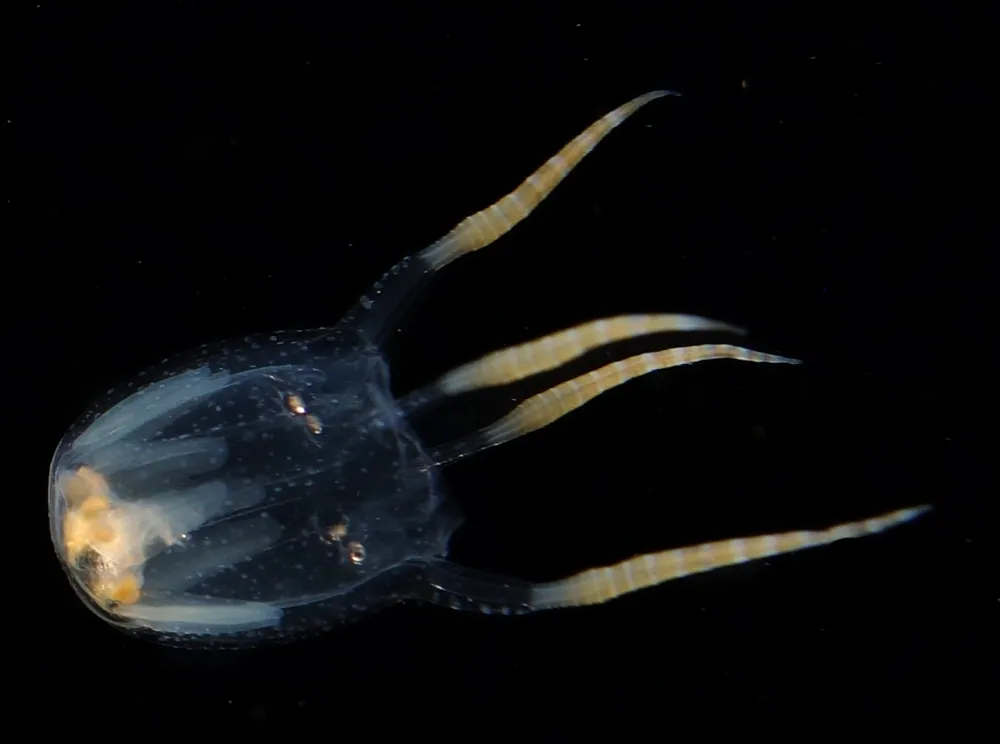
 Ինչպես ճանաչել այն
- The bell is boxy in shape, unlike the umbrella shape of true jellyfish.1
- It has four slender tentacles hanging from the rim, each banded with orange.1
- The eight gonads (reproductive organs) can be seen through the transparent bell. In males they are orange, and in females they are white-speckled.1
- Mature females have orange-brown markings around the edge of the bell.1
- It is most active at night and hides during the day, folding its tentacles inside the bell and flattening itself.1
Թույնի հզորություն
Հազարավոր փոքրիկ խայթող բջիջներ կրակում են, երբ ինչ-որ բան դիպչում է նրանց։
Որքա՞ն վտանգավոր է այն մարդկանց համար։
Վտանգ մարդկանց համար: ԹեթևՄեղվի խայթոցի չափ կամ ավելի թույլ։ Մարդկանց համար գործնականում անվնաս է։Ի՞նչ է անում, երբ վախենում է։
When disturbed by day it hides, folding its tentacles inside the bell and flattening itself against the seabed.1
 Եթե խայթի
- Դուրս արի ջրից և հանիր շոշափուկները (ձեռնոցներով կամ կտորով)։
- Արևադարձային արկղաձև մեդուզաների դեպքում: խայթոցների վրա քացախ լցրու առնվազն 30 վայրկյան, կանչիր օգնություն և պատրաստ եղիր սիրտ-թոքային վերակենդանացում անելու։ Կապույտ ֆիզալիաների և մյուսների մեծ մասի դեպքում: ողողիր ծովի ջրով, ապա տաք ջրով՝ ցավի համար։
Միշտ առաջինը զանգիր շտապ օգնության համարով (112, 000, 911)։ Սա առաջին օգնության ընդհանուր ուղեցույց է, ոչ թե բժշկական խորհրդատվություն։ Առաջին օգնության հիմունքներ
 Մնա անվտանգ
- Երբեք մի՛ դիպչիր, մի՛ բռնիր և մի՛ ջղայնացրու վայրի կենդանուն, նույնիսկ փոքրին, և նույնիսկ եթե այն քնած կամ սատկած է թվում։
- Տարածություն թող նրան։ Եթե հանդիպես, հանգիստ մնա, դանդաղ հետ քաշվիր և թող, որ գնա իր ճանապարհով։
- Եթե դրանցից մեկը քեզ խայթի: հանգիստ մնա, մի՛ շարժվիր, զանգիր շտապ օգնության համարով (112, 000, 911) կամ արագ հասիր հիվանդանոց։ Հիշիր, թե ինչ տեսք ուներ, լուսանկարը կօգնի։
Այն չի ուզում քեզ վնասել։ Այն օգտագործում է իր թույնը սնունդ որսալու կամ իրեն պաշտպանելու համար և շատ ավելի կնախընտրի թաքնվել։ Ավելին անվտանգության մասին
Աշխարհի ո՞ր մասում։
Որքա՞ն մեծ է այն։
Որքա՞ն երկար է այն։
 այնքան փոքր, որ կտեղավորվի քո եղունգի վրա
Որքա՞ն մեծ է Tiny clinging box jellyfish-ը ՔԵԶ համեմատ։
Պարզապես մաթեմատիկա քո դիտարկիչում։ Ոչինչ չի պահպանվում և ոչ մի տեղ չի ուղարկվում։
Որքա՞ն արագ է այն։


Փաստեր
It has twenty-four eyes, grouped on four stalked structures called rhopalia on the rim of the bell.1
Unlike most box jellyfish, it has an elaborate mating ritual. A male grabs a female by one tentacle and pulls her around while they entwine.1
A female has been seen mating with several males, up to eight times in a two-hour period.1
It is attracted to light, and it chooses a spot on the seabed soon after dawn, spending a few minutes selecting a good location before settling there.1
Its average maximum swimming speed is 4.9 cm per second, which is faster than the currents near the surface of the shallow waters where it lives.1
The male passes a red bundle of sperm (a spermatophore) to one of the female's tentacles, which pushes it into her manubrium, the tube hanging from the underside of the bell.1
Թույնի փորձագետների համար
- Գիտական անվանում
- Copula sivickisi
- Խումբ
- Մեդուզաներ և ծովային խայթողներ
- Ընտանիք
- Tripedaliidae2
- Կարգ
- Carybdeida
- Մայրցամաքներ
- Խաղաղ օվկիանոս, Ատլանտյան օվկիանոս, Տիմորի և Արաֆուրայի ծովեր, Օվկիանոսները
- Ձագեր
- Eggs are fertilised inside the female's bell. About two or three days later she releases a mucous strand of embryos into the sea, and these develop into polyps.1
- Վտանգ մարդկանց համար
- 1 / 5: Թեթև3
Որտեղից են փաստերը
- Copula sivickisi (Wikipedia (CC BY-SA 4.0))
- Copula sivickisi (iNaturalist): անուններ և դասակարգում։
- Venom Wiki: վտանգի մակարդակը, բնորոշ չափը և արագության գնահատականը մերն են։ Տես, թե ինչպես ենք դրանք հաշվում: Ինչպես ենք գնահատում վտանգը.
Այս էջի յուրաքանչյուր փաստ ունի համար, որը ցույց է տալիս դրա աղբյուրը։ Եթե ինչ-որ բան սխալ ենք գրել, ներողություն, մենք կենդանիների սիրահարներ ենք, ոչ թե գիտական ամսագիր։ Գրիր մեզ [email protected] հասցեով, և մենք կուղղենք։
 Կարիճը սոված է! Venom Wiki-ն մեկ մարդու նախագիծ է: անվճար, առանց գովազդի և առանց հետագծիչների։ Փոքրիկ թեյավճարն օգնում է այն պահել առցանց։Կերակրիր կարիճին
Ավելին նույն խմբից: Մեդուզաներ և ծովային խայթողներ
 Australian box jellyfishՄեդուզաներ և ծովային խայթողներՄահացուՄի՛ դիպչիր
 Irukandji jellyfishՄեդուզաներ և ծովային խայթողներԿարող է սպանելՄի՛ դիպչիր
 Portuguese man o' warՄեդուզաներ և ծովային խայթողներԲժիշկ է պետքՄի՛ դիպչիր
 Lion's mane jellyfishՄեդուզաներ և ծովային խայթողներՊարզապես ցավում էՄի՛ դիպչիր
 Moon jellyfishՄեդուզաներ և ծովային խայթողներԱնվնաս
 Common kingslayerՄեդուզաներ և ծովային խայթողներԿարող է սպանելՄի՛ դիպչիր
Ապրում է նաև: Խաղաղ օվկիանոս
 Geography coneԿոնաձև խխունջներ և ութոտնուկներՄահացու
 Greater blue-ringed octopusԿոնաձև խխունջներ և ութոտնուկներՄահացու
 Japanese pufferfishԱյլ կենդանիներ, որոնք թունավոր են դիպչելիս կամ ուտելիսՄահացու
 Southern blue-ringed octopusԿոնաձև խխունջներ և ութոտնուկներՄահացու
 Hawksbill sea turtleԱյլ կենդանիներ, որոնք թունավոր են դիպչելիս կամ ուտելիսԿարող է սպանել
 Reef stonefishԹունավոր ձկներԿարող է սպանելՄի՛ դիպչիր