
 Afríka
 Asía
Asía Evrópa
 Suður-Ameríka
 Ástralía og Eyjaálfa
 Suðurskautslandið
 Kyrrahaf
 Atlantshaf
 Indlandshaf
 Norður-Íshaf
 Miðjarðarhaf
 Rauðahaf
 Karíbahaf
 Kóralhaf
 Suður-Kínahaf
 Filippseyjahaf
 Andamanhaf
 Norðursjór
 Tímorhaf og Arafúrahaf
 Bengalflói
 Kaliforníuflói
Black-legged poison frog
 Eitur í húðinniBorðar: KjötEitrað að snerta eða borða, ekki eitrað bit eða stunga
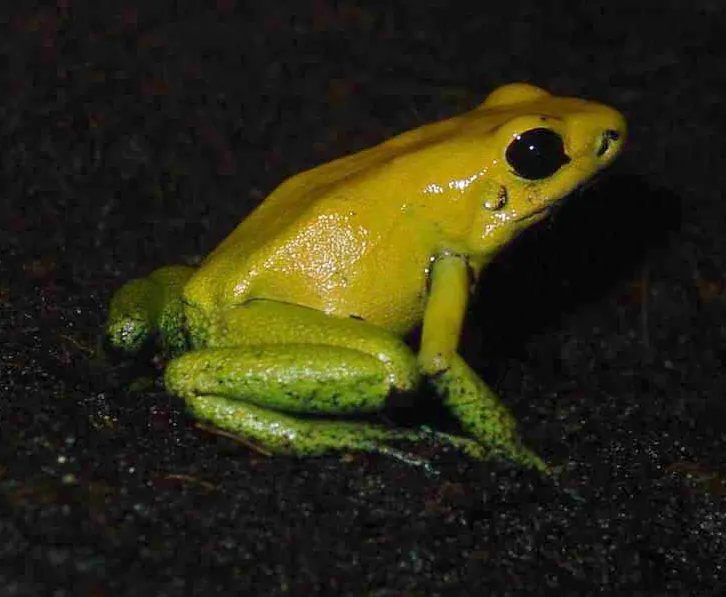
The black-legged poison frog is a small, brightly coloured frog from the rainforests of Colombia. It is one of the most toxic dart frogs in the world, and its skin can kill a person. It is also an endangered species, so it matters for conservation.1


 Svona þekkir þú það
- The body is earthy orange to pure yellow.1
- The forelimbs and hindlegs are black or dark blue.1
- It is one of the largest poison dart frogs, but it is smaller and more slender than the golden poison frog.1
- Juveniles are brown or black and become more vibrant as they mature.1
- It is active in the daytime and moves across the forest floor in quick hops.1
Oft ruglað saman við: It is often mistaken for the golden poison frog (Phyllobates terribilis), which looks similar. The black-legged poison frog is smaller, more slender and less poisonous. Juvenile golden poison frogs can also look like it. It also resembles the 'netted' colour form of D. leucomelas.1
Eiturkraftur
Húðin er eitruð. Það er hættulegt að snerta það, sleikja eða borða.
Hvað gerir eitrið ef maður snertir það eða borðar það?
This frog is poisonous rather than venomous, because its toxin comes out through its skin. The toxin is batrachotoxin, a neurotoxin that attacks the nerves. It stops nerve signals from getting through, which causes paralysis, heart failure and breathing failure. There are no known treatments or antidotes for it.1
Hversu hættulegt er það fólki?
Hætta fyrir fólk: Mjög hættulegtÞað getur drepið manneskju sem fær enga meðferð.It is one of the few frogs confirmed to have killed humans. Between 2 and 200 micrograms of its toxin is enough to kill a person. Its toxin is weaker than that of the golden poison frog.1
Hvað gerir það þegar það er hrætt?
Its bright colours warn predators that it is poisonous, and its skin releases toxins through pores.1
 Ef einhver hefur snert það eða borðað
- Ef einhver hefur snert eitt slíkt: þvoðu hendurnar vel og ekki snerta augun eða munninn. Ef barn eða gæludýr hefur sleikt eða borðað eitt slíkt: hringdu í eitrunarmiðstöð eða neyðarnúmerið.
Hringdu alltaf fyrst í neyðarnúmerið (112, 000, 911). Þetta eru almennar leiðbeiningar um skyndihjálp, ekki læknisráð. Grunnatriði skyndihjálpar
 Farðu varlega
- Aldrei snerta, ná í eða stríða villtu dýri, ekki einu sinni litlu, og ekki einu sinni ef það virðist sofa eða vera dautt.
- Gefðu því pláss. Ef þú hittir eitt, haltu ró þinni, bakkaðu hægt og leyfðu því að fara sína leið.
- Ef þú snertir það eða borðaðir það: ekki nudda augun eða munninn, þvoðu þér um hendurnar og fáðu læknishjálp.
Það er ekki á eftir þér. Eitrið er bara til staðar svo að ekkert éti það. Meira um að fara varlega
Hvar í heiminum?
Hversu stórt er það?
Hversu langt er það?
 styttra en litli fingurinn þinn
 gæti hlaupið 100 metra á 95 sekúndum (fljótasta manneskjan þarf 9,6)
Hversu stórt er Black-legged poison frog miðað við ÞIG?
Bara reikningur í vafranum þínum. Ekkert er vistað eða sent neitt.
Hversu hratt er það?


Staðreyndir
Some Chocó people in Colombia use the poison from these frogs to tip hunting darts for blowguns.1
The male carries the tadpoles on his back. Some of the toxin rubs off onto them, so a predator that eats one would be poisoned.1
The frog cannot make its own toxin. It gets the chemicals it needs from its diet and its surroundings.1
Unlike most frogs, which are active at night, this frog is active during the daytime. Its bright colours are easier to see then, which helps warn predators.1
The male's high-pitched trill attracts females. Brighter males are more attractive, and their colour can help them win mates.1
Goðsagnabani
Goðsögn: That it is the most toxic dart frog in the world.
Sannleikur: It is the second most toxic dart frog. The golden poison frog is more toxic.1
Fyrir eitursérfræðinga
- Fræðiheiti
- Phyllobates bicolor
- Flokkur
- Eiturfroskar, körtur og salamöndrur
- Fjölskylda
- Dendrobatidae2
- Röð
- Anura
- Heimsálfur
- Suður-Ameríka
- Smábörn
- The eggs are fertilised outside the body, and a parent protects them until they hatch. The male then carries the tadpoles on his back to water.1
- Hvernig því vegnar í náttúrunni
- Endangered1
- Hætta fyrir fólk
- 4 / 5: Mjög hættulegt3
Hvaðan staðreyndirnar koma
- Phyllobates bicolor (Wikipedia (CC BY-SA 4.0))
- Phyllobates bicolor (iNaturalist): nöfn og flokkun.
- Venom Wiki: hættustigið, dæmigerða stærðin og ágiskaði hraðinn eru okkar eigið mat. Sjáðu hvernig við finnum það út: Svona metum við hættuna.
Hver staðreynd á þessari síðu hefur númer sem vísar á heimildina. Ef við höfum rangt fyrir okkur, fyrirgefðu, við erum dýraaðdáendur, ekki vísindatímarit. Láttu okkur vita á [email protected] og við lögum það.
 Sporðdrekinn er svangur! Venom Wiki er eins manns verkefni: ókeypis, án auglýsinga og án rakningar. Smá þjórfé hjálpar til við að halda því á netinu.Gefðu sporðdrekanum að borða
Meira úr sama flokki: Eiturfroskar, körtur og salamöndrur
 Gullinn eiturfroskurEiturfroskar, körtur og salamöndrurBanvæntEkki snerta
 Cane toadEiturfroskar, körtur og salamöndrurÞarf lækniEkki snerta
 Dyeing poison dart frogEiturfroskar, körtur og salamöndrurEr bara sártEkki snerta
 Bruno's casque-headed frogEiturfroskar, körtur og salamöndrurÞarf lækniEkki snerta
 Harlequin poison frogEiturfroskar, körtur og salamöndrurÞarf lækniEkki snerta
 Giant leaf frogEiturfroskar, körtur og salamöndrurEr bara sártEkki snerta
 Terciopelo
 Brazilian wandering spider
 Eyelash viper
 Golden lancehead
 South American bushmaster
 Peruvian giant centipede