
 Afríka
 Asía
Asía Evrópa
 Suður-Ameríka
 Ástralía og Eyjaálfa
 Suðurskautslandið
 Kyrrahaf
 Atlantshaf
 Indlandshaf
 Norður-Íshaf
 Miðjarðarhaf
 Rauðahaf
 Karíbahaf
 Kóralhaf
 Suður-Kínahaf
 Filippseyjahaf
 Andamanhaf
 Norðursjór
 Tímorhaf og Arafúrahaf
 Bengalflói
 Kaliforníuflói
Eastern diamondback rattlesnake
 Bit
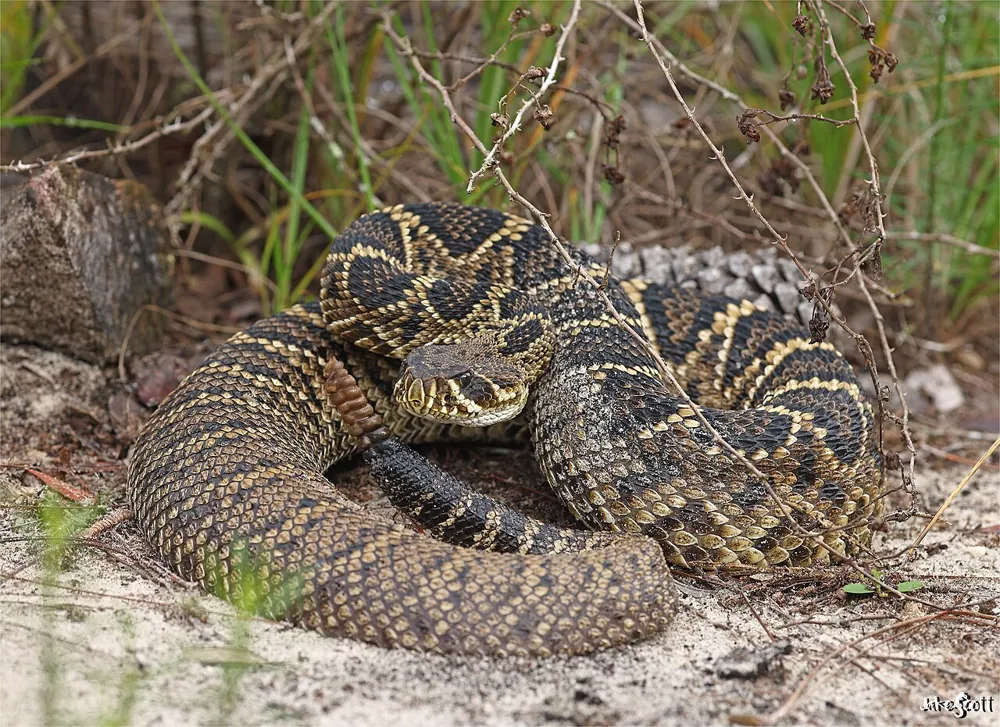
BitThe eastern diamondback rattlesnake is a pit viper that lives in the southeastern United States. It is the largest rattlesnake species and one of the heaviest venomous snakes in the Americas. Its diamond-patterned back and loud rattle make it easy to recognise, and it is widely regarded as one of the most dangerous venomous snakes in North America.1



 Svona þekkir þú það
- Dark brown to black diamond-shaped blotches on a brownish, grey or olive background, each outlined with cream or yellowish scales1
- A dark stripe runs from behind each eye to the mouth corner, edged above and below by white or yellow stripes1
- A rattle of hollow segments at the tail tip, which break off and are replaced when the snake sheds1
- Five to ten bands around the tail, below the diamond pattern1
- A large, heavy body, with adults often around 1.1 to 1.7 m long1
Eiturkraftur
Eitrið kemur út um eiturtennurnar eða tennurnar þegar það bítur.
Hvað gerir eitrið þegar það bítur eða stingur?
Its venom contains more than 100 different toxins, and about 40 have been identified, making it one of the most studied snake venoms. The venom contains a thrombin-like enzyme called crotalase, which clots fibrinogen, a protein needed for blood clotting. The estimated human lethal dose is 100 to 150 mg.1
Hversu hættulegt er það fólki?
Hætta fyrir fólk: Mjög hættulegtÞað getur drepið manneskju sem fær enga meðferð.It has a reputation as the most dangerous venomous snake in North America. It is not usually aggressive, but it is large and powerful. Reported mortality from untreated bites is 10 to 20% in some studies and 30% in another, and it is a major cause of fatal snakebites within its range.1
Hvað gerir það þegar það er hrætt?
When threatened, it raises the front half of its body in an S-shaped coil, rattles loudly, and can strike to at least a third of its body length.1
 Ef það bítur
- Haltu manneskjunni kyrri og rólegri, hafðu bitna útliminn í hjartahæð, taktu af hringi og það sem þrengir að og komdu henni fljótt á sjúkrahús.
Hringdu alltaf fyrst í neyðarnúmerið (112, 000, 911). Þetta eru almennar leiðbeiningar um skyndihjálp, ekki læknisráð. Grunnatriði skyndihjálpar
 Farðu varlega
- Aldrei snerta, ná í eða stríða villtu dýri, ekki einu sinni litlu, og ekki einu sinni ef það virðist sofa eða vera dautt.
- Gefðu því pláss. Ef þú hittir eitt, haltu ró þinni, bakkaðu hægt og leyfðu því að fara sína leið.
- Ef eitt slíkt bítur þig: haltu ró þinni, vertu kyrr, hringdu í neyðarnúmerið (112, 000, 911) eða komdu þér fljótt á sjúkrahús. Mundu hvernig það leit út, mynd hjálpar.
Það er ekki á eftir þér. Það notar eitrið til að veiða sér til matar eða verja sig, og það vill miklu frekar fela sig. Meira um að fara varlega
Hvar í heiminum?
Hversu stórt er það?
Hversu langt er það?
Hversu þungt er það?
 jafn langt og 5 heimiliskettir frá trýni að hala
 jafn langt og 13 bananar í röð
 gæti hlaupið 100 metra á 86 sekúndum (fljótasta manneskjan þarf 9,6)
Hversu stórt er Eastern diamondback rattlesnake miðað við ÞIG?
Bara reikningur í vafranum þínum. Ekkert er vistað eða sent neitt.
Hversu hratt er það?


Staðreyndir
It is the largest rattlesnake species. One specimen shot in 1946 measured 2.4 m and weighed 15.4 kg.1
In proportion to its length, it has the longest fangs of any rattlesnake, with fangs of over 25 mm expected in a 2.4 m adult.1
It can strike its prey within a tenth of a second.1
It can swim well and has been seen crossing water sometimes miles from land.1
Although mainly ground-dwelling, it has been spotted up to 10 m above the ground in bushes and trees.1
Males are usually larger than females, which is a rare pattern called reverse sexual size dimorphism.1
Goðsagnabani
Goðsögn: The eastern diamondback must rattle before it strikes.
Sannleikur: It can strike while completely silent. Some individuals stay quiet even when approached closely.1
Fyrir eitursérfræðinga
- Fræðiheiti
- Crotalus adamanteus
- Flokkur
- Skröltormar
- Fjölskylda
- Viperidae2
- Röð
- Squamata
- Heimsálfur
- Norður-Ameríka
- Smábörn
- It gives birth to live young, between 4 and 28 at a time, usually from July to early October. The newborns are 30 to 36 cm long and look like adults, except they have a small button instead of a rattle.1
- Hvernig því vegnar í náttúrunni
- Least Concern on the IUCN Red List (2001), but its population trend is down. It is under review for the US Endangered Species List, and it is considered endangered in North Carolina.1
- Hætta fyrir fólk
- 4 / 5: Mjög hættulegt3
Hvaðan staðreyndirnar koma
- Eastern diamondback rattlesnake (Wikipedia (CC BY-SA 4.0))
- Crotalus adamanteus (iNaturalist): nöfn og flokkun.
- Venom Wiki: hættustigið, dæmigerða stærðin og ágiskaði hraðinn eru okkar eigið mat. Sjáðu hvernig við finnum það út: Svona metum við hættuna.
Hver staðreynd á þessari síðu hefur númer sem vísar á heimildina. Ef við höfum rangt fyrir okkur, fyrirgefðu, við erum dýraaðdáendur, ekki vísindatímarit. Láttu okkur vita á [email protected] og við lögum það.
 Sporðdrekinn er svangur! Venom Wiki er eins manns verkefni: ókeypis, án auglýsinga og án rakningar. Smá þjórfé hjálpar til við að halda því á netinu.Gefðu sporðdrekanum að borða
 Timber rattlesnake
 Western diamondback rattlesnake
 Sidewinder
 Mojave rattlesnake
 Aruba rattlesnake
 Black-tailed rattlesnake
 Terciopelo
 Eastern coral snake
 Eyelash viper
 Arizona bark scorpion
 Brown recluse
 Cane toad